
Last updated September 20, 2026
Full 25-point door and opener safety check with every visit - springs, cables, rollers, tracks, and your LiftMaster or Chamberlain opener included
You get a price before we start. It does not change when the truck arrives.
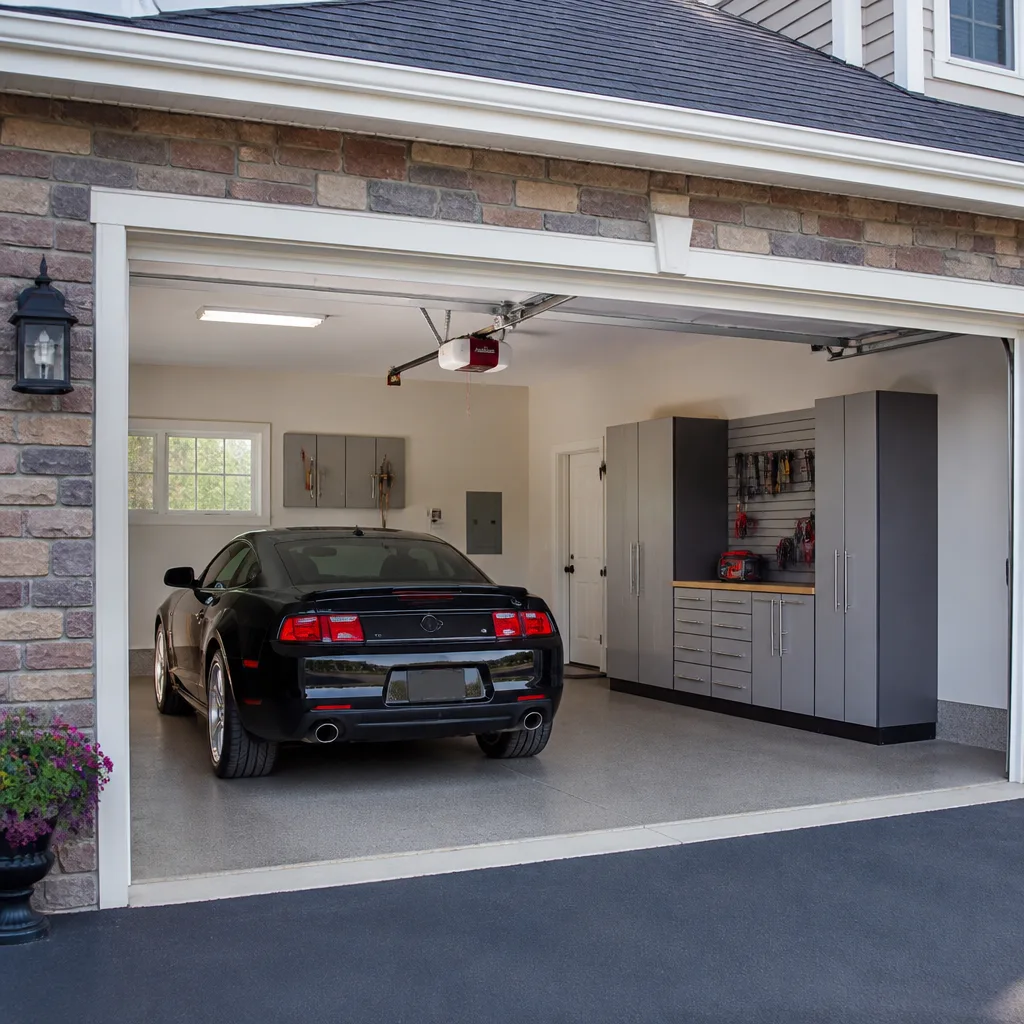
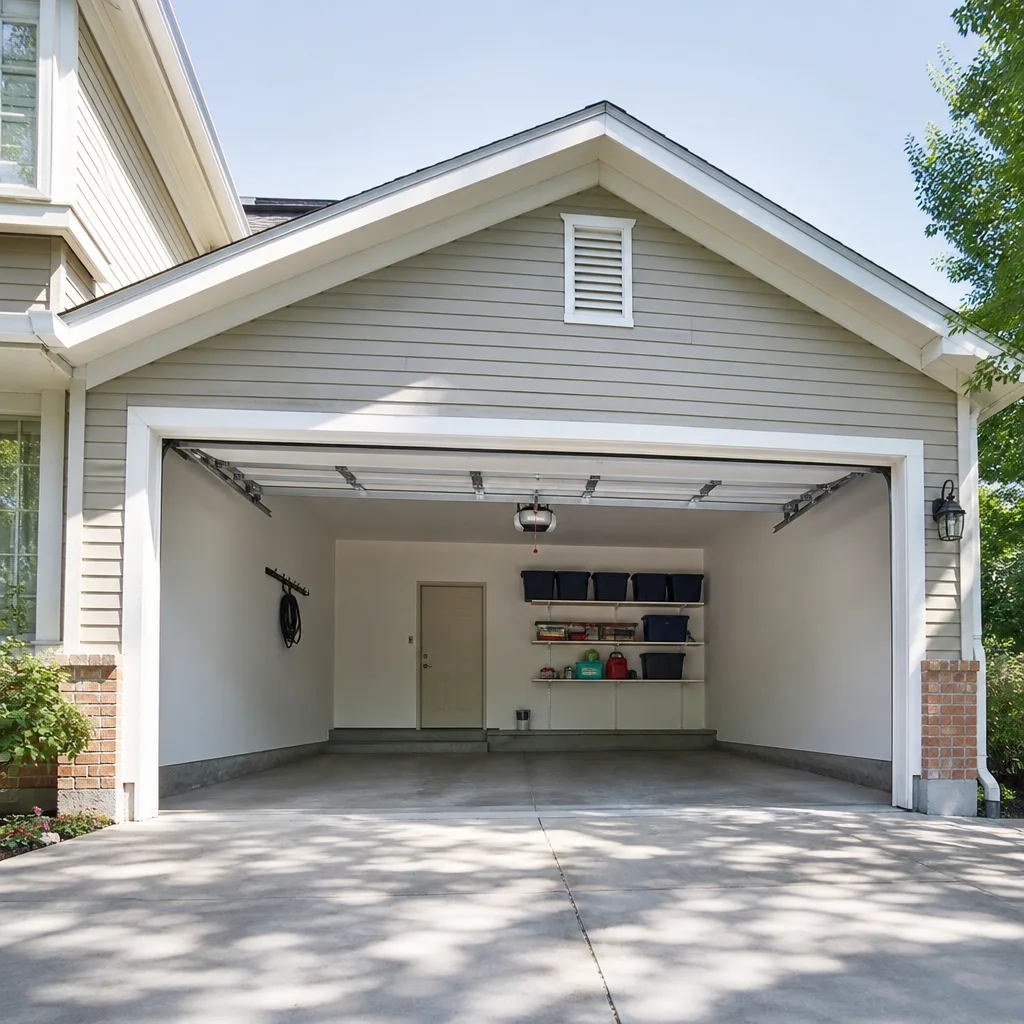
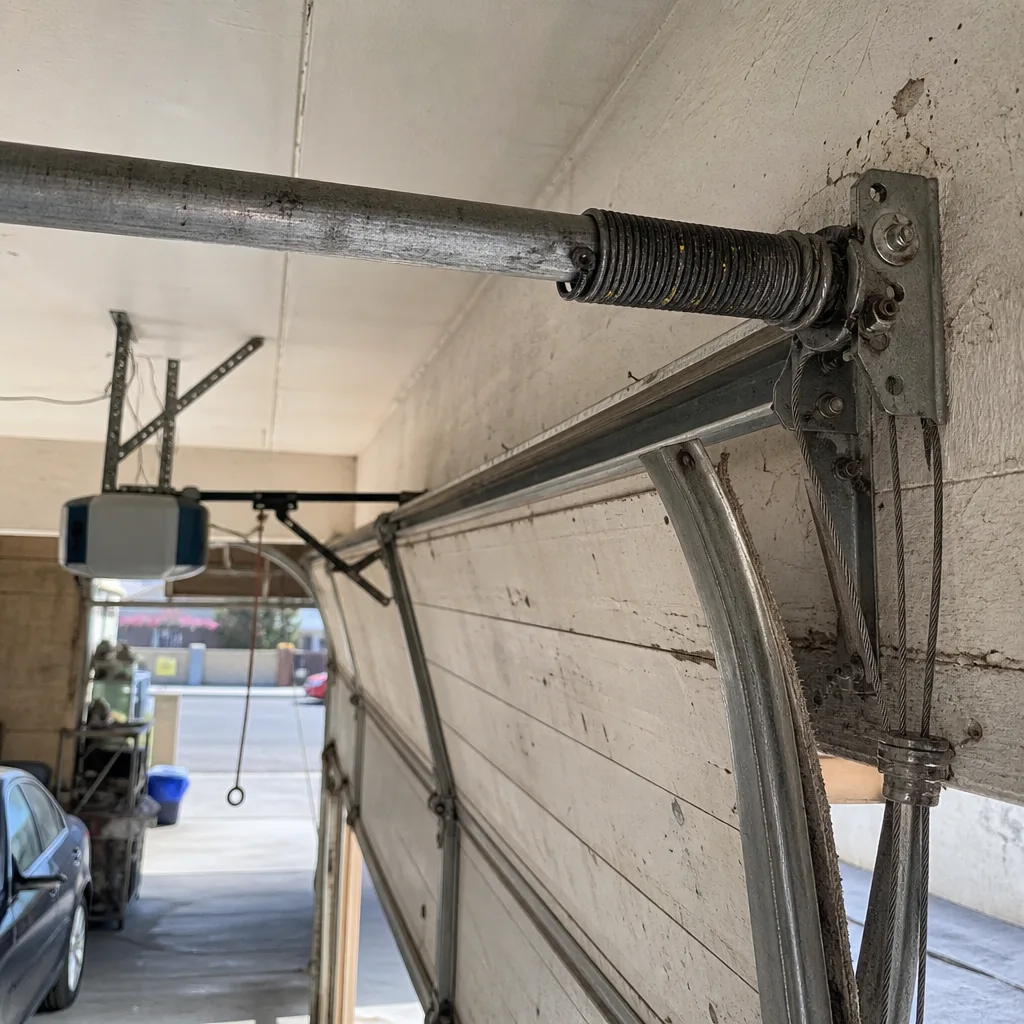 Before
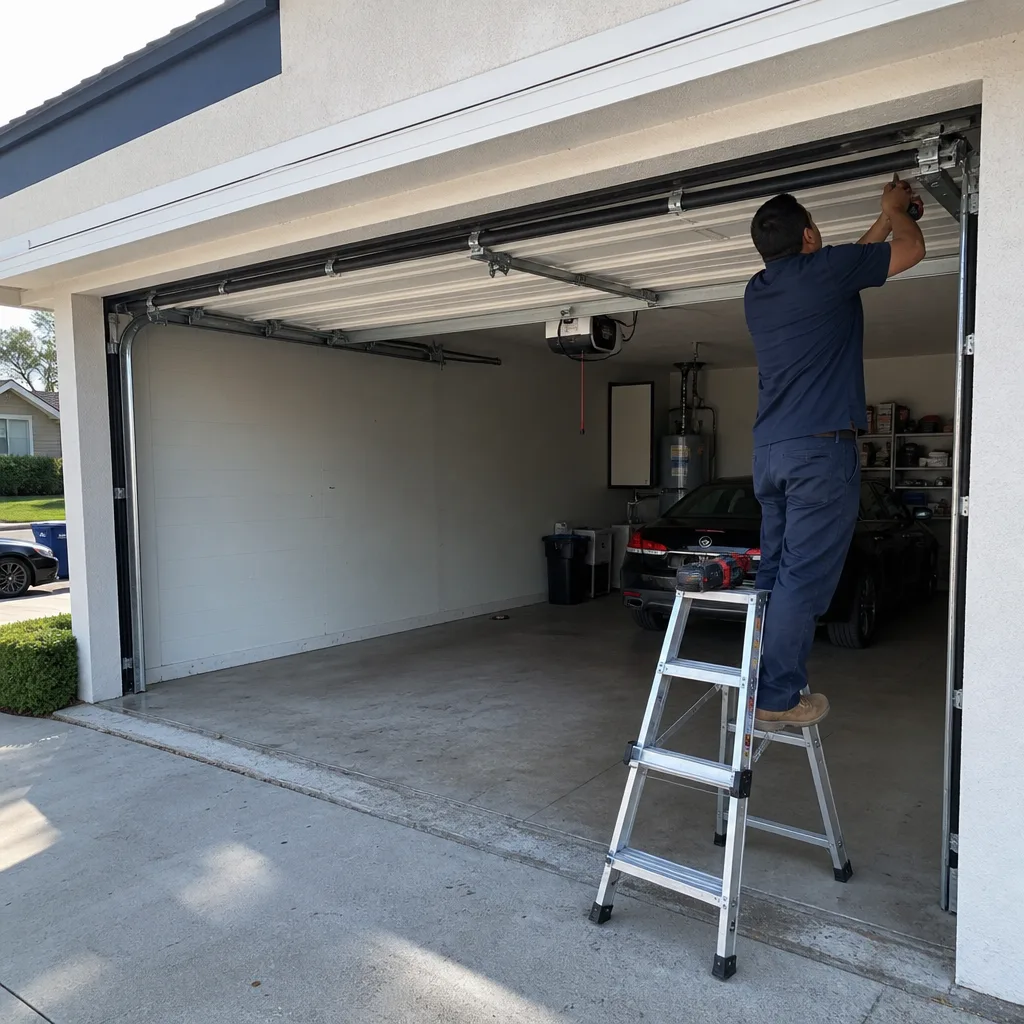 After
After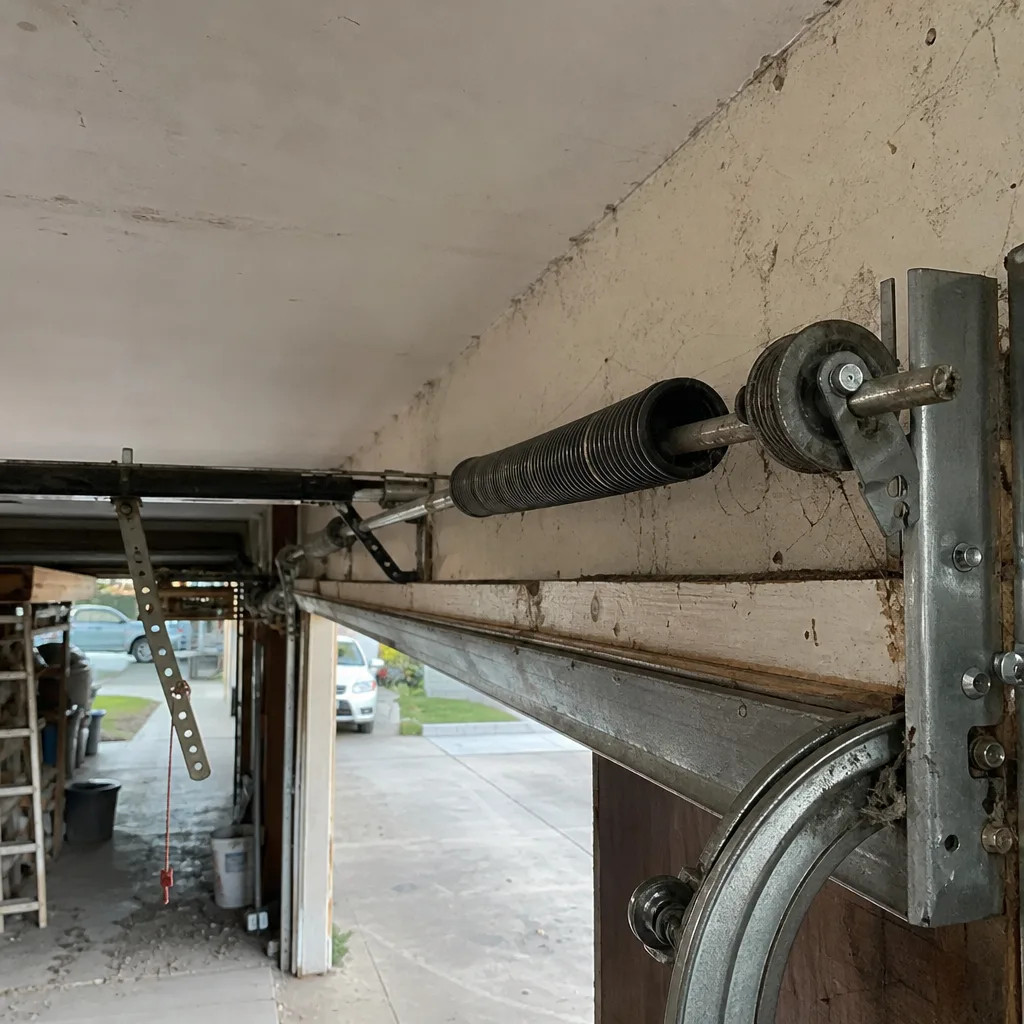 Before
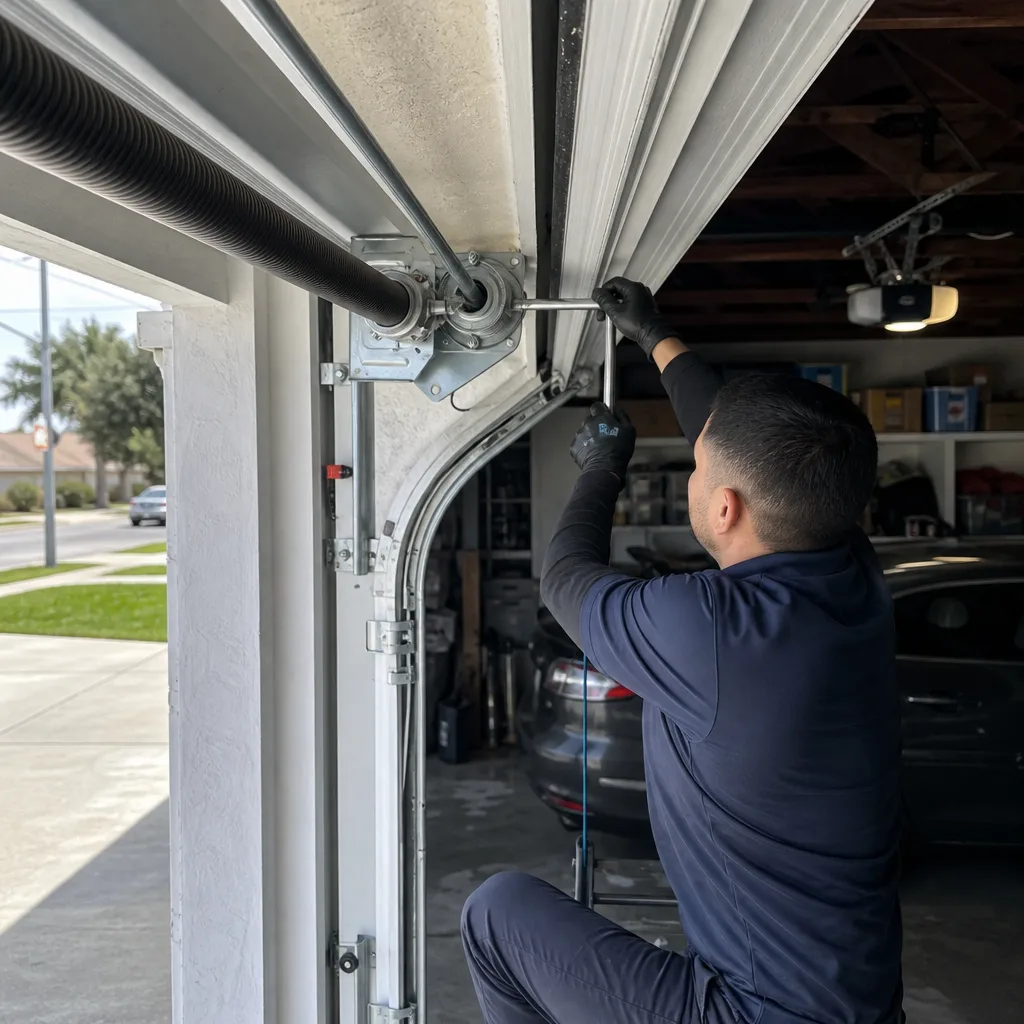 After
After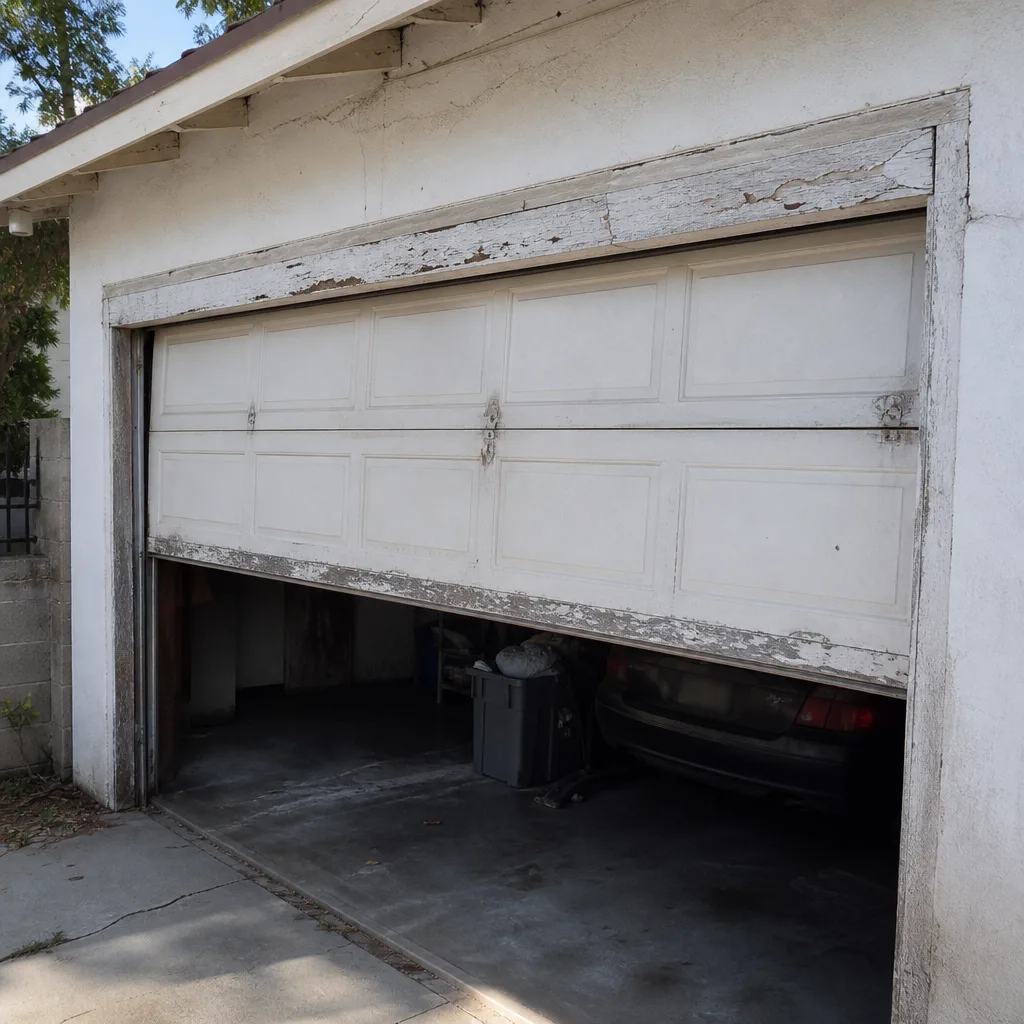 Before
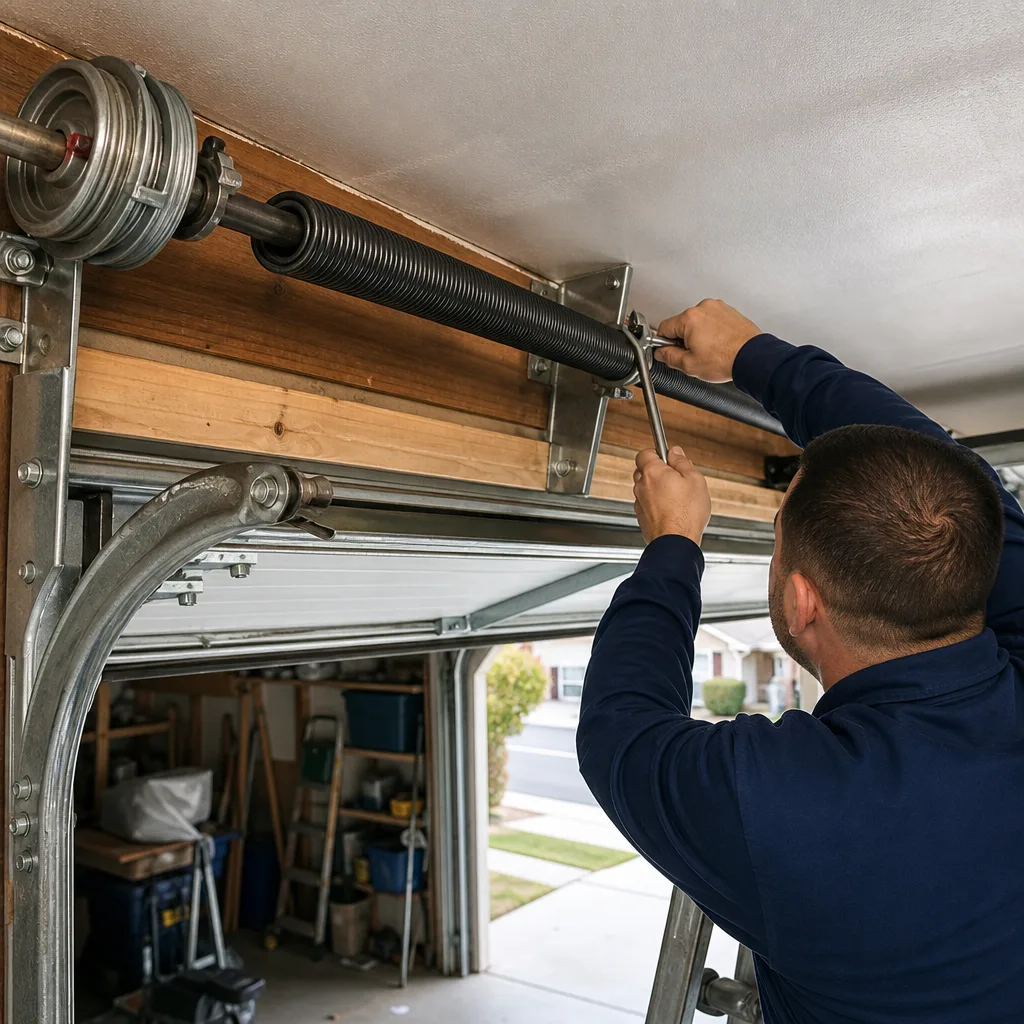 After
AfterGarage Door Permits, Codes & Inspections in CA: What You Need to Know
A garage door replacement that widens or raises the rough opening by even one inch crosses from a like-for-like swap into structural alteration under Los Angeles County building code. That single inch is the difference between a one-day job with no paperwork and a project that legally requires a permit, an engineer’s stamp, and a rough-framing inspection. Most Van Nuys homeowners never learn this distinction until a home inspector or title company flags it during a sale. This guide maps the exact permit triggers, fire-rating rules, inspection sequence, and the concrete cost of getting it wrong, so you can make the call before the work starts, not after. For more guides & resources, see our blog.
Quick Answer
Most garage door replacements in California do not require a permit when the door is swapped into the existing, unmodified opening with no new wiring. You do need a permit when the rough opening is structurally altered, when new electrical is added for an opener, or when an attached garage requires a fire-rated door assembly that is being changed or installed for the first time. The permit fee in Los Angeles County typically runs $150 to $250, while unpermitted structural work can cost $2,000 to $8,000 to remediate at resale. Confirm permit status through the LADBS online portal before buying any home in Van Nuys.
Table of Contents
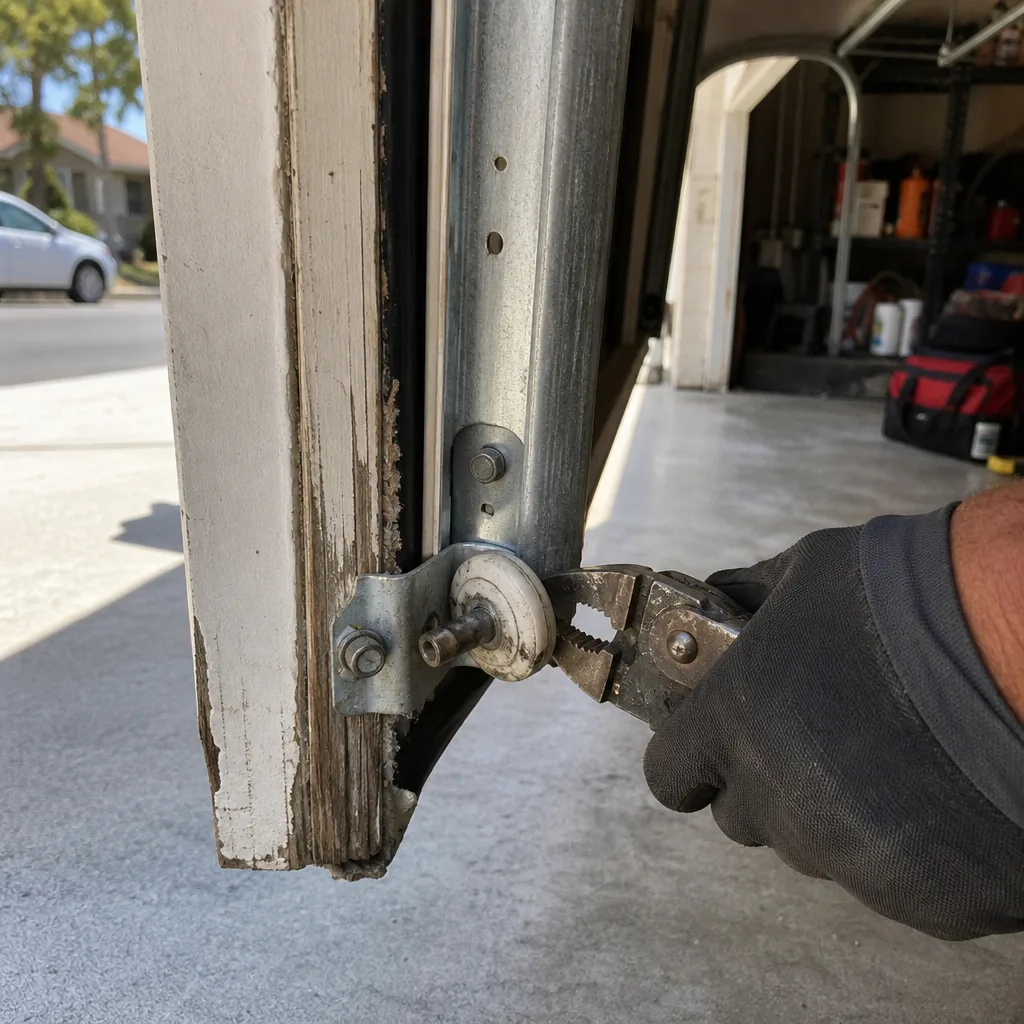
- When a Garage Door Permit Is Actually Required in California
- Fire-Rated Door Requirements: The 20-Minute Assembly Rule
- How Unpermitted Work Shows Up on a Title Report and What It Costs
- The Inspection Sequence: Rough Framing, Fire Assembly, Final
- How to Verify Permit Status Before Buying a Home in Van Nuys
- LA County vs. City of LA: Which Code Governs Your Van Nuys Door
- Why Van Nuys Climate and Housing Stock Change the Calculation
- Common Mistakes to Avoid
- When to Call a Professional
- Frequently Asked Questions
- The Bottom Line
BeforeAfterWhen a Garage Door Permit Is Actually Required in California
California follows the California Residential Code (CRC), but enforcement lives at the city and county level. For Van Nuys, that means the Los Angeles Department of Building and Safety (LADBS) is the authority that matters. The general rule: a like-for-like garage door replacement in an existing, unmodified rough opening is a repair, not a construction project. No permit. What triggers a permit comes down to three specific conditions that LADBS enforces, all three of which come up more often in Van Nuys than contractors like to admit.
The first trigger is structural modification. If the rough opening changes dimensionally in any direction (wider, taller, or deepened for a thicker door), that is an alteration to a load-bearing or shear wall condition. In the single-story detached garages common south of Victory Boulevard, widening a single door to a double door means cutting into the wall framing and adding a header. That is structural work. It requires a permit and an engineer’s detail. A technician from our team has walked into at least a dozen Van Nuys garages where a previous owner widened an opening with a reciprocating saw, threw in a 4×4 header from a lumber yard, and called it done-exactly the kind of scenario covered in our Garage Door Warning Signs: A Van Nuys Homeowner’s Reference Guide. The door operates. The wall is compromised.
The second trigger is new electrification. If you are adding a garage door opener to a garage that has no existing receptacle within reach, the electrical run is new work and requires a permit. This catches people who buy a house in Van Nuys with a detached garage built in the 1940s, where the original wiring is knob-and-tube and the nearest outlet is on the house. Running a new circuit to power a LiftMaster opener is a permitted electrical job, not a handyman task.
The third trigger is the fire-rated assembly requirement specific to attached garages. If the garage shares a wall or ceiling with living space and the existing door is not fire-rated, replacing it with a non-rated door maintains a code violation. If you are changing or installing that door, LADBS can require you to bring the assembly into compliance. That means a 20-minute fire-rated door or a solid wood door not less than 1-3/8 inches thick. We will get into the specifics below.
The practical question from Van Nuys homeowners is always the same: “Will anyone know if I skip it?” The answer is that unpermitted structural work shows up at resale, on insurance claims, and during refinance appraisals. The permit fee is $150 to $250 for a typical garage door scope. The remediation cost for unpermitted structural alteration starts around $2,000 and climbs from there. The economics argue for doing it right.
For a full picture of how a permitted replacement fits into the broader scope of work, see our guide to Garage Door Installation in Van Nuys.
Fire-Rated Door Requirements: The 20-Minute Assembly Rule
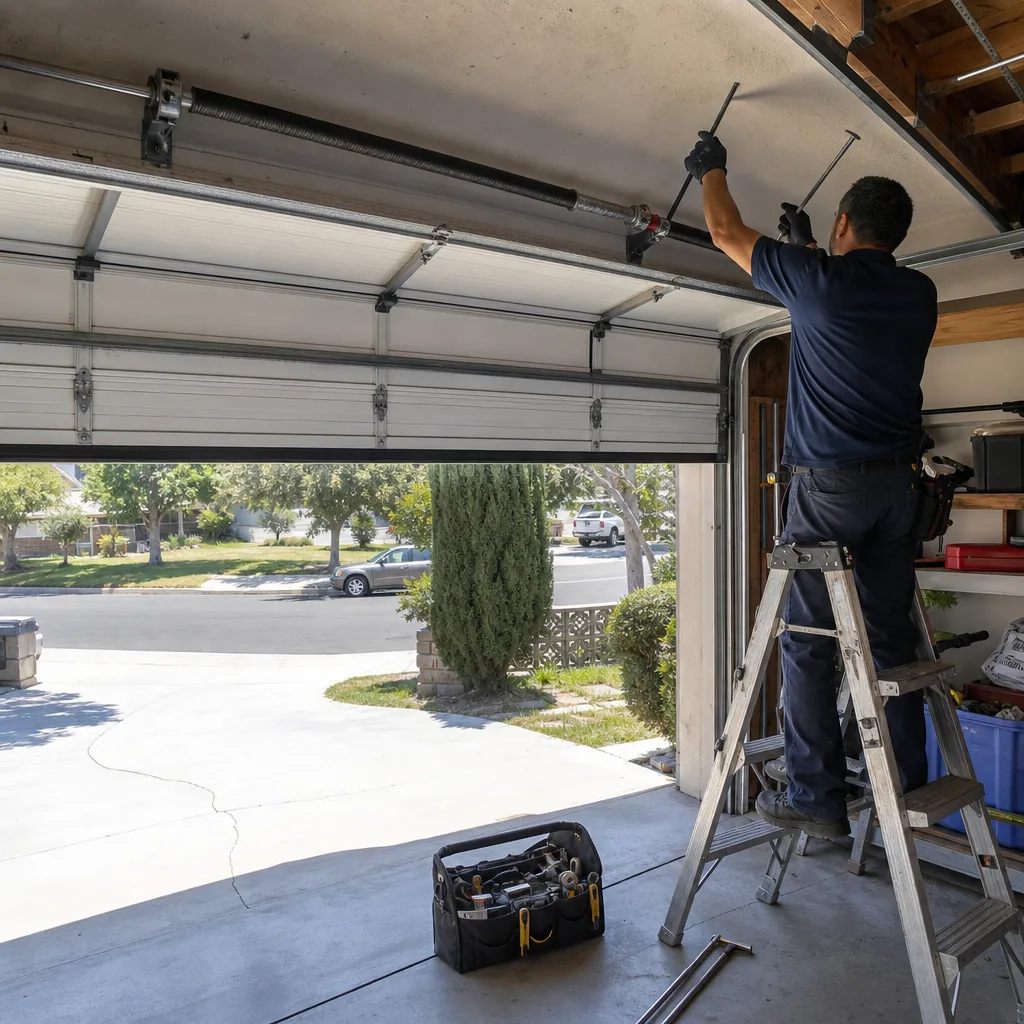
California has the strictest fire separation requirements for attached garages in the country, and for good reason: a garage fire has a head start to spread into living space if the assembly fails. Under CRC Section R302.5, any opening between an attached garage and a residence must be protected by a door that meets one of three standards: a solid wood door not less than 1-3/8 inches thick, a solid or honeycomb-core steel door not less than 1-3/8 inches thick, or a 20-minute fire-rated door with a visible, legible label from a certified testing agency.
The “20-minute fire-rated assembly” language confuses people. The rating is not just about the door slab. It is the door, the frame, the hinges, the door closer or self-closing device, and the latching hardware working together as a rated assembly. A Clopay or Wayne Dalton door marketed as fire-rated meets the slab requirement. The installation is what completes the rating. That means a listed frame, listed hinges, a positive-latching device, and a self-closing mechanism that actually works. We frequently find fire-rated Clopay doors in Van Nuys attached garages where someone removed the self-closing arms because they were inconvenient. The door slab is compliant. The assembly is not.
How to verify compliance before you buy: ask for the certification label. A genuine fire-rated door carries a label from UL, Intertek, or Warnock Hersey with the rating and the standard it was tested to. That label is embossed, printed, or attached at the factory and must remain legible for the life of the door. No label, no rating, regardless of what the seller claims. A solid wood door is exempt from the labeling requirement so long as it measures a true 1-3/8 inches or more at the edge. A solid core steel door is also exempt from labeling for this application, but it must be a true solid or honeycomb-core steel construction, not a thin residential-grade panel door with foam fill.
If you are replacing a door in an attached garage in Van Nuys and the existing door has no label and measures under 1-3/8 inches, you have a code compliance question on your hands before the first bolt comes out. The right sequence is to verify what is there, then specify the replacement to match or exceed the requirement. Do not let a contractor sell you a non-rated door because it is $150 cheaper and “nobody checks.” Somebody checks at resale.
When we scope a replacement door for a Van Nuys home with an attached garage, the fire-rating question is part of the written scope before any price is finalized. The customer sees the existing door’s label status in the photo record we provide on every visit. That documentation is what Clause 4 of The Haven Standard was written for: you see the evidence before a quote is ever discussed.
How Unpermitted Work Shows Up on a Title Report and What It Costs
A title report itself does not list permits. What it lists is the chain of ownership, deeds, liens, and recorded documents. Unpermitted garage work surfaces one step later, during the buyer’s due diligence, when the home inspector or the appraiser flags a discrepancy between the property’s legal description and its physical condition. In Van Nuys, the most common flag is a garage that was converted into a living space without permits, followed by a garage door opening that was structurally modified without LADBS approval.
Here is how the sequence typically plays out. A buyer makes an offer. The home inspection report notes a double garage door opening where the original building records show a single door, or a doorway cut through a garage wall. The buyer’s lender requires a permit search through LADBS. The search comes back clean, meaning no permit was ever issued, meaning the modification was never inspected, meaning the construction is presumed noncompliant until proven otherwise. The buyer asks for a credit or a fix. The seller either pays to legalize the work retroactively or the deal loses value.
Retroactive legalization is called “as-built” permitting, and it is not a rubber stamp. It requires an engineer to evaluate the existing work and certify that it meets current code, or to specify corrections. If the previous owner’s 4×4 header is undersized, the as-built permit fails and the work must be redone properly. The cost to legalize a structurally altered garage door opening in Van Nuys typically runs $2,000 to $8,000, with the high end involving opening walls, installing a properly sized header, and passing a rough-framing inspection before the finish work goes back.
Compare that to the permit fee paid upfront: $150 to $250 for the permit, plus an engineer’s design fee if structural work is involved, typically $400 to $900 for a garage header design. The total upfront cost of doing it right on a $6,000 door replacement is roughly 10% to 15% of the project cost. The cost of doing it wrong shows up later, at the worst possible time, under the worst possible negotiating position.
This is why we are direct with Van Nuys homeowners about the permit category before any work is quoted. A door swap into an unmodified opening: no permit, one-day job. A door swap with an opening that grows by one inch in any direction: different conversation. We have seen the title problems. We have also seen what a properly documented, permitted, inspected job looks like at resale. The difference is paperwork.
The Inspection Sequence: Rough Framing, Fire Assembly, Final
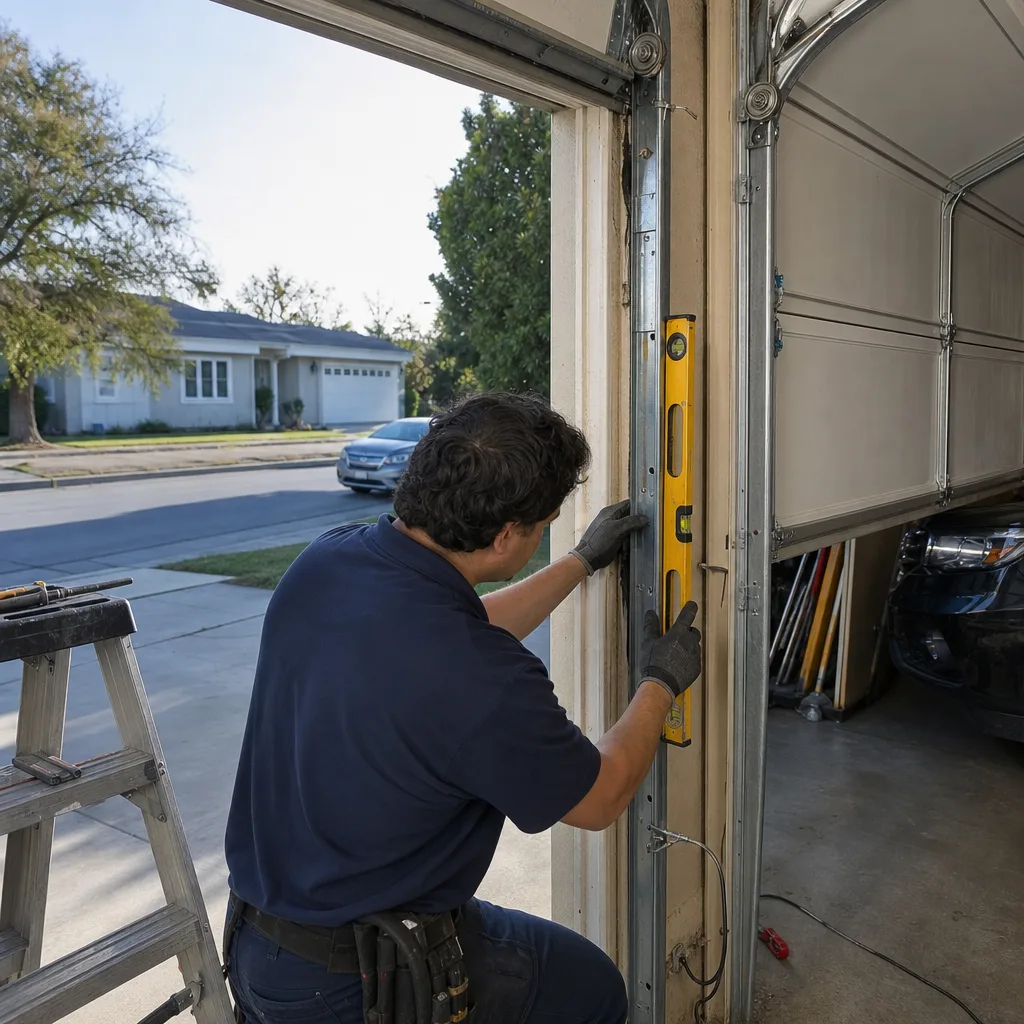
When a garage door project in Van Nuys requires a permit, it follows a three-phase inspection sequence under LADBS. Knowing this sequence before you start removes the uncertainty that contractors often use to justify vague timelines and change orders. Here is exactly what happens, in order.
- Rough framing inspection. This occurs after the structural alteration is complete but before drywall or finish trim covers the work. The inspector looks at the header size, the king and jack studs, the tie-downs or straps, and the bearing path down to the foundation. For a widened garage door opening in a Van Nuys home, this is the inspection that matters most. The homeowner or a designated representative must be present. The inspector issues a correction notice if anything fails, and the correction must be addressed before the next phase.
- Fire-rated assembly inspection (attached garages only). For attached garages, the inspector verifies the door label, the frame, the self-closing mechanism, and the latching hardware before the door goes into service. If the door is a solid wood or solid-core steel alternative, the inspector measures the thickness at the edge. If the label is missing, the door fails. This phase is often combined with the final inspection if no structural work occurred.
- Final inspection. The inspector verifies that the electrical work (if any) is complete and accessible, that the door operates correctly, that the fire assembly is in place, and that the site is clean. The permit is then signed off, and the job is legally closed.
The phase that catches homeowners off guard is the first one. Rough framing inspections happen mid-project, when the garage looks torn apart and the homeowner is wondering if the contractor is ever coming back. In our experience in Van Nuys, a contractor who communicates clearly about the inspection schedule is a contractor who has done this before, as outlined in our Garage Door Repair Maintenance Checklist for Van Nuys Homeowners. A contractor who says “we’ll handle the inspection” without telling you when it happens or what the inspector looks for is one to question.
On the Garage Door Repair in Van Nuys side of our business, permits rarely come into play because repair work by definition returns a door to its existing condition. The permit conversation starts when the scope changes from repair to alteration. We make that distinction explicitly in every written scope we provide under Clause 1 of The Haven Standard.
How to Verify Permit Status Before Buying a Home in Van Nuys
If you are buying a home in Van Nuys and the garage has been modified in any way, a permit search through LADBS is a 20-minute job that can save you a five-figure remediation. Here are the exact steps.
- Go to the LADBS Building Records search portal at ladbs.org and navigate to “Check Permit Status” or “Building Records.”
- Enter the property address exactly as it appears on the listing. Use the house number and street name without unit designations unless it is a multi-unit property.
- Review the permit history. You are looking for any permit issued for “garage door,” “framing,” “structural alteration,” or “garage.” A permit that was pulled and closed with a final inspection sign-off is a good sign. A permit that was pulled and expired or left open is a red flag.
- If no permit exists and the garage door opening is clearly not original (a double door where a single door should be, a door moved to a new location, or a doorway cut through an exterior wall), request a copy of the original building plans from the seller. The plans show the as-built condition. Compare them to what you see.
- If the discrepancy is confirmed, get a written cost estimate for as-built legalization before you close. Use that number in your negotiation.
This lookup matters in Van Nuys specifically because the housing stock is old and heavily modified. The area was built out in the 1940s and 1950s, and generations of homeowners have expanded garages, converted them, and cut new openings without permits. A house with a beautifully finished garage on a listing can be hiding an unpermitted structural alteration that the seller does not know about or hopes you will not ask about. The LADBS portal is free to search. Use it.
The same verification applies to the garage door opener. If the opener is wired in and no electrical permit exists for the circuit, that is a smaller issue than structural work, but it is still technically an unpermitted electrical installation. In a sale, the home inspector may flag it. The fix is usually a retrofit permit and an inspection, less costly than structural legalization but still worth pricing in.
LA County vs. City of LA: Which Code Governs Your Van Nuys Door
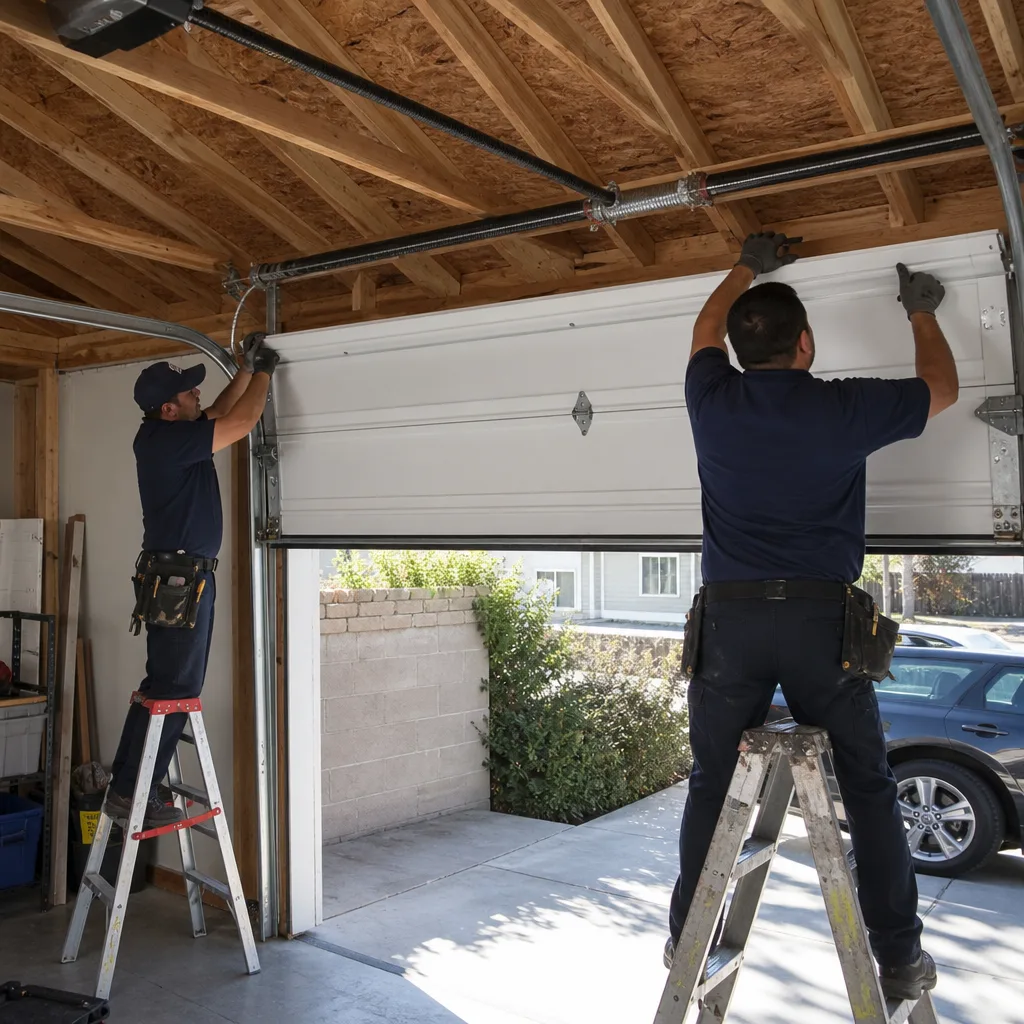
Van Nuys is a neighborhood within the City of Los Angeles, which means the Los Angeles Department of Building and Safety is your authority for permit questions. The Los Angeles County Building Code applies to unincorporated areas like parts of the San Fernando Valley outside city limits. The two bodies share the California Residential Code as their base document, but enforcement details and permit processing differ.
The practical difference for a Van Nuys homeowner is minimal in terms of what triggers a permit. The structural modification threshold, the fire-rated assembly rule, and the electrification requirement are the same under both frameworks because they flow from the California Residential Code. Where the difference shows up is in processing time and inspection scheduling. LADBS is a large municipal department with significant volume. Permit issuance for a straightforward garage door structural alteration typically runs one to three weeks. Inspections are scheduled through the LADBS portal or by phone, and the wait for a rough-framing inspection can add several days to a project timeline. Plan for it.
If you live in the parts of the San Fernando Valley that are unincorporated Los Angeles County, you deal with the county’s Building and Safety division instead. The trigger thresholds are the same. The paperwork is similar. The processing times can be faster or slower depending on the office. If you are unsure which jurisdiction applies to your address, the LADBS portal will tell you when you enter the property address. If the address does not return results, you are likely county jurisdiction.
For garage door opener work specifically, the electrical permit question follows the same jurisdictional split. A new circuit for an opener in a Van Nuys garage is a City of LA permit. The same work in an unincorporated county area is a county permit. Either way, the work is permitted and inspected. A Genie or LiftMaster opener installed on an existing, dedicated receptacle avoids the electrical permit question entirely because the contractor is swapping like for like.
Why Van Nuys Climate and Housing Stock Change the Calculation
Van Nuys sits in the San Fernando Valley, and the climate here is not neutral to a garage door. Summer temperatures routinely cross 100 degrees. The dry heat accelerates seal degradation, and the intense afternoon sun breaks down exterior finishes faster than coastal locations. A garage door that faces west into the afternoon sun in Van Nuys will show weather checking and edge warping on a wood door within a few years. That matters to the permit conversation because a homeowner who is replacing a door anyway may be tempted to make minor opening adjustments at the same time. “We’re replacing the door, let’s just widen it six inches while we’re in here.” That is a structural permit trigger.
The housing stock compounds the issue. Van Nuys is dominated by post-war single-story homes with detached or attached garages built between the 1940s and the 1970s. These structures were built before modern fire separation standards and before current seismic requirements. The original openings were sized for narrow single doors. Modern vehicles are wider. The pressure to widen openings is constant. The structural consequences of doing so without proper headers and connection details are real: a garage wall under load fails at the opening first in a seismic event.
This is the context in which we operate as the local Servo Garage Doors Van Nuys home team. We see the full range of Van Nuys garage conditions, from unmodified 1950s single openings to 1990s remodels that were done right, to recent unpermitted work that was done fast. The permitting question has a technical answer, but the local conditions are what make the answer relevant. A door swap on an unmodified 1952 opening in the flats near Van Nuys Boulevard: no permit needed. A door swap on that same opening after someone cut the opening wider in 2018 without a permit: the new work triggers the question regardless of what the current owner did or did not know.
When we handle Garage Door Opener Repair & Installation in Van Nuys, the permitting conversation is almost always brief because the electrical work is usually a like-for-like swap. The longer conversation happens on installation projects where the opening changes or the fire-rated assembly needs to be brought up to code. We have that conversation before we quote, not after.
Common Mistakes to Avoid
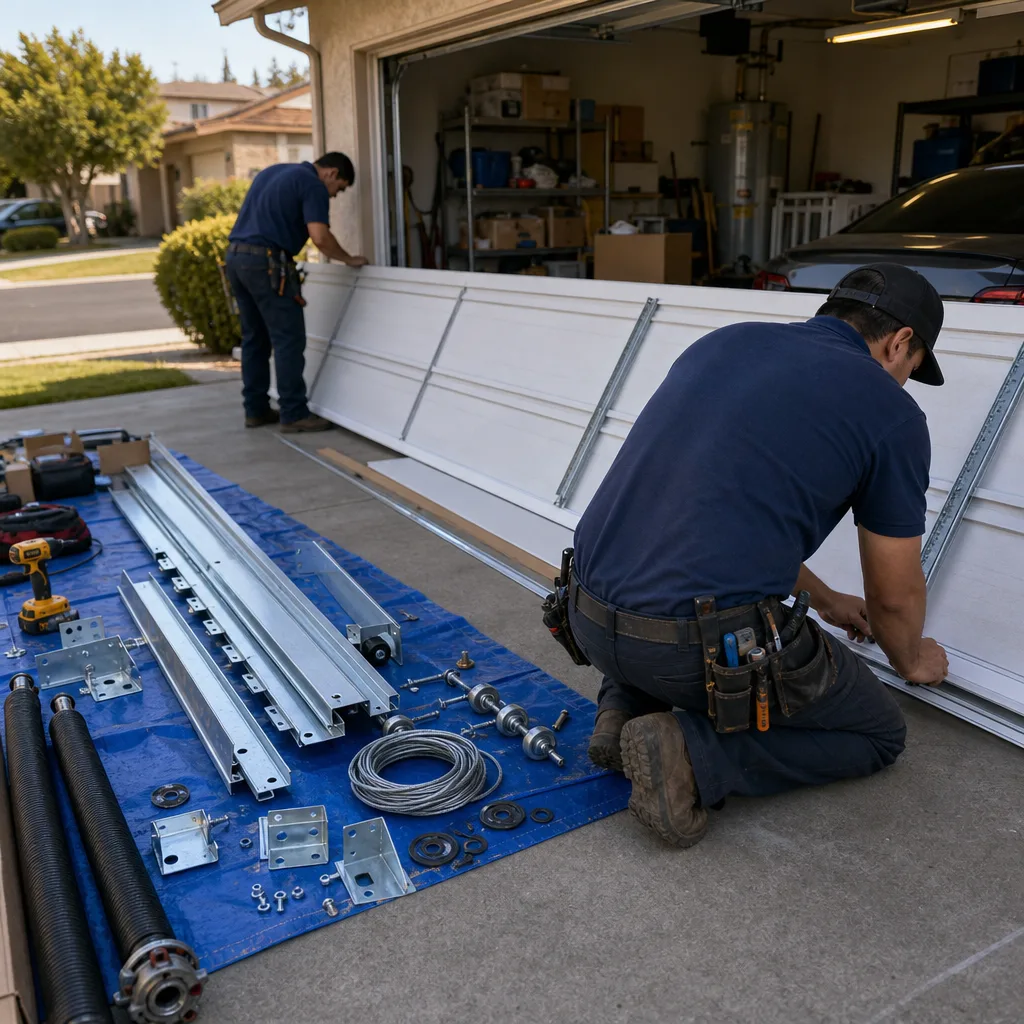
- Widening an opening without a permit because “nobody checks.” The work may never be caught until resale, but it will be caught. A Realtor in Van Nuys is legally obligated to disclose known unpermitted work, and the buyer’s inspector will note the discrepancy. The cost to fix at resale is four to ten times the cost to permit upfront.
- Assuming the new door is fire-rated because the old one was. The old door’s condition does not transfer. A 20-minute door is rated by its label, and a new non-labeled door is not rated regardless of how thick it feels. Verify the label before the door is installed, not after.
- Skipping the self-closing mechanism on a fire-rated door. The door slab can be fully compliant and the assembly still fails because the closer was removed. In Van Nuys attached garages, we see this constantly. The closer is part of the rated assembly.
- Treating the permit as a formality to be handled “later.” The rough-framing inspection happens mid-project. If the inspector is not called until after the drywall goes up, the work cannot be approved without opening the walls again. Schedule the inspection at the right phase or pay to undo finish work.
- Using a handyman for structural garage work to save a few hundred dollars. The permit requires a licensed contractor or an owner-builder declaration with a plan from a licensed engineer. A handyman cannot legally pull the permit, and the work they deliver will not pass a structural inspection.
- Buying a Van Nuys home without running the LADBS permit search. The 20 minutes it takes to check the portal is the difference between buying a house and buying a future structural remediation. If the garage does not match the building records, get a cost to legalize in writing before you close.
When to Call a Professional
If the job involves cutting into a garage wall, changing a rough opening dimension, installing a new electrical circuit for an opener, or verifying a fire-rated assembly on an attached garage, call a professional before you touch anything. These are the exact scenarios where a permit decision is required, and a licensed contractor can tell you which category your job falls into-learn more in How to Hire a Garage Door Contractor in Van Nuys: A Step-by-Step Guide. In Van Nuys, the structural questions are real: old framing, seismic considerations, and fire separation requirements that are enforced at resale. Servo Garage Doors Van Nuys offers free estimates in Van Nuys, with the permit determination included in the written scope. Call (213) 418-2520 to have the opening measured, the existing door checked, and the permit question answered in writing before any work begins.
Frequently Asked Questions
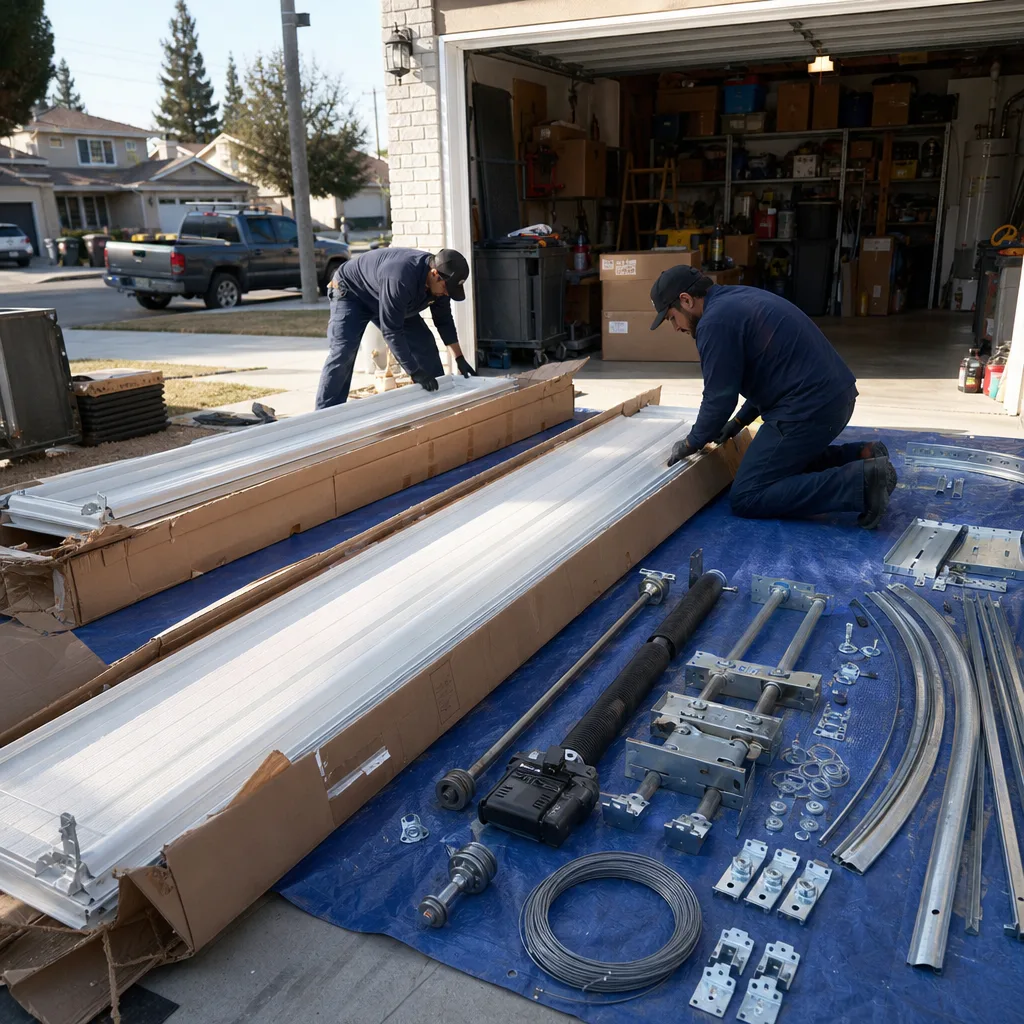
No, not for a like-for-like replacement in the existing, unmodified opening with no new electrical work. A permit is required when the rough opening is structurally altered, when new electrification is added for an opener, or when an attached garage requires a fire-rated assembly change. Call (213) 418-2520 with your specific Van Nuys scope and we will tell you which category applies.
Expect $150 to $250 for a typical garage door permit through LADBS, plus $400 to $900 for an engineer’s design if structural alteration is involved. The total is a fraction of the $2,000 to $8,000 cost to legalize unpermitted work later. If you have a written estimate from another company, bring it to us for a free second opinion.
The opening between an attached garage and living space must have a 20-minute fire-rated door with a visible label, or a solid wood door at least 1-3/8 inches thick, or a solid/honeycomb-core steel door at least 1-3/8 inches thick. The rated assembly includes the frame, hinges, latching hardware, and a working self-closer. Missing any one of those components fails the assembly.
Yes, typically during the buyer’s inspection or the lender’s permit search. The inspector notes the discrepancy between the physical garage and the building records, and the deal renegotiates around a remediation cost. The title report itself does not list permits, but the due diligence process will surface the issue.
Search the LADBS online portal by address under “Check Permit Status.” Look for permits classified as “garage door,” “framing,” or “structural alteration.” A closed permit with a final inspection sign-off means the work was legalized. No permit and a modified opening means the work was not.
Yes. The permit determination is part of every written scope we provide under Clause 1 of The Haven Standard. Our technician photographs the existing opening, documents the fire-rating status, and the written quote specifies whether a permit is required before any work is scheduled. Estimates are free; call (213) 418-2520.
The Bottom Line
Most garage door replacements in California need no permit, but the exceptions carry outsized consequences. If the rough opening changes dimension, if new electrical is added, or if an attached garage requires a fire-rated assembly update, the permit is not optional. The fee is $150 to $250. The cost of skipping it is measured later, at resale, in the $2,000 to $8,000 range. For Van Nuys homeowners, the LADBS portal is a free tool that answers the permit question before a purchase closes. The smart sequence is this: identify the job category, verify the fire-rating status, pull the permit when required, and document everything. In our experience, the difference between a simple door swap and a structural headache is often one inch and one permit.
Written by Marcus Deller, Owner at Servo Garage Doors Van Nuys, serving Van Nuys since 2015.