
Last updated September 20, 2026
Full 25-point door and opener safety check with every visit - springs, cables, rollers, tracks, and your LiftMaster or Chamberlain opener included
You get a price before we start. It does not change when the truck arrives.
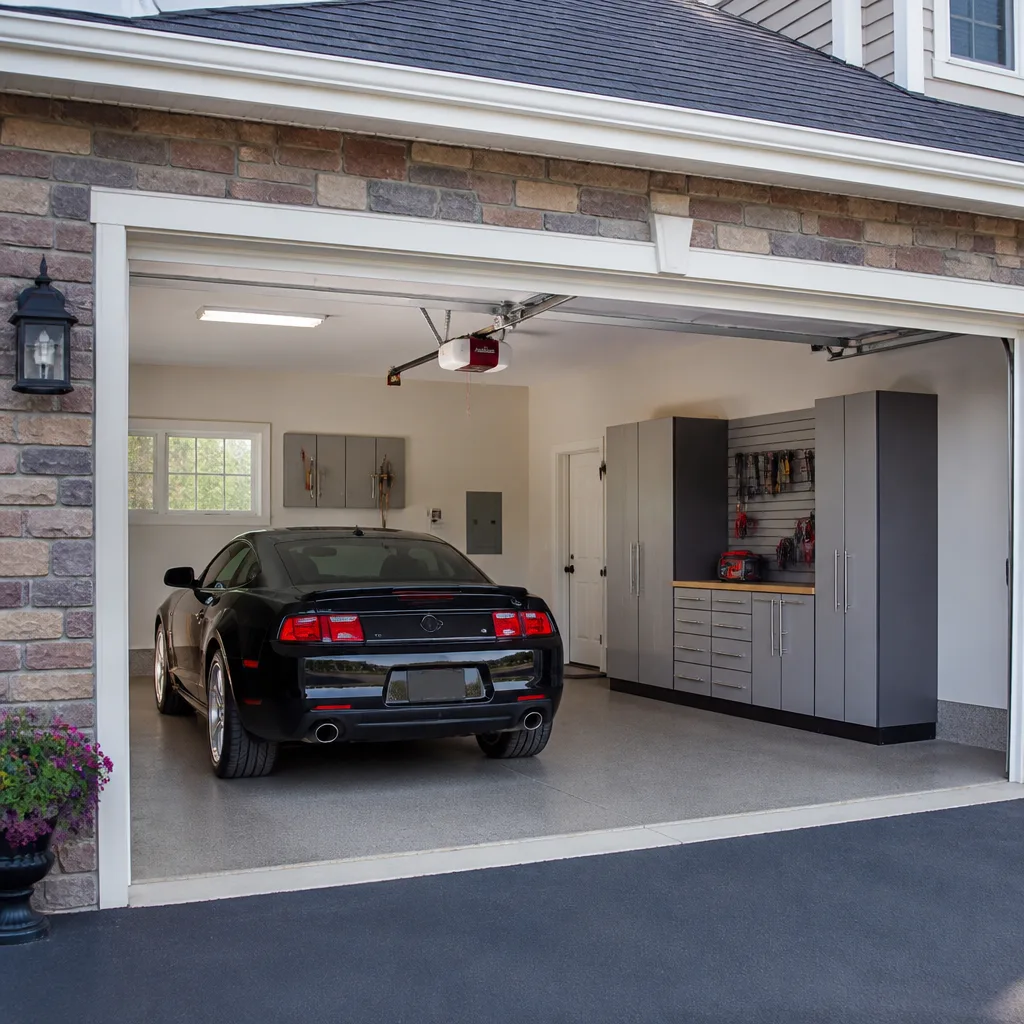
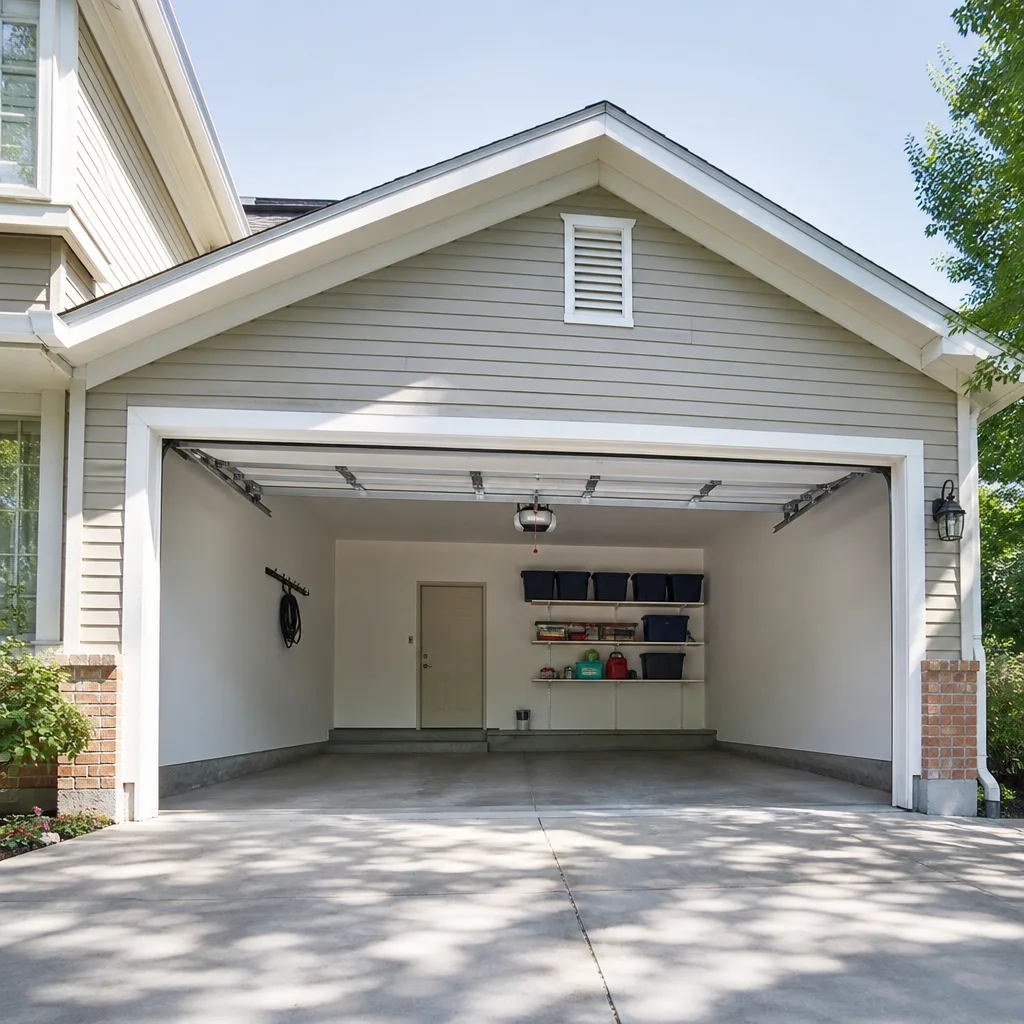
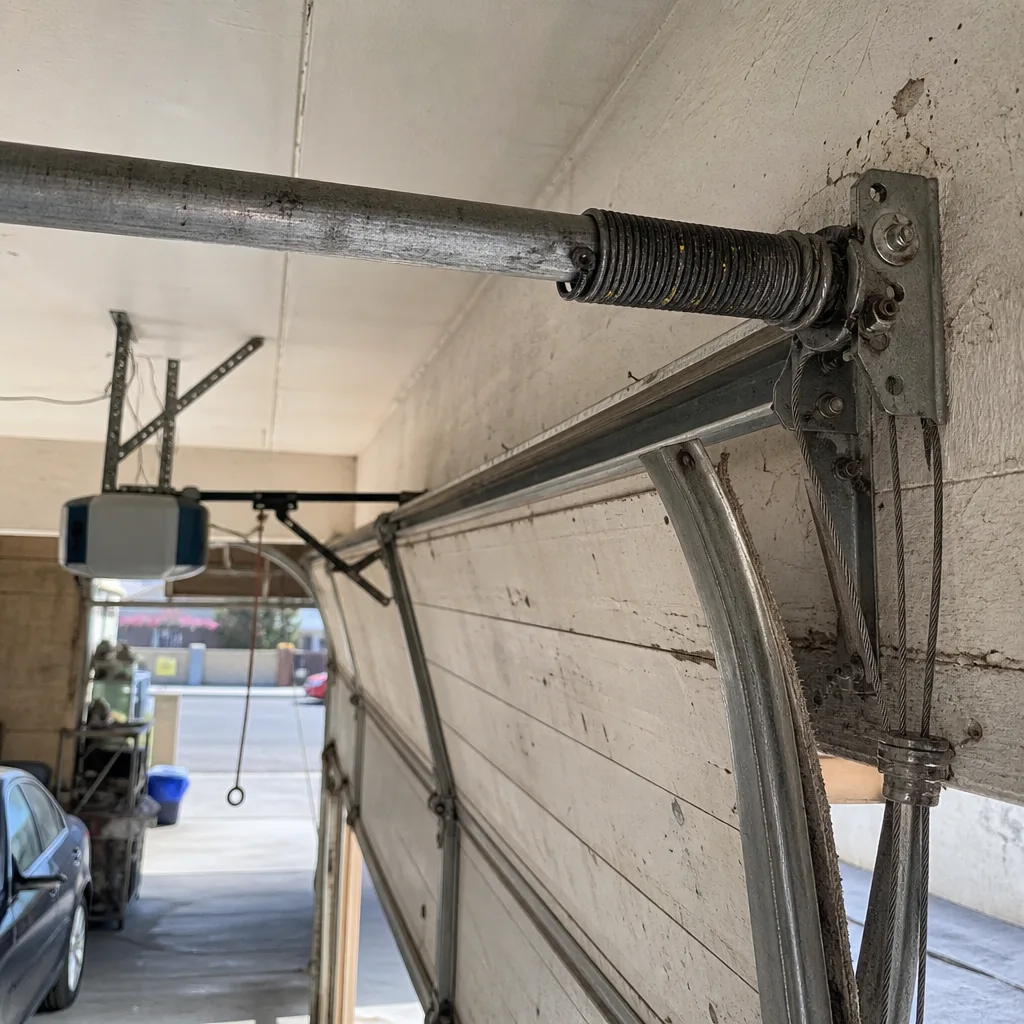 Before
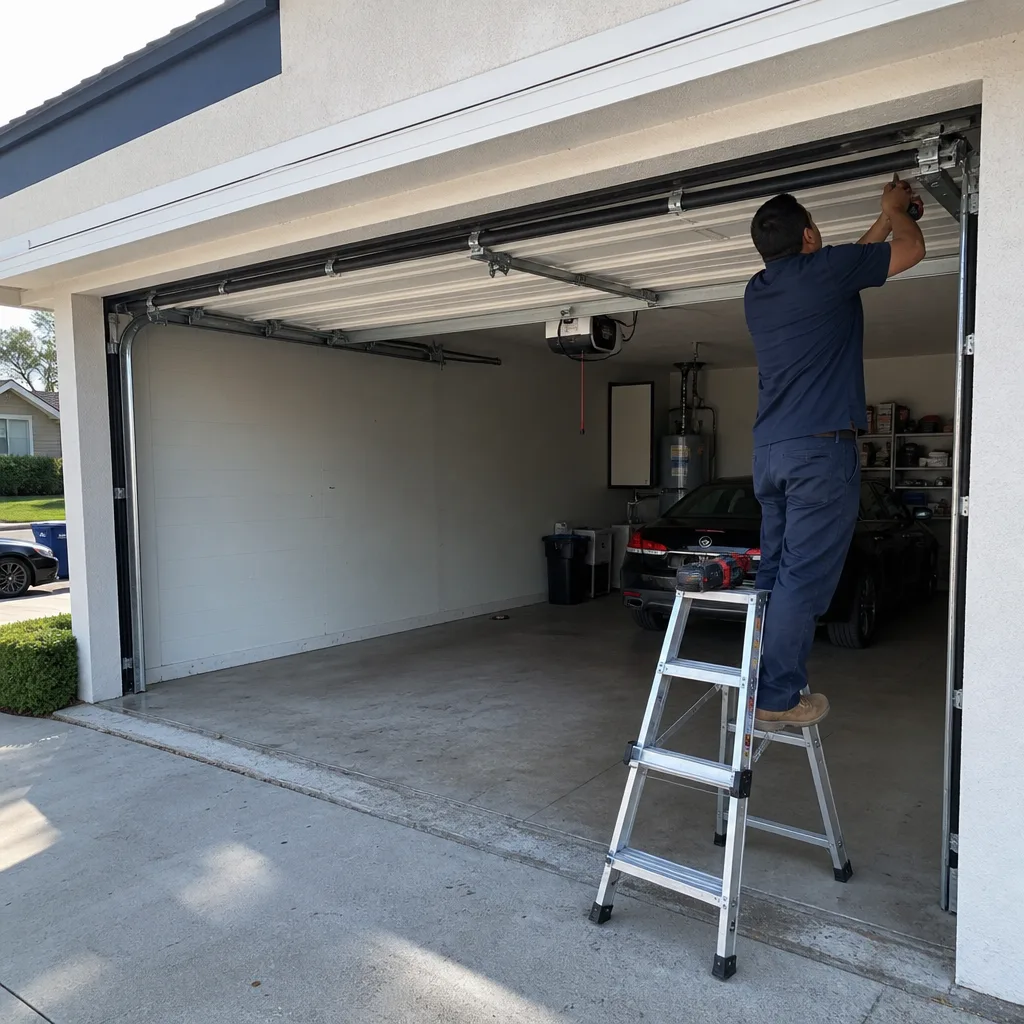 After
After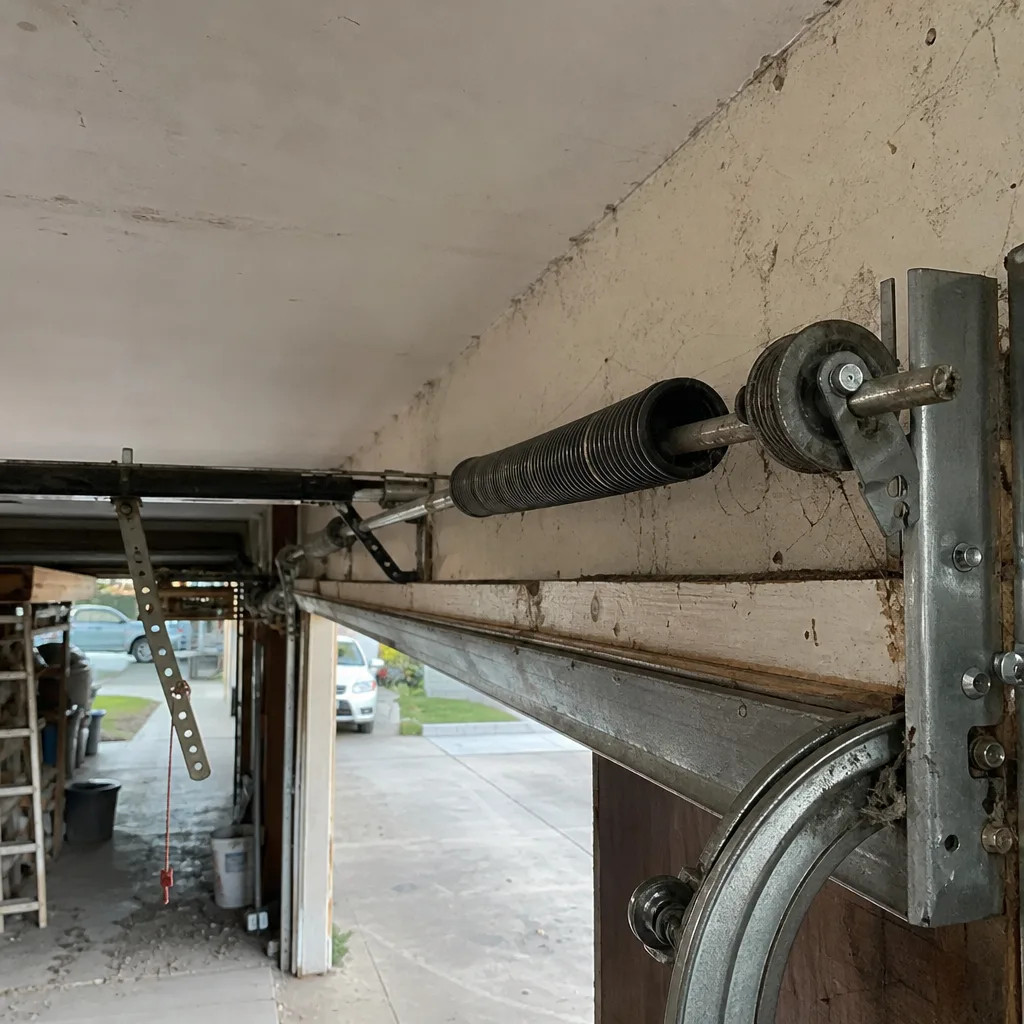 Before
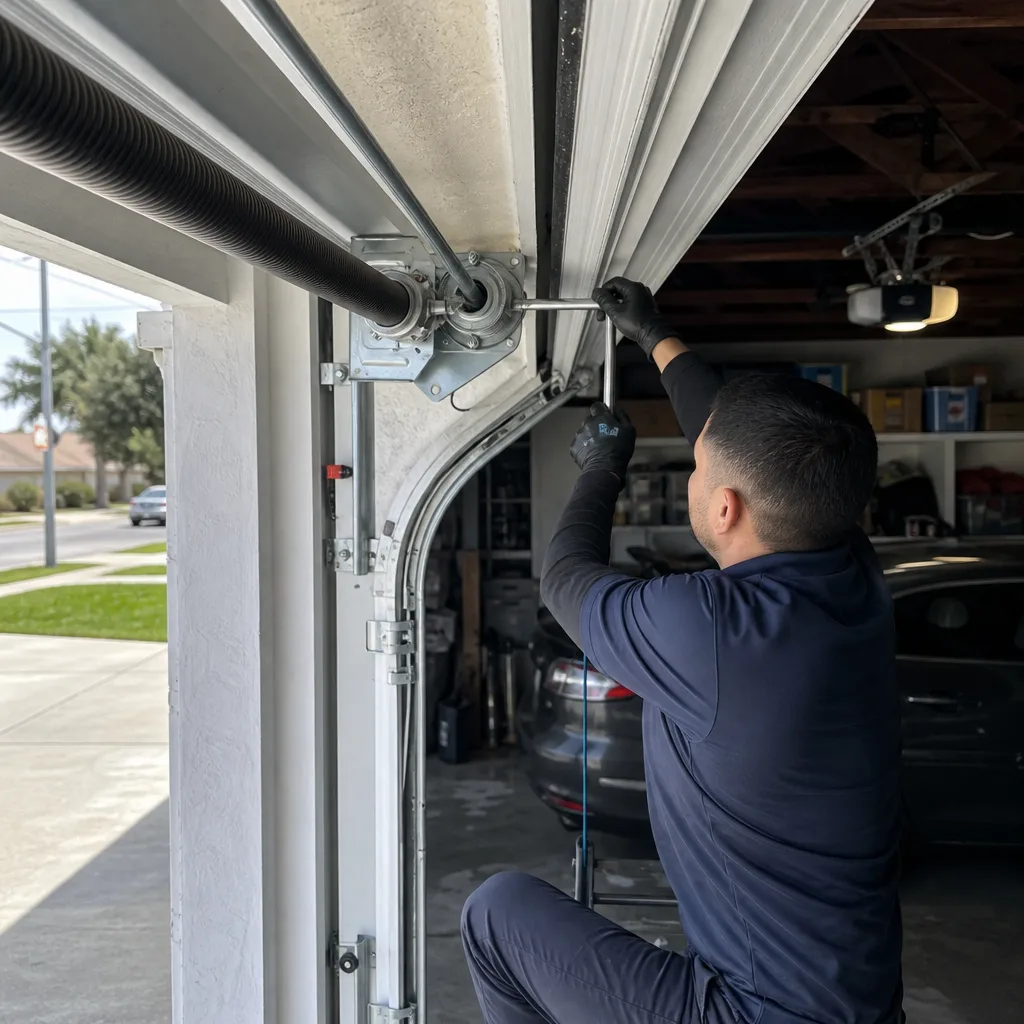 After
After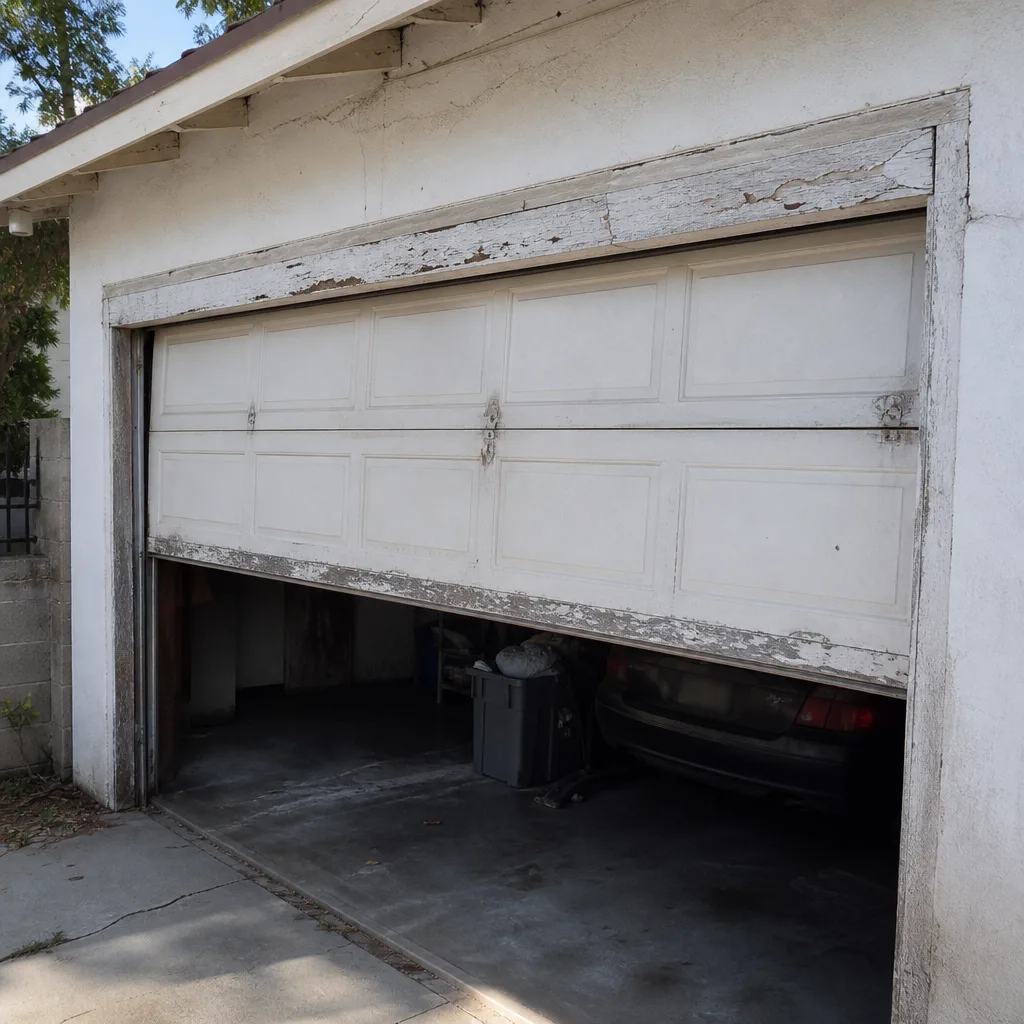 Before
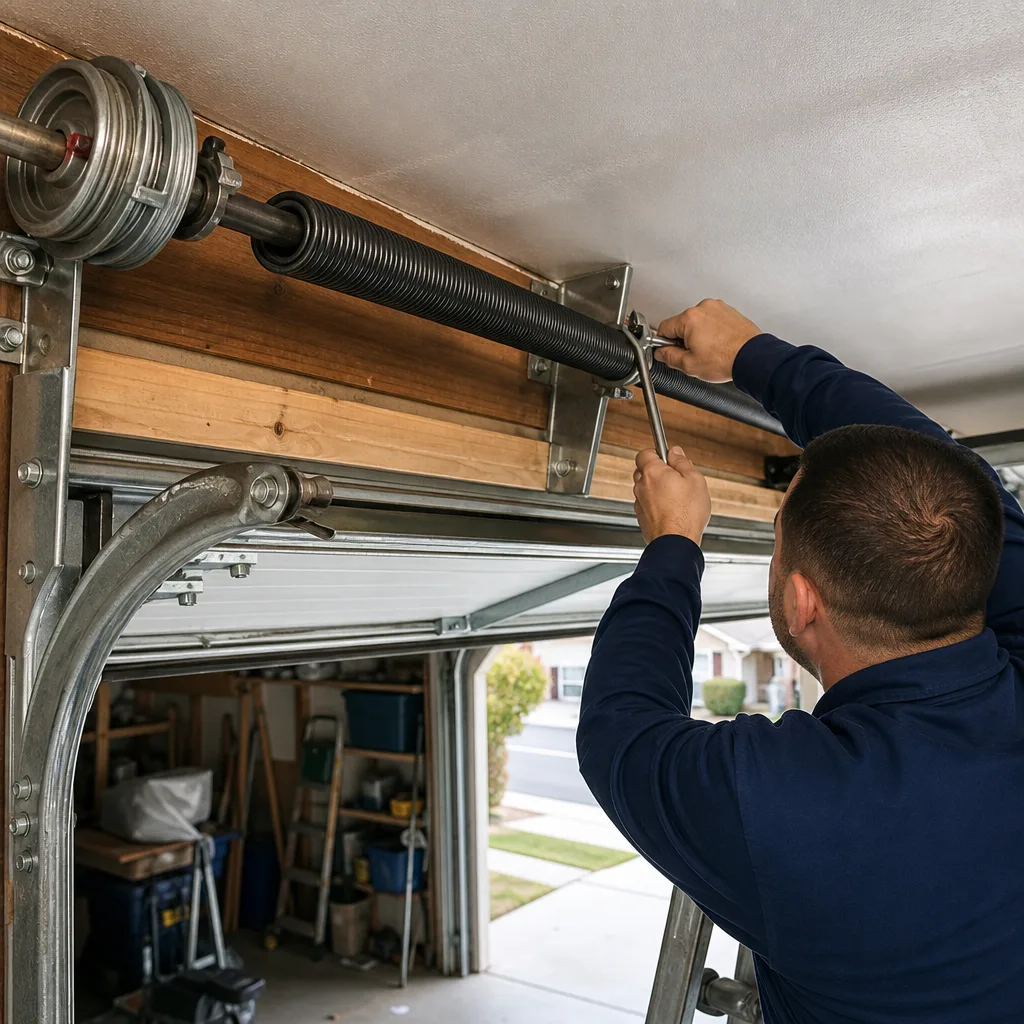 After
AfterDIY vs Professional Garage Door: The Van Nuys Homeowner’s Decision Guide
Every garage door in Van Nuys has a component that stores enough energy to crush bone. It’s not the motor. It’s not the tracks. It’s the torsion spring mounted above the door, and on a standard two-car door it holds between 100 and 150 foot-pounds of rotational energy, comparable to a compressed automobile jack spring. The injury pattern from improper release isn’t a cut or bruise. It’s a crush fracture. This guide exists because the real decision isn’t whether you’re handy enough. It’s whether the component you’re about to touch can store lethal force. We’ll walk through which jobs are genuinely safe for a competent homeowner, which jobs never are, what the parts actually cost versus hiring a pro, and what DIY work looks like when a technician encounters it later. For a full maintenance checklist for Van Nuys homeowners, see our companion guide.
Quick Answer
DIY garage door work in Van Nuys is appropriate for weatherseal replacement, panel painting, lubrication, sensor realignment, and remote reprogramming, jobs that involve no stored mechanical energy. Professional service is non-negotiable for torsion spring replacement, cable work, drum adjustment, track realignment, and opener motor swaps, because these components remain under tension or load even when the door is fully open, and a failed release can cause crush fractures, lacerations from snapped cables, or a free-falling door. The cost of professional repair is almost always less than the medical deductible for a hand injury.
Table of Contents
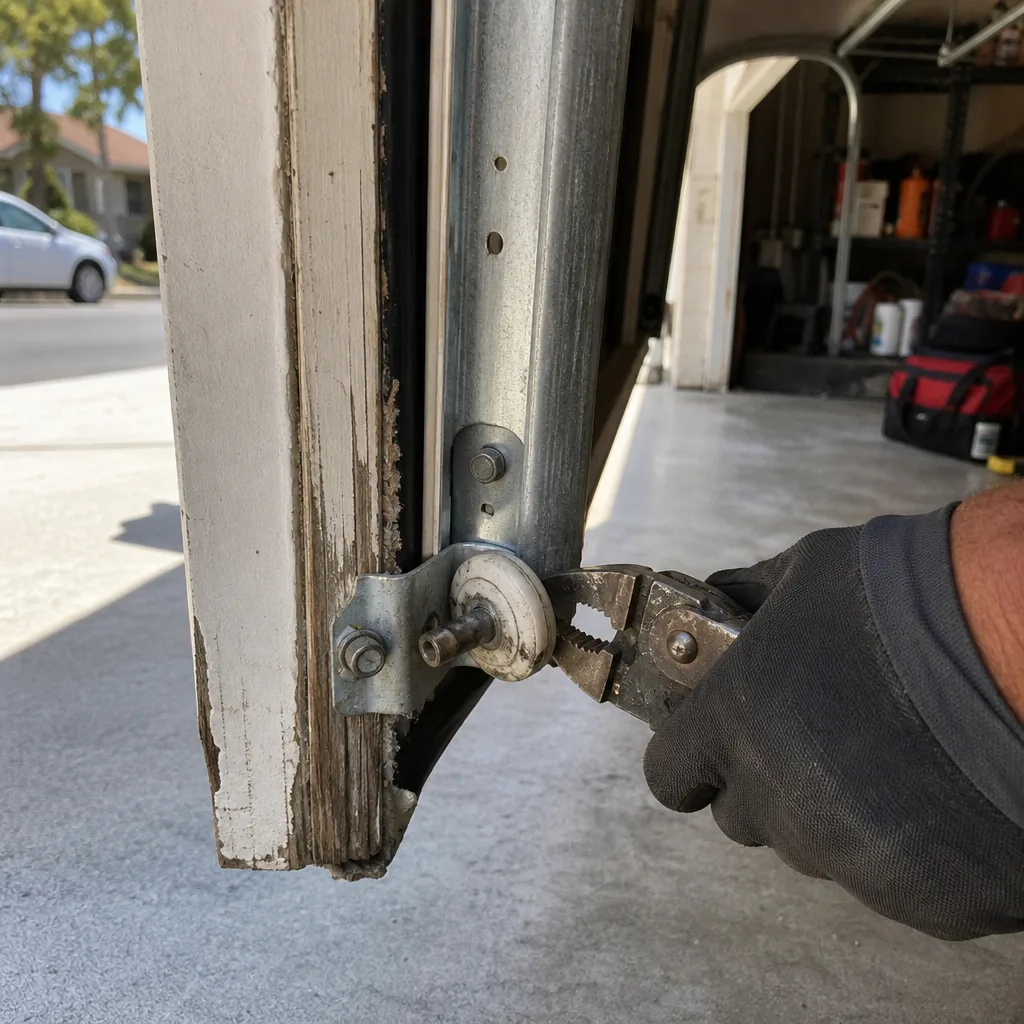
- The Binary Task List: What’s Safe, What’s Not, and the Mechanical Reason Why
- Who Actually Gets Hurt: The Injury Data Behind Spring Work
- The Honest Savings Calculation: Part Cost vs. Full-Service Cost
- What Failed DIY Repairs Look Like When We Arrive
- The Documentation Gap: Insurance, Home Warranty, and Resale Implications
- Why Van Nuys Specifically Makes Garage Door Maintenance Different
- What a Written-Price-First Company Actually Delivers
- Common Mistakes to Avoid
- When to Call a Professional
- Frequently Asked Questions
- The Bottom Line
BeforeAfterThe Binary Task List: What’s Safe, What’s Not, and the Mechanical Reason Why
The DIY-versus-professional question for garage doors isn’t about skill level. It’s about which specific components store lethal amounts of potential energy. That answer is binary. Torsion springs and cables are not a competence gradient. They’re a categorical boundary. A homeowner who rebuilds motorcycle engines in a Sylmar garage should not touch a torsion spring. A homeowner who has never held a socket wrench can replace weatherseal in 20 minutes. The dividing line is not talent. It’s stored energy.
DIY-Appropriate Tasks (No Stored Energy, No Tension)
These five jobs involve components that are not under spring tension or cable load when the door is in the fully open position. They require basic tools and basic spatial awareness. The worst realistic outcome is a misaligned part that a professional can correct in one visit.
- Weatherseal replacement. The rubber strip along the bottom of the door degrades in Van Nuys heat, especially on west-facing doors that catch afternoon sun for five months straight. The old seal slides out of its aluminum retainer, the new one slides in. No tension is involved anywhere in the system. Cost: $20 to $60 for a 16-foot seal. Time: 30 minutes.
- Panel painting. Steel doors with cosmetic rust or fading can be scuffed, primed, and painted with exterior-grade acrylic. This is surface work. You are never near the spring assembly, cables, or drums. The door stays in place, resting on the horizontal track, while you work panel by panel.
- Lubrication. White lithium grease on the hinges, rollers, and bearing plates, and a silicone-based spray on the torsion spring itself, reduces noise and extends roller life. The key rule: never use WD-40 on any garage door component. It strips the existing lubricant and accelerates wear. This is a five-minute quarterly task.
- Sensor realignment. The photo-eye sensors near the floor on either side of the door occasionally get knocked out of alignment by a bike, a trash can, or a wandering recycling bin. If the door reverses immediately when closing and both sensor lights are blinking, the fix is usually loosening a wing nut and aiming the sensor back at its partner until the light goes solid. This requires no tools beyond a Phillips screwdriver and does not bring you near any loaded component.
- Remote reprogramming. When a LiftMaster or Craftsman remote stops working and the wall button still operates the door, the problem is usually a dead battery or a lost pairing. Most openers from the last 15 years have a learn button on the motor unit. Hold it, press the remote, done. This is electronics, not mechanics.
Professional-Only Tasks (Stored Energy or Loaded Component)
These five jobs involve components that remain under tension or load regardless of door position. The danger is not the tool you’re using. It’s the stored energy that releases suddenly and unpredictably when the wrong fastener is loosened.
- Torsion spring replacement. The spring above the door holds 100 to 150 foot-pounds of rotational energy when the door is closed, and a meaningful fraction of that when open. Releasing it requires winding bars, a specific winding sequence, and an understanding of how many quarter-turns the spring requires for the door’s weight and cable drum size. One slip with a screwdriver or an improvised bar, and the energy releases through whatever is holding the bar, which is usually a hand or a face. This is the categorical boundary.
- Extension spring replacement. Older doors use springs along the horizontal tracks instead of above the opening. These are under linear tension, not rotational tension, which sounds gentler until you understand that a snapped extension spring becomes a projectile moving at speeds that can break bones or puncture a car door. The safety cable that should run through the spring center is often missing or rusted out on Van Nuys homes built before 1990.
- Cable replacement. The lifting cables that run from the bottom brackets up to the cable drums are load-bearing at all times. They hold the door’s full weight, typically 150 to 250 pounds for a standard two-car steel door. When one snaps, the other cable keeps partial tension, and the door can shift violently in the track. A cable that looks frayed is a fracture waiting to happen, and replacing it requires releasing the spring tension first.
- Drum adjustment. The cable drums at either end of the torsion shaft control how evenly the door rises. When a drum slips or is set incorrectly, the door lifts crooked, which cascades into roller damage, track wear, and eventual cable derailment. Adjusting the drums requires the spring to be unwound, the cables reset, and the spring wound back to the correct tension. This is not a one-wrench job.
- Opener motor swap. Replacing the logic board or the entire motor unit involves line-voltage wiring, which means the breaker must be off and the load understood. It also involves setting the limit switches correctly, because an improperly set limit switch will drive the door past its normal stopping point and can pull the cables off the drums, which then requires spring unwinding to correct. This is a $200 mistake waiting for anyone who skips the limit-switch calibration step.
The pattern is consistent: DIY-appropriate jobs are cosmetic, electronic, or involve components that sit idle while you work. Professional-only jobs involve springs, cables, drums, or line voltage. If you have to ask which category a job falls into, it belongs in the professional column. Our Garage Door Repair in Van Nuys page walks through what a professional repair visit actually includes.
Who Actually Gets Hurt: The Injury Data Behind Spring Work
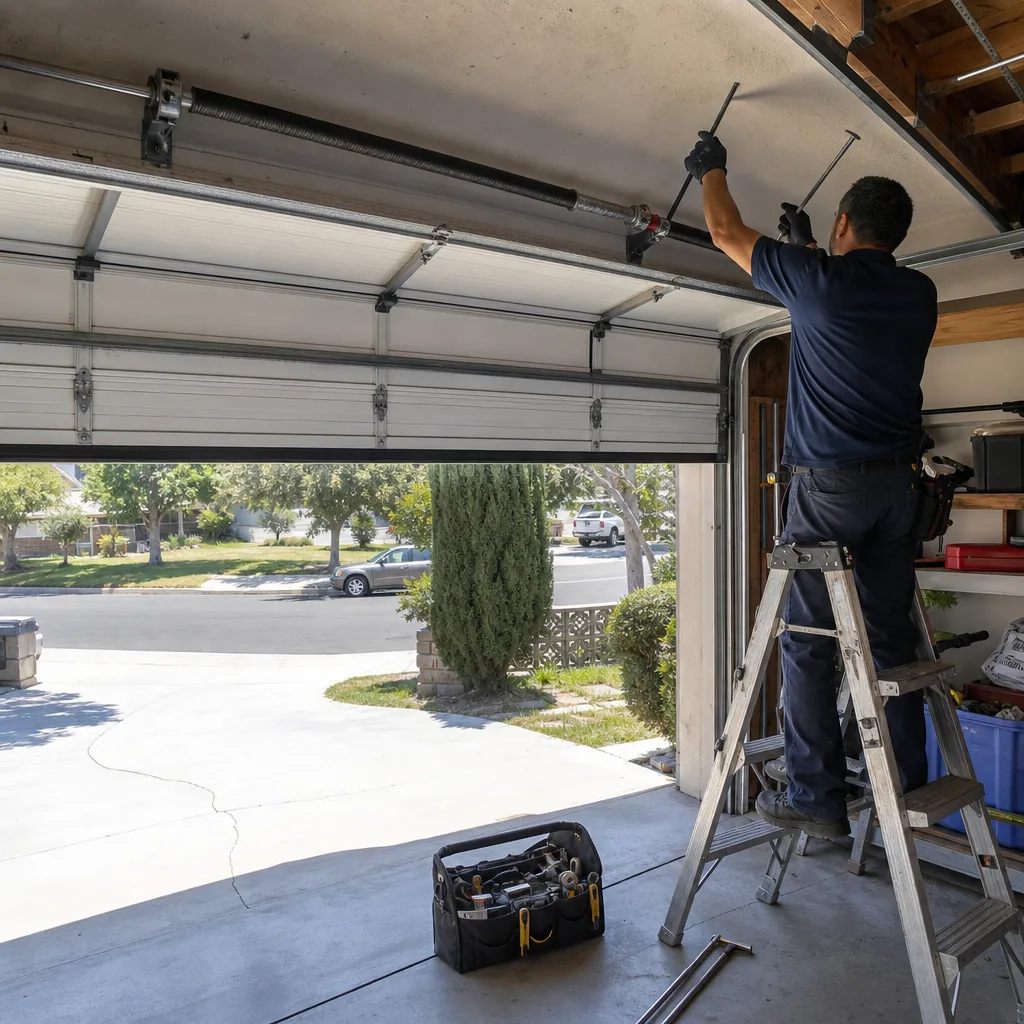
The actuarial case against DIY spring work is not built on horror stories. It’s built on who shows up in emergency rooms, and the answer surprises most homeowners. It’s not first-timers. It’s experienced people.
A study published in the Journal of Trauma examined garage door-related injuries over a multi-year period and found that the average injured person was a male between 25 and 60 who had performed mechanical work before. Many had done the exact repair they were attempting before, or a similar one on a different machine. Experience did not reduce the injury rate on stored-energy components. In some categories, it increased it, because experienced people were more likely to attempt the repair without reading instructions and more likely to improvise tools instead of using the correct winding bars.
California workers’ compensation data tells the same story from the professional side. Garage door technicians who perform spring replacements daily still record injuries at a measurable rate, and those are people with training, supervision, and the correct tools. The amateur attempting the same repair with a pair of screwdrivers and a YouTube video is operating at a deficit on every axis: knowledge, equipment, and a second pair of hands.
The specific injury pattern matters because it dispels the “I’ll be careful” fallacy. Torsion spring injuries are not lacerations that heal after a few stitches. They’re crush fractures to the hand, wrist, and forearm. Bone fragments. Tendon avulsions. In the worst cases, degloving injuries that require multiple reconstructive surgeries. The medical cost of a crush fracture starts around $7,500 to $15,000 for the uninsured, and a hand surgery can exceed $30,000 in Los Angeles County. The cost of professional spring replacement, which we’ll get to below, is almost always below $500.
The other data point nobody mentions: garage door springs fail at a predictable rate based on cycles, not years. A standard spring from Wayne Dalton or Raynor is rated for 10,000 cycles, which translates to roughly 7 to 10 years for a door that opens twice daily. When the spring fails, it almost always fails while the door is closed and the spring is at maximum tension. The homeowner hears a sound like a gunshot in the garage, and the door becomes immovable. That’s the moment the DIY temptation peaks, because the door is stuck and you need it fixed. It’s also the moment the stored energy is at its maximum. This is the worst possible time to experiment.
The Honest Savings Calculation: Part Cost vs. Full-Service Cost
Homeowners attempt DIY garage door repairs for one reason: the perceived savings. The logic goes, “The part costs $40 on Amazon, so a $350 service call is a ripoff.” The flaw in that logic is that the part cost is real but the comparison is incomplete. Here’s the honest math on the four most common DIY-attempted jobs, using current Van Nuys market pricing.
| Repair | Part Cost (DIY) | Full-Service Cost (Professional) | Actual Savings | What the Savings Buys You |
|---|---|---|---|---|
| Torsion spring replacement (pair) | $45-$90 | $280-$450 | $190-$360 | ER copay, if you have good insurance |
| Lifting cable replacement (pair) | $30-$60 | $180-$300 | $120-$240 | Half the cost of fixing a misaligned track |
| Sensor replacement | $25-$45 | $110-$190 | $65-$145 | A little more than a tank of gas |
| Weatherseal replacement | $20-$60 | $90-$150 | $30-$90 | About what you saved is fair |
Look at the first row. The savings on a DIY torsion spring replacement is $190 to $360. That’s real money, and we won’t pretend otherwise. But it’s real money saved only if the repair goes perfectly. If the winding bar slips and you’re in the ER with a hand injury, the savings is negative $7,000 before lunch. Even setting aside catastrophic injury, consider the failure modes that don’t send you to the hospital: an improperly wound spring produces a door that slams shut instead of closing gently, which then damages the door panels, the hinges, and eventually the opener. That’s a $400 mistake layered on top of the original problem. We’ve seen this exact sequence in Van Nuys more times than we can count.
The second and third rows are the ones where DIY makes the most sense on paper. Cables and sensors are cheaper to DIY, and the savings is meaningful. The problem is that cable replacement is not a standalone job. Cables attach to the bottom brackets and wrap around the drums, and to replace them properly you release spring tension first. There is no safe way to do a cable-only replacement without touching the spring system. So the real DIY cost of cable replacement is the cable plus the risk of spring work. Sensor replacement, by contrast, is genuinely DIY-appropriate, which is why it’s in our safe list above.
The fourth row, weatherseal, is the one DIY job where the savings honestly justifies the effort for most people. $30 to $90 saved for 30 minutes of work. That’s a reasonable hourly rate. If every garage door job carried the same risk profile as weatherseal replacement, we’d tell you to do them all yourself. But that’s not how the door is built.
What Failed DIY Repairs Look Like When We Arrive
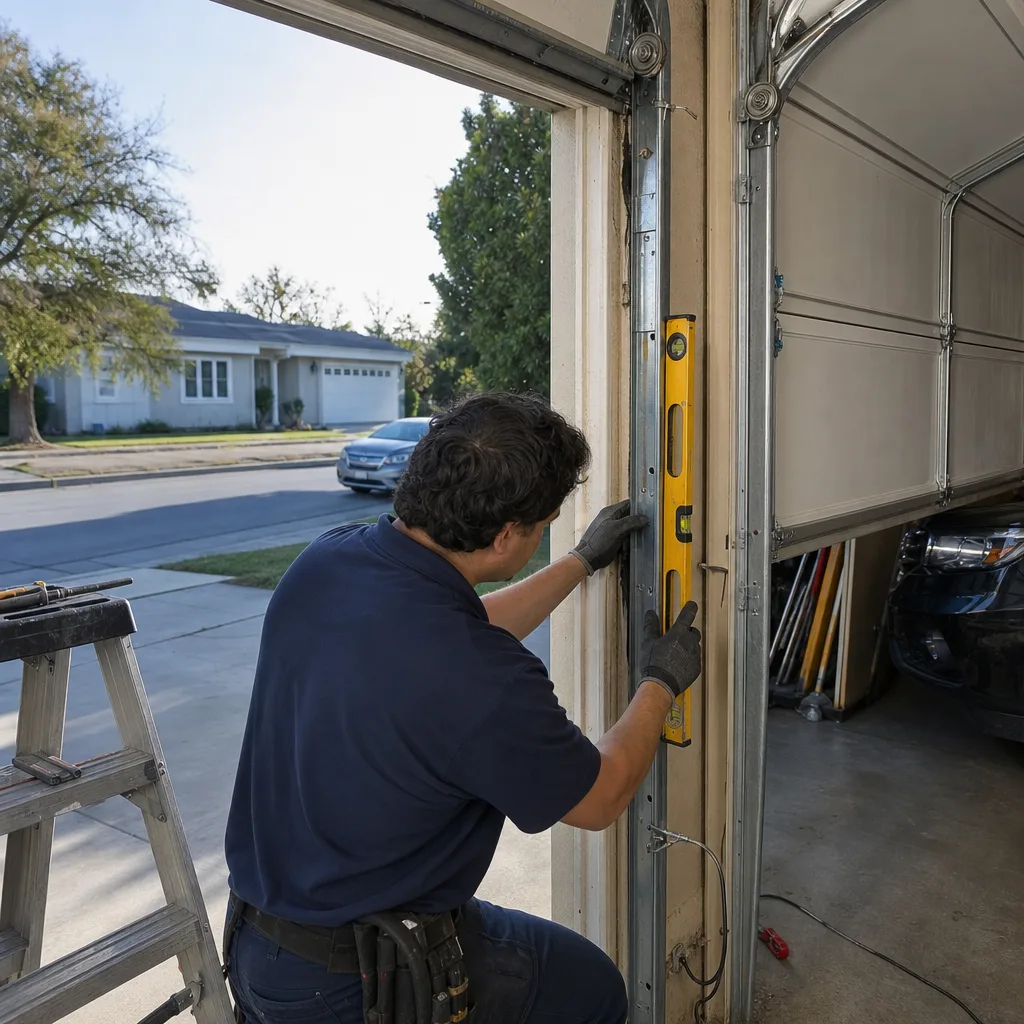
We’ve been repairing garage doors in Van Nuys since 2015, which means we’ve seen thousands of doors. A meaningful percentage of those doors had been worked on by an amateur before we arrived. The failure signatures are consistent, and they’re worth describing in detail because a YouTube video will never show you what a spring wound by feel looks like six months later.
The Improperly Wound Torsion Spring
A torsion spring that was wound by someone counting “a bunch of turns” instead of using the door-weight-and-drum-size calculation has a specific failure pattern. The door opens, but it feels heavy at the bottom and launches upward at the top. Or it opens fine but slams shut, because the spring has too little tension to counterbalance the door’s weight on the way down. The homeowner usually describes this as “the door feels off.” What we find when we measure is a spring wound 2 to 5 quarter-turns short or long. The fix is unwinding and rewinding, which means doing the job a second time. The first DIY attempt didn’t save money. It added a correction fee.
The Incorrectly Clamped Cable Drum
When an amateur replaces a cable without setting the drum properly, the door lifts with one side slightly higher than the other. It’s subtle at first, a half-inch gap between the door and the floor on the right side at full open. Over time, that half-inch becomes an inch, then the rollers start binding in the track, then the track itself bends from the uneven load. By the time we’re called, the repair is no longer a cable replacement. It’s a cable replacement plus a track realignment plus roller replacement. The original $180 to $300 professional job has become a $500 to $700 corrective repair.
The “Adjusted” Sensor That Never Stops Blinking
This one is more benign, but it’s instructive. Someone read that dirty sensors cause the door to reverse, so they wiped the lenses and adjusted the alignment by eyeballing it. The sensor lights still blink. They call us. What they missed is that the sensors on a LiftMaster or Chamberlain opener need to be aligned well enough that the sending unit’s beam hits the receiving unit dead center, which is harder to eyeball than it sounds when the units are mounted on floor tracks that have been bent slightly out of parallel by years of cars driving too close to the left side. This job is on our safe list, so this isn’t a warning. It’s an example of how a genuinely simple job still has failure modes that aren’t obvious until someone shows you.
The consistent theme: DIY failures almost never announce themselves immediately. The door works, or mostly works, and the real cost arrives months later as accelerated wear or a complete failure. The amateur saved $200 and bought a $600 problem that lands on a Wednesday night when the car is inside the garage and the door won’t open. For homeowners researching Garage Door Installation in Van Nuys after a failed repair, the pattern is familiar.
The Documentation Gap: Insurance, Home Warranty, and Resale Implications
Here’s the part nobody includes in a DIY tutorial: when you repair your own garage door, you become the manufacturer, the installer, and the warrantor. That has consequences in three areas that matter to Van Nuys homeowners.
Homeowner’s Insurance
If a self-repaired garage door fails and causes property damage, say a torsion spring releases and sends a winding bar through the drywall, or a cable snaps and lets the door fall on a car, the insurance adjuster’s first question is who performed the last repair. If the answer is “I did,” the claim enters a gray zone. Many policies cover sudden and accidental damage but exclude damage resulting from faulty workmanship, and self-performed work is workmanship. A professional repair comes with a paper trail: the invoice, the technician’s notes, and, in our case, a documented photo record of what was found and what was done. That paper trail is exactly what an adjuster needs to close a claim in your favor. Without it, you’re arguing from memory.
Home Warranty Coverage
Home warranty companies in California maintain detailed records of work performed on covered systems. If your garage door opener fails and the warranty company’s adjuster sees evidence of prior self-repair, the claim can be denied on the grounds of unauthorized modification or improper maintenance. This is not hypothetical. It’s a standard exclusion in most warranty contracts. A professional repair record, by contrast, is exactly what the warranty company wants to see, because it shifts liability from them to the repair company if the repair fails.
Resale Disclosure Obligations
California Civil Code requires sellers to disclose known material defects affecting the property. A garage door that was self-repaired and later exhibits issues is a disclosure item. A garage door serviced by a professional with a documented record is a selling point. When you sell a Van Nuys home, the buyer’s inspector will look at the garage door, and if they see evidence of amateur work, such as a spring wound with visible set-screw marks from an improvised bar, or a cable drum that’s been scored by a pipe wrench, it becomes a negotiation item. The $300 you saved on DIY repair can cost you $1,500 at the closing table. The professional paper trail is the difference between “garage door recently serviced” and “garage door needs work, seller to credit buyer.”
The deeper point: a professional repair buys more than the thirty minutes of labor. It buys a documented record of what was found and what was done, which is the thing you can’t create for yourself after the fact. Clause 4 of The Haven Standard exists specifically because of this. The technician photographs the failed component before quoting a replacement, and you receive that photo record when the job is done. It’s not a sales gimmick. It’s an evidence file for any future insurance, warranty, or disclosure conversation.
Why Van Nuys Specifically Makes Garage Door Maintenance Different
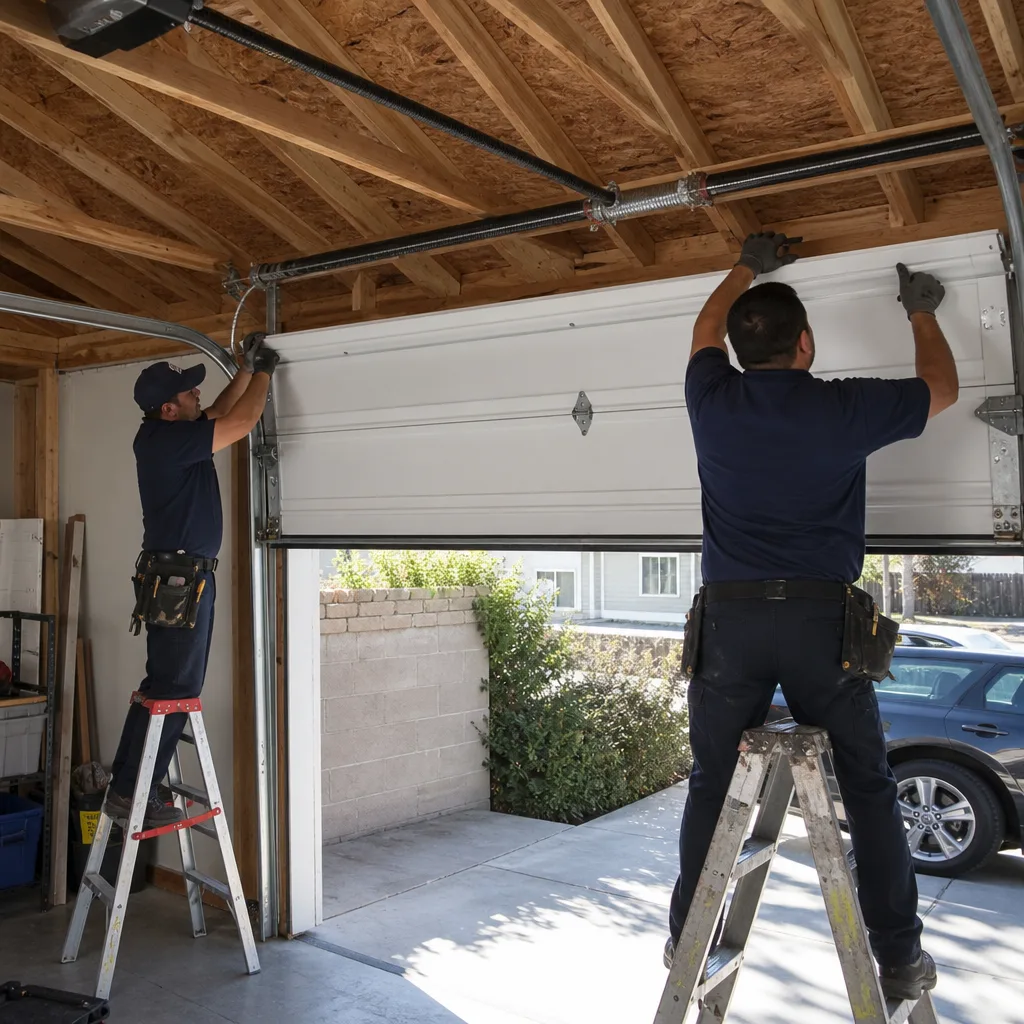
Van Nuys has a set of environmental and structural conditions that make garage door maintenance more demanding than in coastal LA or the cooler parts of the Valley. Understanding these conditions helps homeowners see why some doors fail earlier and what preventive work is genuinely worth doing.
First, the temperature range. Van Nuys regularly sees summer highs above 100 degrees, and the interior of an uninsulated garage can hit 120 on an August afternoon. That heat accelerates two things: the degradation of rubber weatherseals, which crack and lose flexibility after three to five Valley summers, and the expansion and contraction cycles of steel door panels, which stress the hinge connections over time. Homeowners on the east side of Van Nuys, in neighborhoods like Valley Glen, face a particular issue: morning sun heats the door rapidly after a cool night, and the thermal expansion cycle repeats daily, which is harder on panels than a steady temperature.
Second, the dust. Van Nuys sits in the San Fernando Valley’s wind corridor, and the fine dust that blows through in the fall and spring works its way into every mechanical joint on a garage door: hinges, rollers, bearings, and the torsion spring’s contact points. That dust acts as a mild abrasive, accelerating roller wear and contaminating lubricant. The standard recommendation from manufacturers like Wayne Dalton and Raynor is quarterly lubrication, but in Van Nuys, doors that are lubricated twice a year show measurably more roller wear than doors in coastal LA that get the same treatment. This is not a reason to panic. It’s a reason to be consistent.
Third, the housing stock. A large percentage of Van Nuys homes were built between 1950 and 1980, and many still have their original garage door hardware or hardware that was replaced once in the 1990s. Those doors were built for lighter, wooden panels, and many have been retrofitted with heavier steel panels without upgrading the spring system to match. The result is a spring that’s under-spec’d for the door it’s lifting, which shortens spring life and creates the “heavy door” feeling that homeowners often mistake for a failing opener. If your Van Nuys home has a Clopay or Amarr steel door on a vintage track system, the spring may have been correct for the original door and wrong for the one you have now.
Fourth, the neighborhood layout. Van Nuys is dense, with narrow lots and shared driveway easements in the older sections. A garage door that fails in a shared driveway situation is not just an inconvenience. It blocks a neighbor’s access, which makes it an emergency with social consequences. The same door failure on a rural property in Santa Clarita is a minor annoyance. In Van Nuys, it’s a call to your neighbor and a scramble to find same-day service. For this reason, we recommend that Van Nuys homeowners pay more attention to spring wear indicators than the average homeowner. A door that creaks at one specific point in its travel, or a door that feels suddenly heavier than last month, is giving you warning signs that are cheaper to address before the failure than after. Our Servo Garage Doors Van Nuys home page has more on the local service area and what a typical repair visit looks like.
What a Written-Price-First Company Actually Delivers
If you’ve decided a job belongs in the professional column, the next decision is which professional. And this is where the garage door industry earns its bad reputation. The standard playbook is a bait-and-switch: a low service fee to get a tech in the door, then a fuzzy verbal quote, then a “parts are more than I thought” phone call, then a final invoice that’s 40% higher than the one you approved. Van Nuys homeowners in their 30s and 40s have learned to smell this pattern from three blocks away.
The alternative is a written-price-first company. The rule is simple, and it’s Clause 1 of The Haven Standard: a flat, written price and a written scope are delivered before any work starts. Not a range. Not an estimate that’s subject to change. A price. If the job takes ten minutes longer than expected, the price doesn’t move. If a part costs more than the tech assumed, the tech absorbs it. The homeowner sees the failure, agrees to the price, and the work proceeds with no surprises.
This sounds like a minor procedural difference, but it changes the entire interaction. When the price is written and fixed before work starts, the technician’s incentive shifts from finding things to upsell to performing the repair correctly the first time, because Clause 4 requires a documented photo record of the failed component before any quote, and the 365-Day Done Right Promise means a repair that isn’t right gets made right at no additional cost. The documentation isn’t theater. It’s the mechanism that makes the written price enforceable. You see what we saw. You know what you approved. The photo record is the paper trail.
In our experience, which now spans 18,000 garage doors made right since 2015, the homeowners who choose a written-price company over a fuzzy-quote company are not choosing based on price alone. They’re choosing based on the absence of a particular fear: the fear of standing in the driveway at 7 p.m. with a garage door that won’t close and a technician who has just announced that the “real” cost is $300 more than the number he mentioned on the phone. That fear is legitimate, because it describes the standard industry interaction. The fix is structural, not attitudinal. It’s a written price, written scope, and a photo record, every time. No exceptions.
Common Mistakes to Avoid
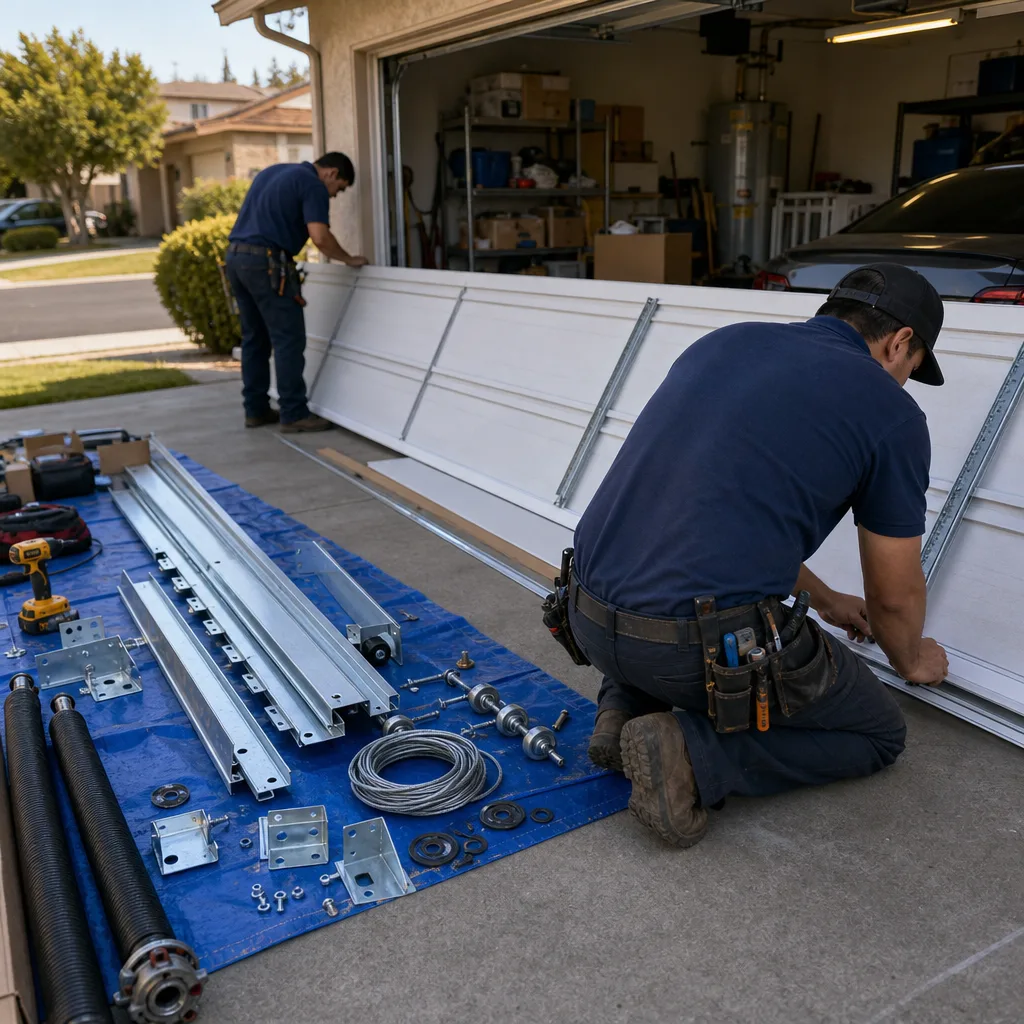
- Using the wrong tool for spring work. A screwdriver or a steel rod is not a winding bar. Winding bars are sized to fit the winding cone’s holes precisely, and an undersized or oversized bar will slip under load. In Van Nuys, we’ve recovered mangled screwdrivers from the sheetrock behind doors where the bar slipped and launched. When the spring lets go, it releases through the tool, and a screwdriver has no handle geometry for that.
- Lubricating with WD-40. This is the most common maintenance mistake we see across the Valley. WD-40 is a solvent, not a lubricant, on garage door components. It strips the grease from hinges and rollers, then evaporates, leaving the metal dry and noisier than before. Use white lithium grease on metal-to-metal contacts and a silicone spray on the torsion spring.
- “Fixing” a crooked door by adjusting the track bolts. A door that lifts unevenly is almost always a cable or drum issue, not a track issue. Loosening the track bolts and pushing the track into a new position just bends the track over time and masks the real problem. The uneven lift will persist and worsen, and now the track is out of square too.
- Replacing a spring with a mismatched cycle rating. Not all torsion springs are the same. A 10,000-cycle spring costs a bit more than a 5,000-cycle spring, and the difference is meaningful: the 5,000-cycle spring on a door that cycles four times a day will fail in about three years, while the 10,000-cycle spring lasts seven to ten. The cheap part from a parts website often has no cycle rating marked, which means you’re buying blind.
- Disconnecting the opener and expecting the door to be safe to lift manually. Disconnecting the opener removes the motor from the equation, but it does nothing to release the spring tension. The door remains connected to the springs and cables, which is exactly the loaded system that requires caution. A door that’s disconnected from the opener but still under spring tension is no safer to work on than a door that’s connected.
- Skipping the safety cable on extension spring doors. If your Van Nuys home has an older door with extension springs along the horizontal tracks, the safety cable that runs through each spring is a required safety component. Many of these cables were never installed or have rusted through. A spring without a safety cable is a projectile waiting for a failure event, and the cable itself is a $15 part and a 20-minute install. This is a professional-only job for a reason: reaching the cable requires working near a loaded spring.
When to Call a Professional
Call a professional when the job involves any component under tension or load: torsion springs, extension springs, lifting cables, cable drums, or the track system that carries the door’s weight. Call when you hear a loud bang from the garage, which signals a spring failure. Call when the door lifts unevenly, which signals a cable or drum problem. Call when the door feels suddenly heavier than it did last month, which signals a spring that’s losing tension and will fail soon. And call when you’re not sure which category the job falls into, because the uncertainty itself is the signal. A trained eye sorts the safe from the dangerous in about five minutes, and the sorting is what the service call actually buys. Servo Garage Doors Van Nuys offers free estimates in Van Nuys. Call (213) 418-2520 and a real person answers, 24 hours a day, including holidays. The price you’re quoted is the price you pay, written before work starts, per Clause 1 of The Haven Standard.
Frequently Asked Questions
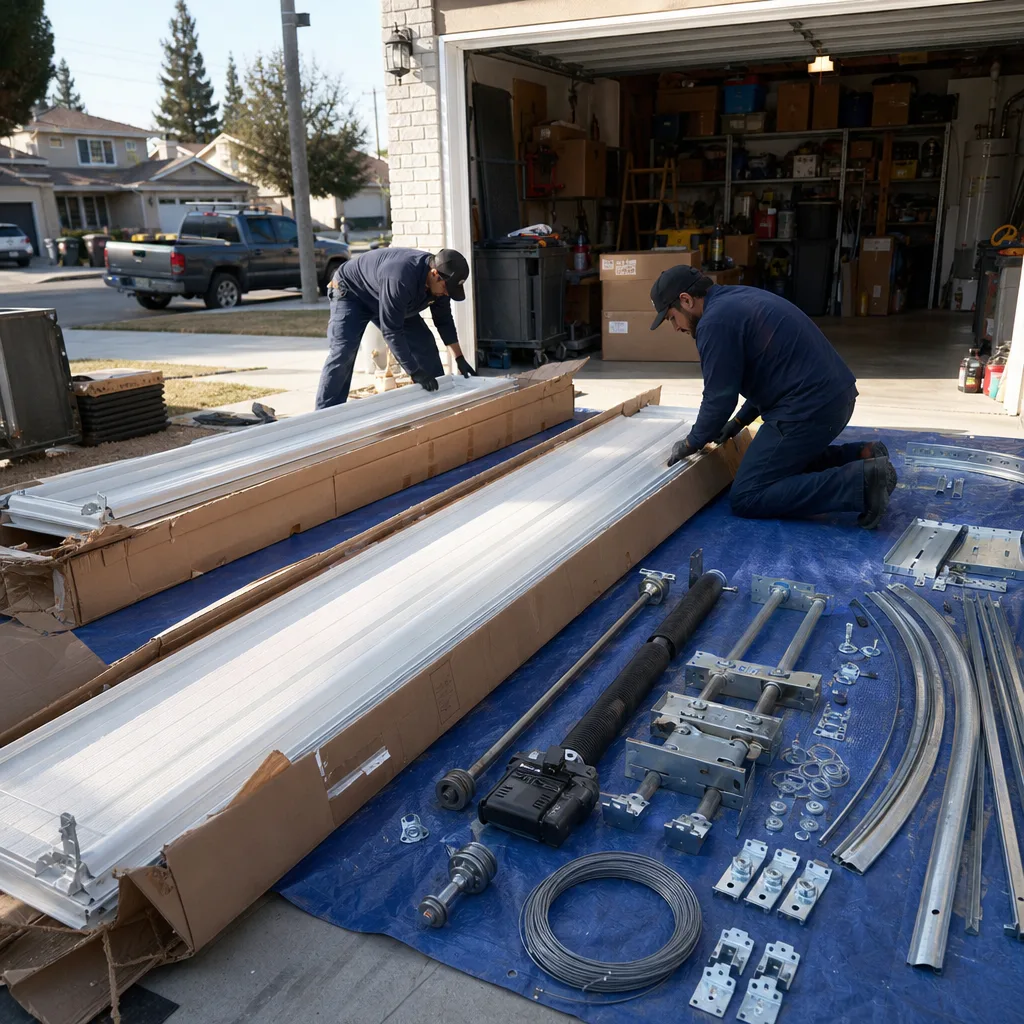
You can, in the same sense that you can rewire your own electrical panel or patch your own roof. The mechanical reality is that a torsion spring under 100 to 150 foot-pounds of rotational energy is a stored-energy hazard that releases through whatever tool you’re holding when the winding cone slips, and the California injury data shows that experience does not reduce the risk on this specific component. The parts cost $45 to $90, and the full-service replacement costs $280 to $450. Call (213) 418-2520 for a written quote before you decide, and compare the number against your medical deductible.
Professional torsion spring replacement in Van Nuys currently runs $280 to $450 for a standard two-car door, including parts, labor, and the full-service warranty. Springs with higher cycle ratings, like the 30,000-cycle spring, run at the higher end of that range. The price is written and fixed before work starts, which means the quote you approve is the invoice you pay.
Weatherseal replacement, panel painting, lubrication with the correct products, photo-eye sensor realignment, and remote reprogramming are all safe DIY jobs because none of them involve components under spring tension or cable load. The dividing line is stored energy: if the part you’re touching can store force that releases suddenly, it’s a professional job. For more guides & resources on garage door care, explore our blog.
The signs are consistent: a door that feels heavier than it did a few months ago, a loud creak or ping at a specific point in the travel, visible gaps in the spring coil, or a door that no longer stays in the open position without the opener holding it. If you see a gap in a torsion spring coil, the spring has already begun to fail and should be replaced within days, not weeks. This is particularly urgent in Van Nuys, where shared driveways in the older neighborhoods mean a failed door blocks more than just your own access.
Most home warranty contracts cover garage door components, but coverage is typically limited to the opener system, and springs and cables are often excluded as “wear items.” Additionally, evidence of prior self-repair can void a warranty claim on grounds of unauthorized modification. If you’ve done DIY work on the door and the warranty company’s inspector sees it, the claim may be denied. A documented professional repair history prevents this. If you have a written estimate from another company, bring the paperwork and we’ll give you a Garage Door Opener Repair & Installation in Van Nuys second opinion at no charge.
Some do, some don’t. Servo Garage Doors Van Nuys provides free estimates, and the estimate is a written price with a written scope, not a ballpark range. The number you approve before work starts is the number on the invoice when the work is done. No trip fees, no diagnostic fees, no “parts adjustment” calls mid-job. That’s Clause 1 of The Haven Standard, and it’s been the operating rule since 2015. Call (213) 418-2520 for an exact quote.
The Bottom Line
The DIY-versus-professional question has a simple answer: it depends on whether the component stores energy. Weatherseal, paint, lubricant, sensors, and remotes are safe for anyone with basic competence. Springs, cables, drums, and tracks are not, and no amount of YouTube research changes the physics. The savings on professional-grade work is real, but it’s dwarfed by the downside of a crush fracture or a door that fails catastrophically months later. In Van Nuys, where the heat accelerates wear, the dust contaminates joints, and the housing stock is aging, the smartest DIY move is the one that keeps you away from the loaded components. For everything else, the professional standard exists in writing. Get the price on paper before work starts. Get the photo record when it’s done. Call (213) 418-2520 and talk to a real person, any hour, any day.
Written by Marcus Deller, Owner at Servo Garage Doors Van Nuys, serving Van Nuys since 2015.