
Last updated September 20, 2026
Full 25-point door and opener safety check with every visit - springs, cables, rollers, tracks, and your LiftMaster or Chamberlain opener included
You get a price before we start. It does not change when the truck arrives.
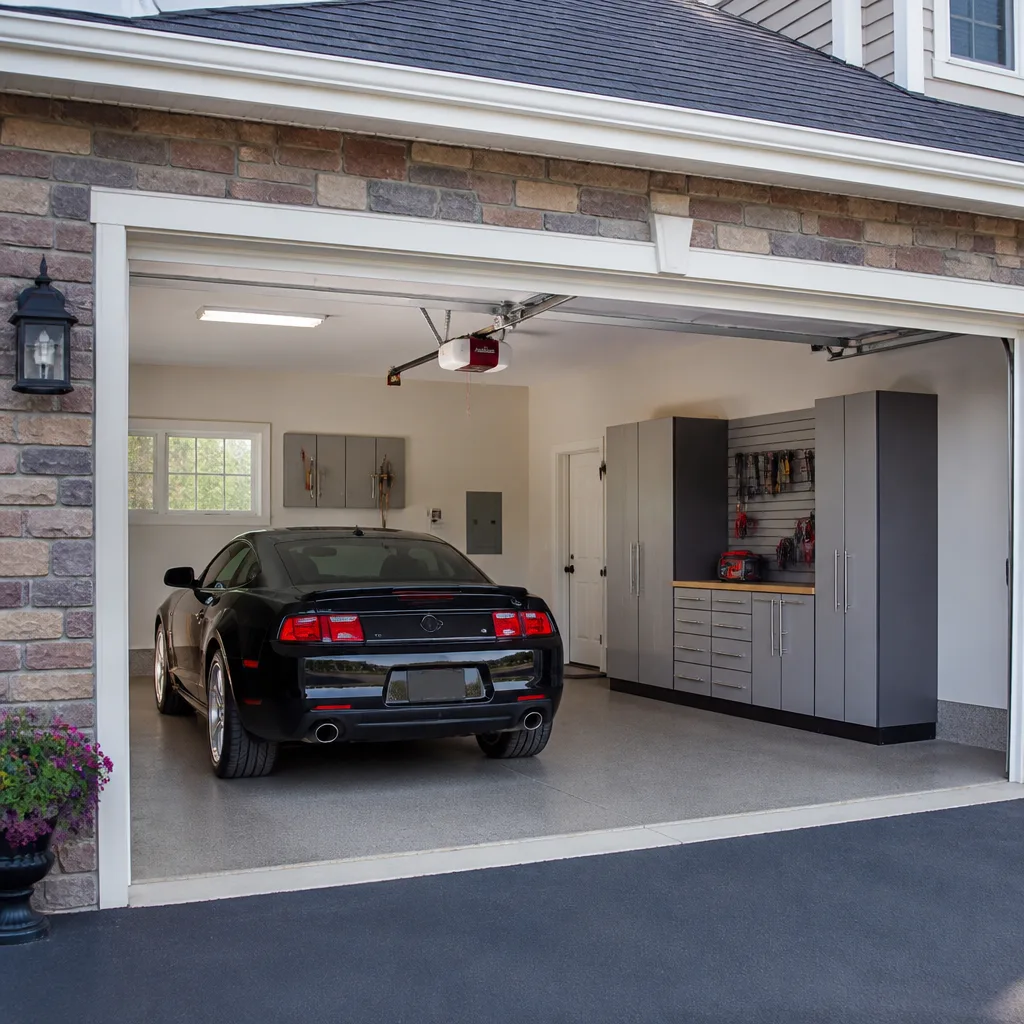
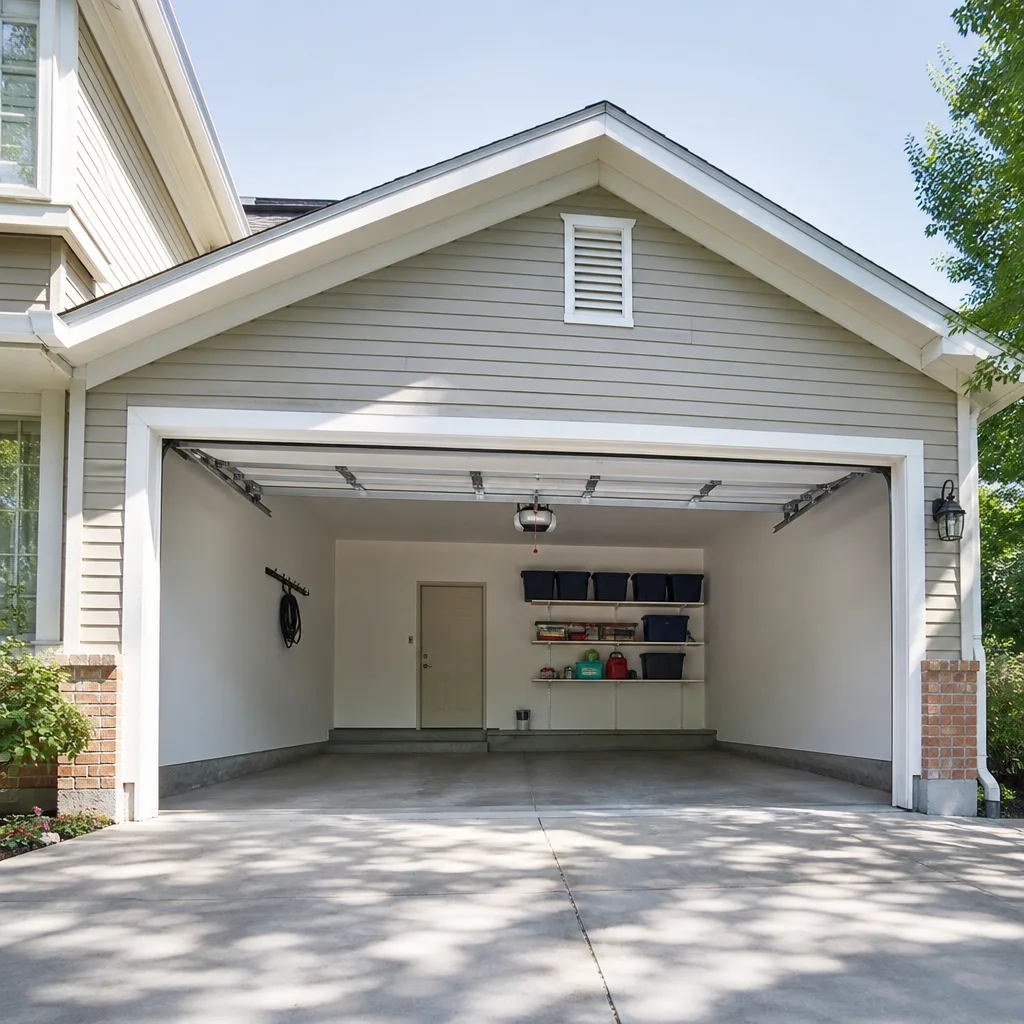
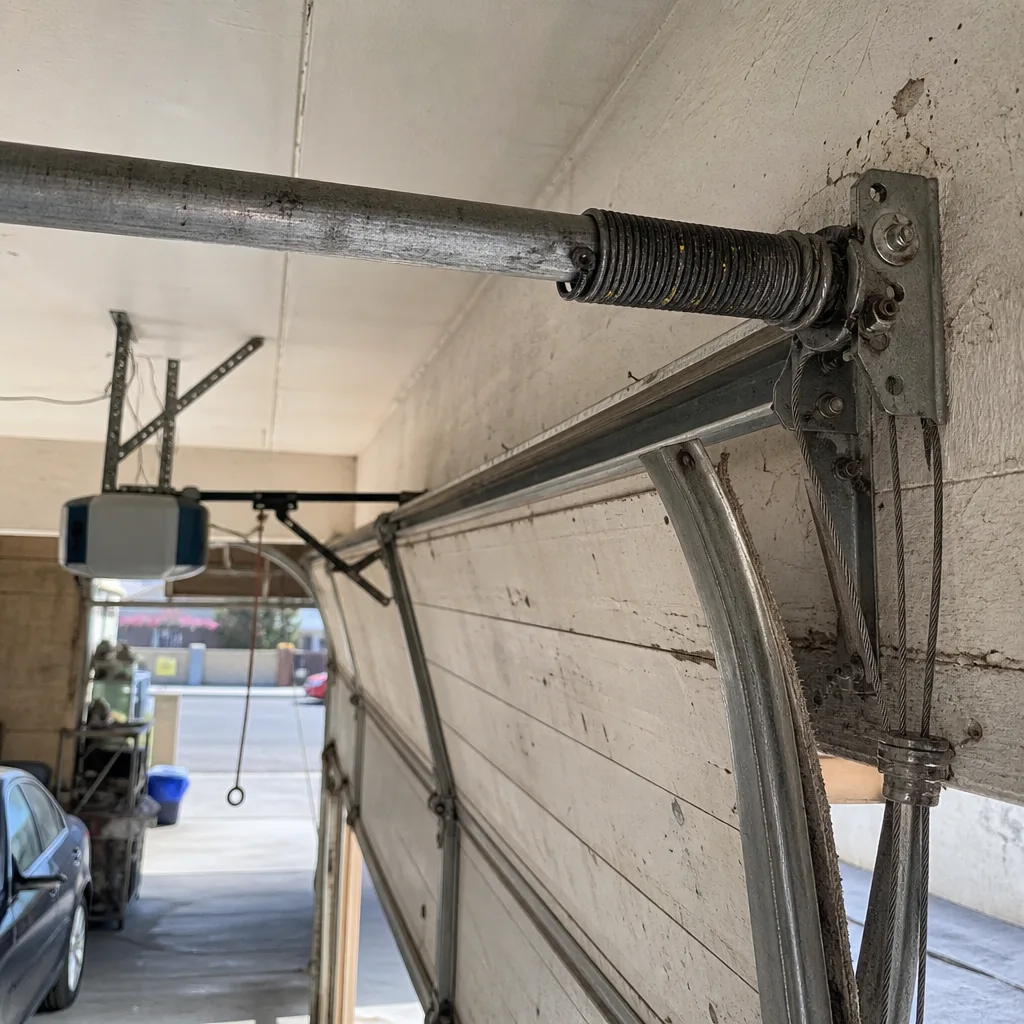 Before
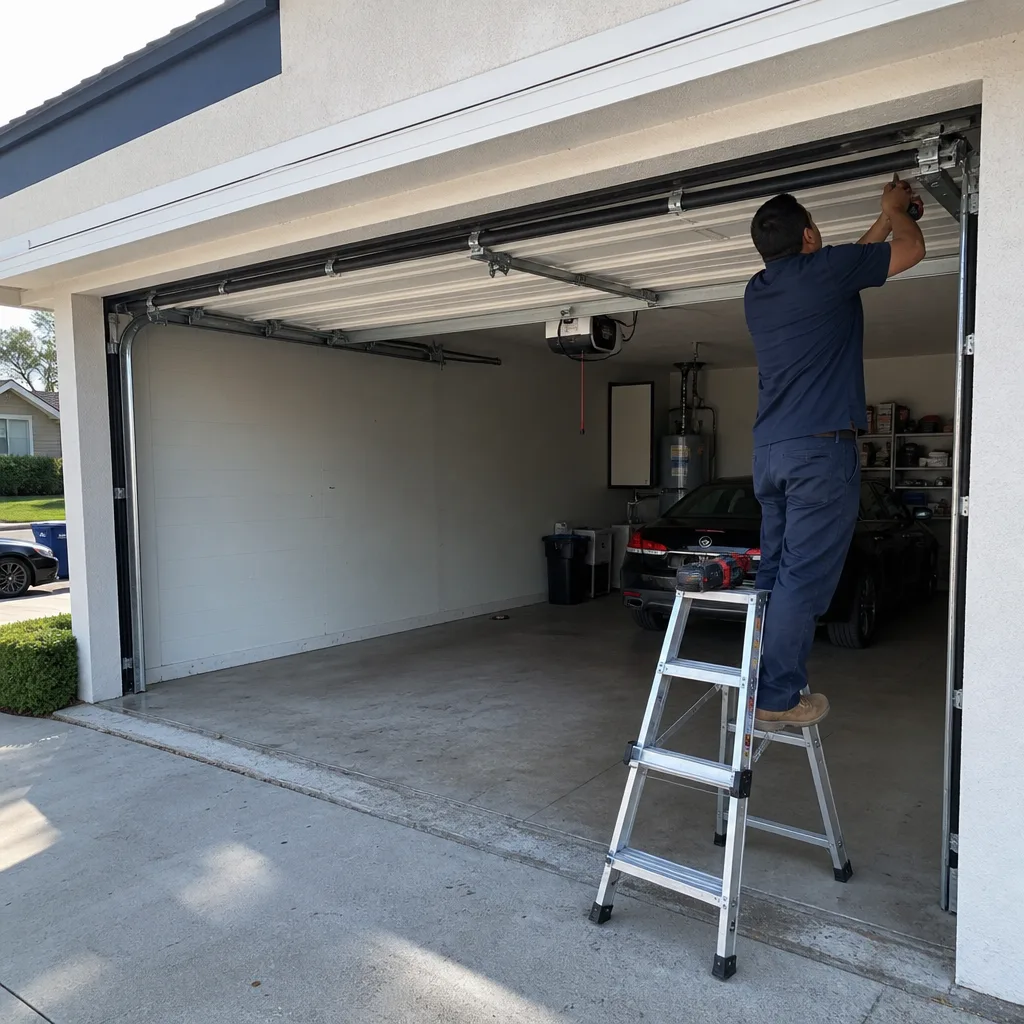 After
After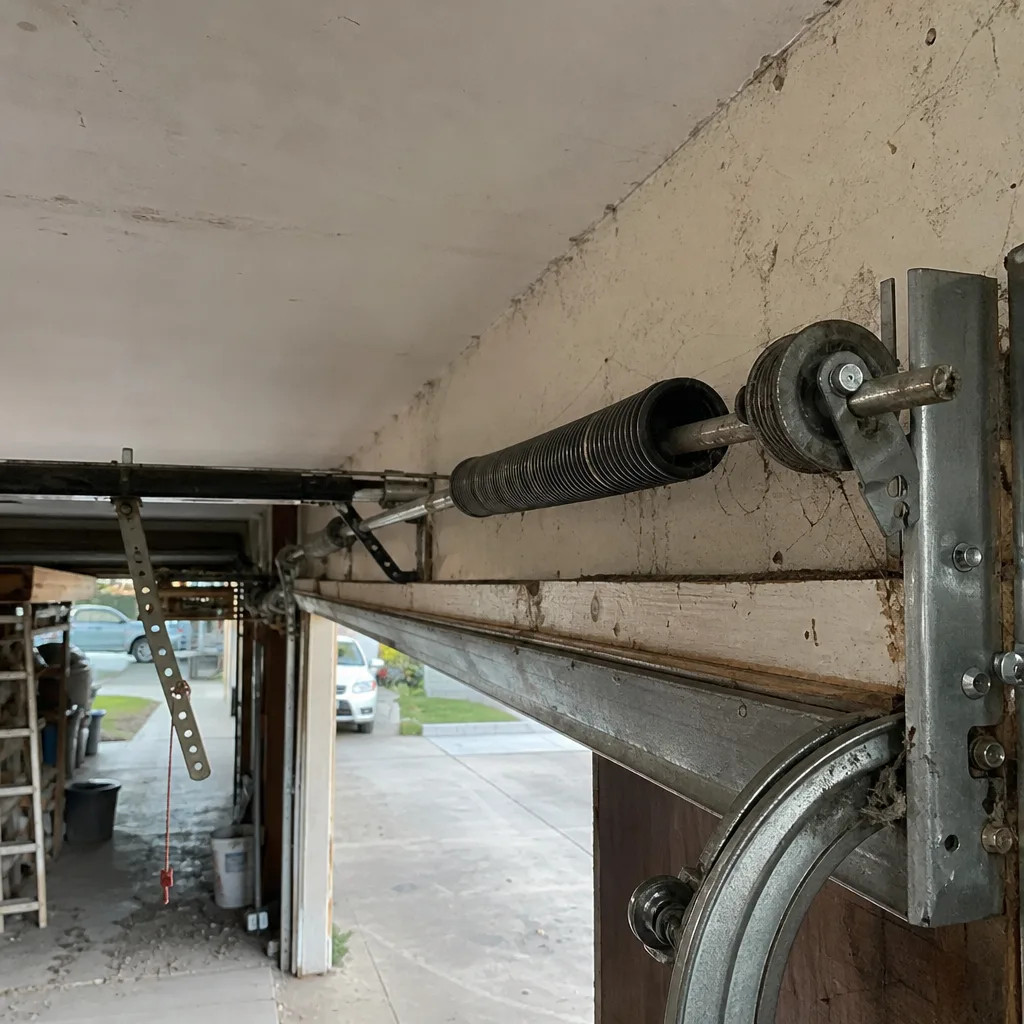 Before
 After
After Before
 After
AfterSeasonal Garage Door Care for Van Nuys: Year-Round Homeowner’s Guide
The Diablo wind events that sweep through the San Fernando Valley each October and November carry more than leaves. They drive a fine, abrasive grit into garage door track channels that wears down nylon rollers faster than eighteen months of normal use. Most seasonal maintenance guides never mention this because they were written for places with actual winters. This Complete Guide to Garage Door in Van Nuys is written for a climate that doesn’t follow the traditional four-season script. You’ll learn what your garage door actually needs here, when it needs it, and what you can safely skip.
Quick Answer
Seasonal garage door care in Van Nuys means adapting to four distinct periods: Pre-Heat (April), Peak Heat (June through September), Wind-Grit (October through November), and Mild (December through March). The two most important tasks are lubricating rollers and hinges before summer heat arrives, and cleaning track channels after Diablo wind events in the fall. Most homeowners can handle basic cleaning and visual inspection themselves, but torsion spring inspection and replacement should always go to a trained technician-something our DIY vs Professional Garage Door guide explores in detail.
Table of Contents
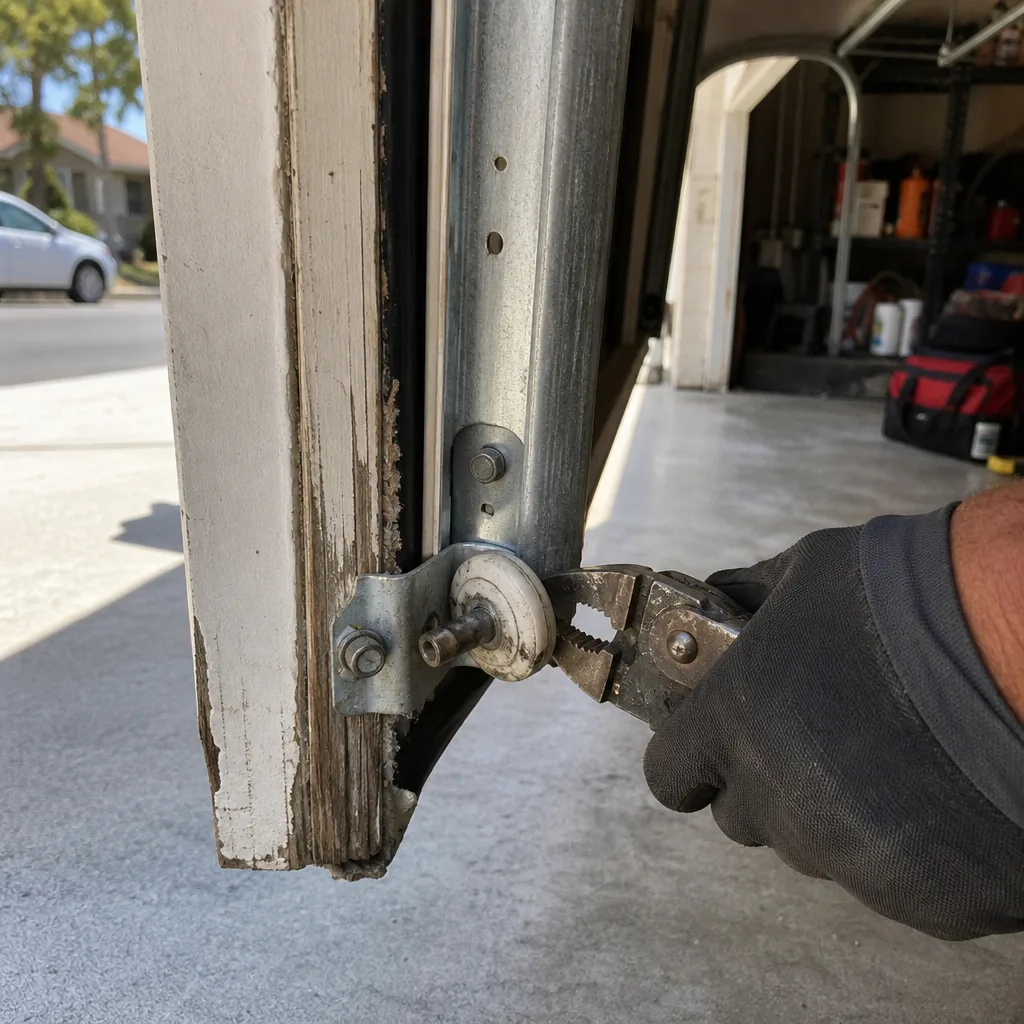
- Why Van Nuys Doesn’t Have Four Seasons (And What It Has Instead)
- Pre-Heat Period (April): The Maintenance Window That Actually Matters
- Peak Heat (June-September): How 100-Degree Days Stress Your Door
- Wind-Grit Period (October-November): The Diablo Wind Cleanup Protocol
- Mild Period (December-March): Rain Prep and Slow-Season Repairs
- Weatherseal Inspection Before the Rain Window
- Opener Thermal Performance: Why Black Doors Cook Circuit Boards
- Common Mistakes to Avoid
- When to Call a Professional
- Frequently Asked Questions
- The Bottom Line
BeforeAfterWhy Van Nuys Doesn’t Have Four Seasons (And What It Has Instead)
Van Nuys sits in the San Fernando Valley, where the climate works differently than coastal Los Angeles. Summer temperatures routinely climb into the high 90s and low 100s. October and November bring Santa Ana and Diablo wind patterns that strip moisture from the air and kick up particulate from the dry hillsides. December through February delivers most of the year’s rainfall, often in concentrated bursts. April and May are the transition months, when temperatures are mild enough to work comfortably but the first heat wave is usually only weeks away.
This means your garage door faces four distinct stress periods, not four seasons:
- Pre-Heat (April): The window for preventive maintenance before thermal expansion and metal fatigue become daily factors.
- Peak Heat (June-September): Sustained high temperatures that accelerate spring metal fatigue, soften lubricants, and strain opener electronics.
- Wind-Grit (October-November): Diablo wind events that deposit abrasive particulate into tracks, rollers, and hinges.
- Mild (December-March): The rain window, when weatherseal failures become obvious and slow-season repairs make sense.
In our experience at Servo Garage Doors Van Nuys home, homeowners who follow a Midwest-style maintenance calendar end up over-lubricating during months when nothing is happening and completely missing the post-wind cleanup their tracks actually need. The calendar matters because the climate dictates it, not because a generic guide says “check your door every spring.”
Pre-Heat Period (April): The Maintenance Window That Actually Matters
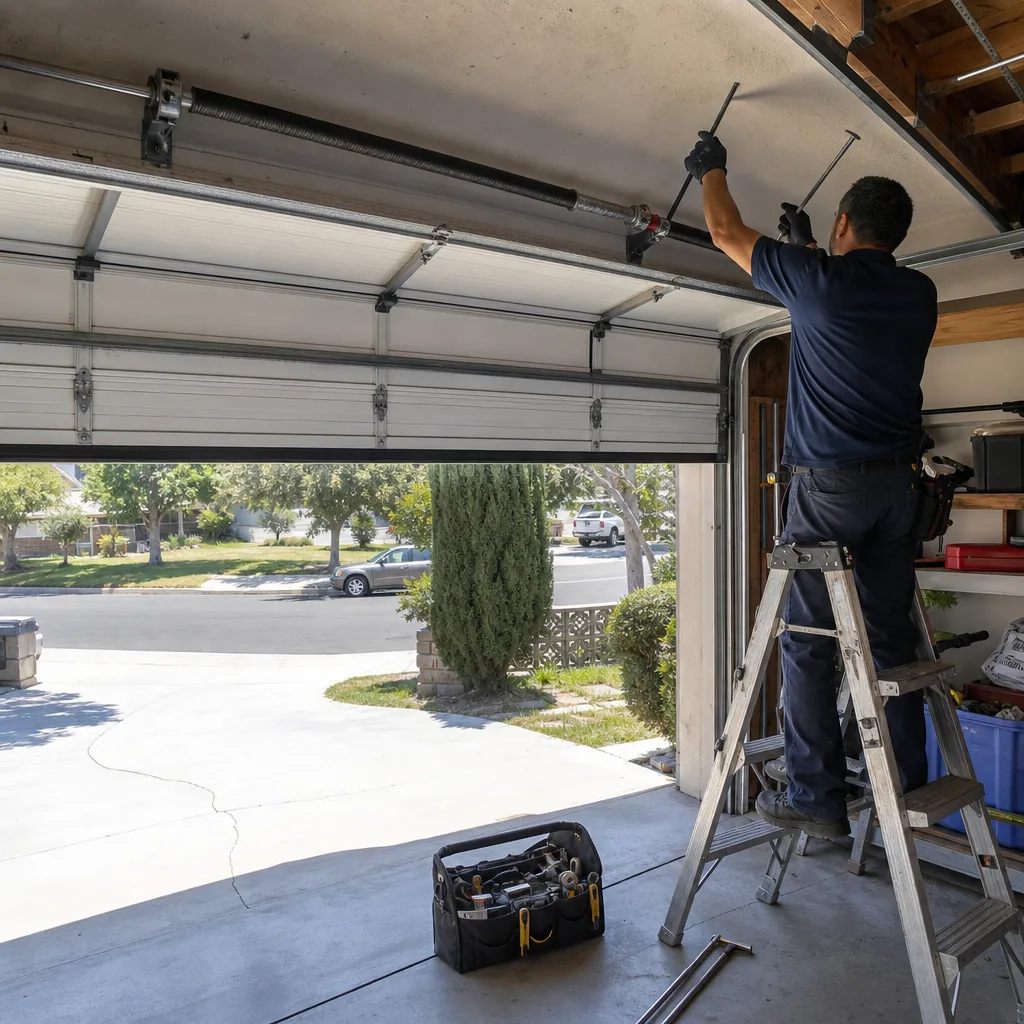
April is the single most important month for garage door maintenance in Van Nuys. The reason is straightforward: you want every moving component lubricated and adjusted before the first sustained heat wave pushes temperatures into the 90s. Once summer arrives, metal expands, lubricants thin out, and small problems become larger ones faster.
Here is the Pre-Heat task list, in order of priority:
- Lubricate all moving parts. Apply a lithium-based or silicone spray lubricant to rollers, hinges, springs, and the opener chain or belt. Avoid WD-40 as a primary lubricant; it displaces moisture but doesn’t provide lasting lubrication for high-friction components.
- Check torsion spring condition. Look for gaps in the coil spacing, rust, or visible wear. If the spring shows a separation in the coil, it has already failed. A spring that looks “stretched” is working, but a spring with uneven spacing may be nearing the end of its cycle life.
- Test the balance. Pull the manual release cord (usually a red handle hanging from the opener rail) and lift the door by hand. A properly balanced door stays in place about halfway up without falling or rising on its own.
- Tighten hardware. Doors cycle thousands of times per year. Bolts, brackets, and track fasteners loosen over time. A quick pass with a socket set at each hinge and track bracket prevents alignment problems later.
- Inspect rollers. Nylon rollers wear down gradually. If a roller shows visible flattening on the wheel surface or wobbles when spun by hand, replace it now rather than during summer.
This is also the right time to schedule any opener repair or replacement work before peak season hits. Garage Door Opener Repair & Installation in Van Nuys tends to get busier in June and July when heat-related circuit board failures spike. Doing it in April means shorter wait times.
Peak Heat (June-September): How 100-Degree Days Stress Your Door
Van Nuys regularly sees stretches of 95 to 105 degrees between June and September. The heat affects your garage door in ways that cold-weather climates never have to deal with. Torsion springs, which are tempered steel coiled under constant tension, experience accelerated metal fatigue when exposed to sustained high temperatures inside an enclosed garage. A garage with direct afternoon sun exposure can reach 120 degrees or more inside.
The visual signature of heat-stressed spring coil is subtle but identifiable. Look for:
- Micro-cracks at the coil surface that appear as faint, hairline lines along the spring’s body.
- Discoloration where the spring’s finish has dulled or turned a darker gray in specific spots, indicating localized overheating.
- Inconsistent coil spacing where some sections of the spring appear more compressed than others.
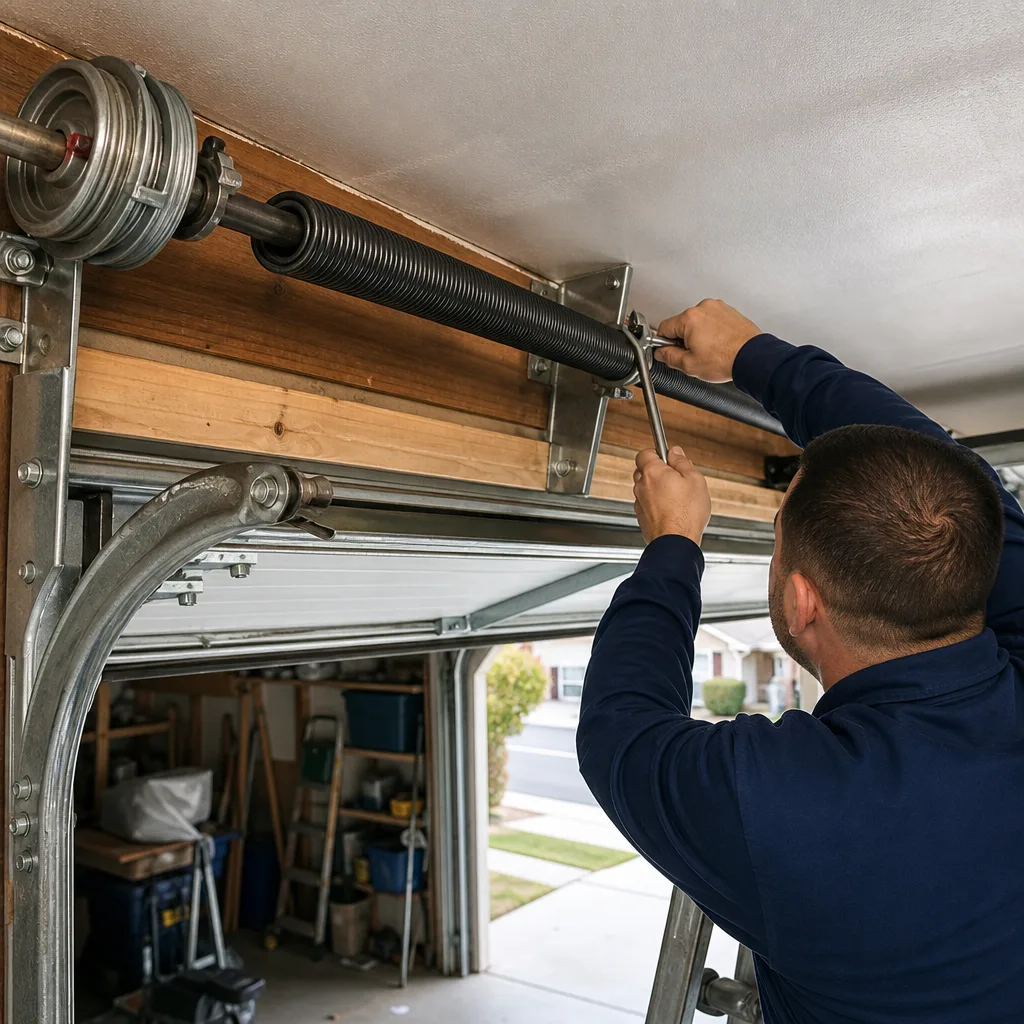
If you spot any of these signs, don’t attempt to adjust or replace the spring yourself. Torsion springs store enough force to cause serious injury if mishandled. Call a technician who can measure the wire diameter, coil count, and inside diameter to match the correct replacement.
During Peak Heat, your job is mostly observation. Listen for changes in how the door sounds. A door that suddenly sounds louder or “grindy” during a heat wave is telling you something about lubrication breakdown. Keep the opener’s logic board in mind as well, which we cover in detail below. If you need professional help during a heat wave, Garage Door Repair in Van Nuys is available for honest assessments of what’s failing and why.
Wind-Grit Period (October-November): The Diablo Wind Cleanup Protocol
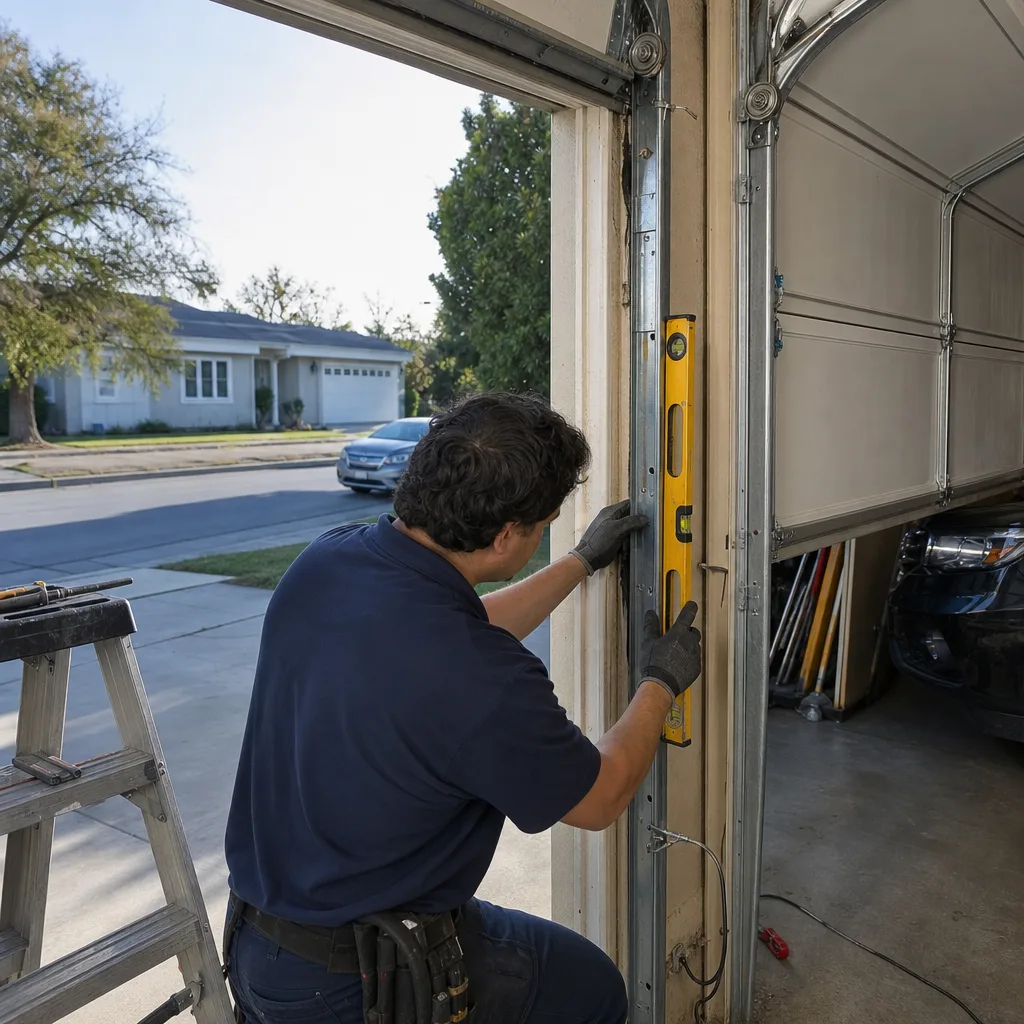
The Diablo winds that hit the San Fernando Valley in October and November are different from coastal breezes. They’re dry, strong, and carry particulate from the hillsides: fine dust, sand, plant matter, and microscopic grit. This stuff gets into everything, including your garage door tracks. Once inside the track channels, the grit acts like sandpaper against nylon rollers, accelerating wear dramatically.
Here is the cleanup protocol to follow after each significant wind event:
- Wait for the wind to stop completely. Cleaning tracks while wind is still blowing particulate around is wasted effort.
- Wipe the track channels with a dry cloth first. Remove loose dust and debris before introducing any solvent. This prevents turning dry grit into an abrasive paste.
- Use isopropyl alcohol (70% or higher) on a clean cloth. Alcohol dissolves the fine particulate that water alone won’t remove, and it evaporates quickly without leaving residue. Avoid WD-40 or oil-based cleaners in the track channel; they attract more grit.
- Inspect rollers for visible wear. If the roller wheels show flat spots, pitting, or wobble freely on their shafts, they need replacement. Nylon rollers in Van Nuys garages typically last 7 to 10 years, but Diablo wind seasons can cut that to 5 or 6.
- Re-lubricate after cleaning, not before. Apply silicone spray to the roller bearings and hinge points only after the tracks are completely clean and dry.
- Check the bottom seal for debris accumulation. Wind-blown grit gets trapped under the door, where it abrades the weatherseal every time the door closes.
This protocol matters more than most homeowners realize. We’ve seen track channels in Van Nuys neighborhoods like Valley Glen and Lake Balboa coated with a fine red-brown dust after major wind events. If that dust isn’t removed, the rollers degrade rapidly and the door starts to bind, which puts additional stress on the opener.
Mild Period (December-March): Rain Prep and Slow-Season Repairs
The Mild period in Van Nuys is when most of the year’s rain falls, typically between December and March, and a good time to review our Garage Door Cost Breakdown for 2026 if you’re planning ahead. It’s also the slow season for garage door repair work, which makes it an ideal time to schedule larger projects like door replacement or opener upgrades. There’s less urgency, more scheduling flexibility, and you’ll have the work done before the next heat season begins.
Your Mild period task list:
- Inspect weatherseal integrity before the first significant rain. The bottom seal and side seals age faster in Van Nuys because of the summer heat. Once the rains arrive, a failed seal means water intrusion into the garage, which brings mold risk and potential damage to stored items.
- Check for rust on hinges and track brackets. The humidity spike during the rainy months accelerates corrosion on any exposed metal that’s lost its plating or paint. Surface rust is cosmetic; pitted rust means the component should be replaced.
- Lubricate lightly. The Mild period requires less lubrication than Pre-Heat because temperatures are cooler. A light application to hinges and springs every 8 to 10 weeks is sufficient.
- Test the auto-reverse safety feature. Place a 2×4 piece of wood flat on the ground under the door path and close the door. It should reverse when it contacts the obstruction. This is a federal safety requirement and worth checking at least once a year.
If you’ve been considering Garage Door Installation in Van Nuys, the December through March window is the most practical time to do it. The mild weather makes installation easier, and you’ll have a new door properly sealed and adjusted before the next heat cycle begins.
Weatherseal Inspection Before the Rain Window
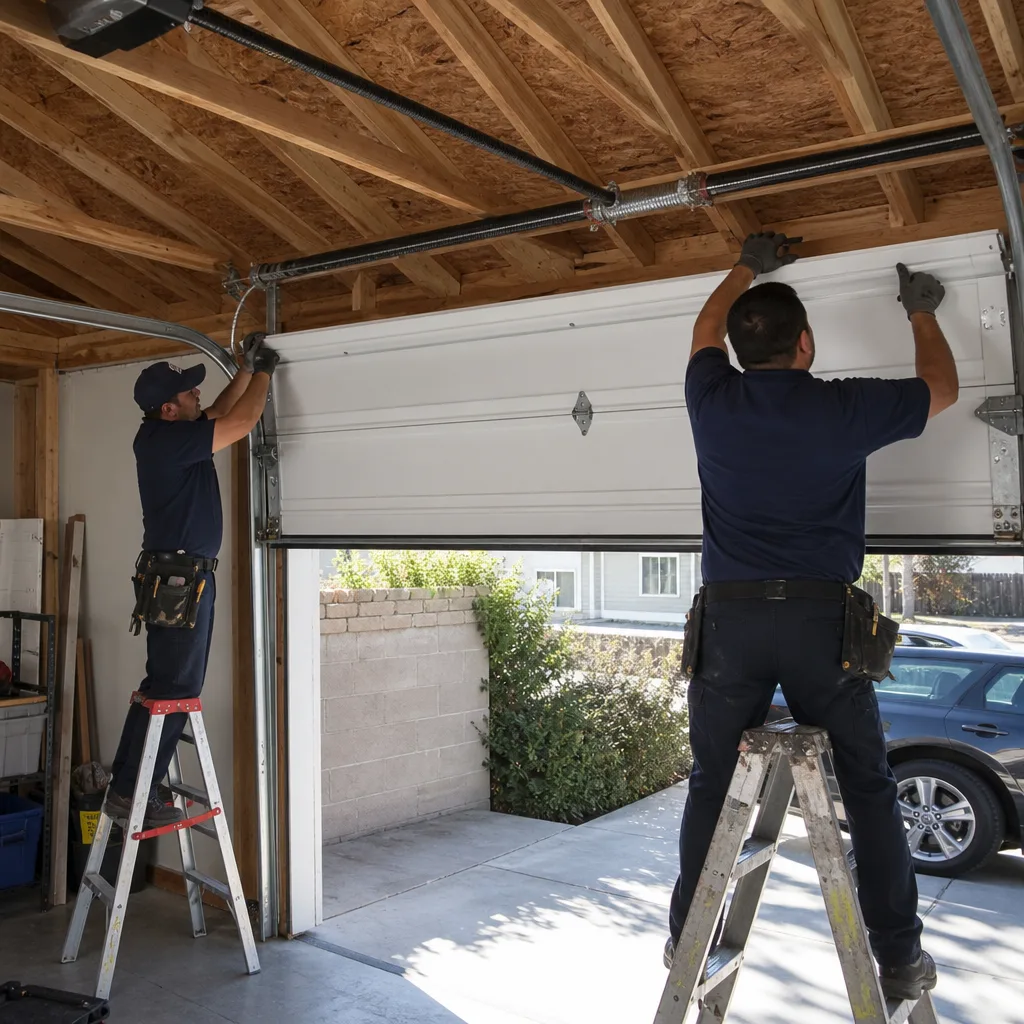
The November-through-January rain window in Van Nuys is predictable. What’s less predictable is whether your garage door’s weatherseal will survive it. The bottom seal (also called an astragal) is a rubber or vinyl strip that runs along the bottom edge of the door. It compresses against the floor to keep water, dirt, and pests out. When it fails, the failure is usually visible long before the rain finds it, if you know what to look for.
Signs of seal compression failure:
- Visible gaps under the door when closed. Look from inside the garage with the door down. If you can see daylight through any section of the bottom seal, it’s no longer compressing properly.
- Flattened or cracked rubber. A healthy seal has a rounded or T-shaped bottom profile. A failing seal looks compressed flat or shows cracks at the flex point.
- Water staining on the garage floor near the door. Evidence of previous intrusion during light rain means the seal was already weak then and will be worse now.
- Debris accumulation at the door base. Wind-blown grit and leaves collect at the seal edge and act as an abrasive every time the door cycles.
Replacing a bottom seal is a moderately straightforward job, but the material choice matters. In Van Nuys, the seal needs to tolerate summer heat that softens cheap PVC and winter moisture that accelerates cracking in brittle rubber. We typically recommend a double-T or bulb-style seal made from EPDM rubber, which holds its flexibility through the full temperature range. If you’re unsure whether your seal is failing, a documented photo review can clarify what you’re working with.
Opener Thermal Performance: Why Black Doors Cook Circuit Boards
Most homeowners don’t think about their garage door opener’s circuit board until the opener stops working. In Van Nuys, the combination of a dark-colored door, an uninsulated garage, and sustained summer heat creates a real thermal problem for opener electronics. Circuit boards have operating temperature limits, and those limits get exceeded routinely in Valley garages during July and August.
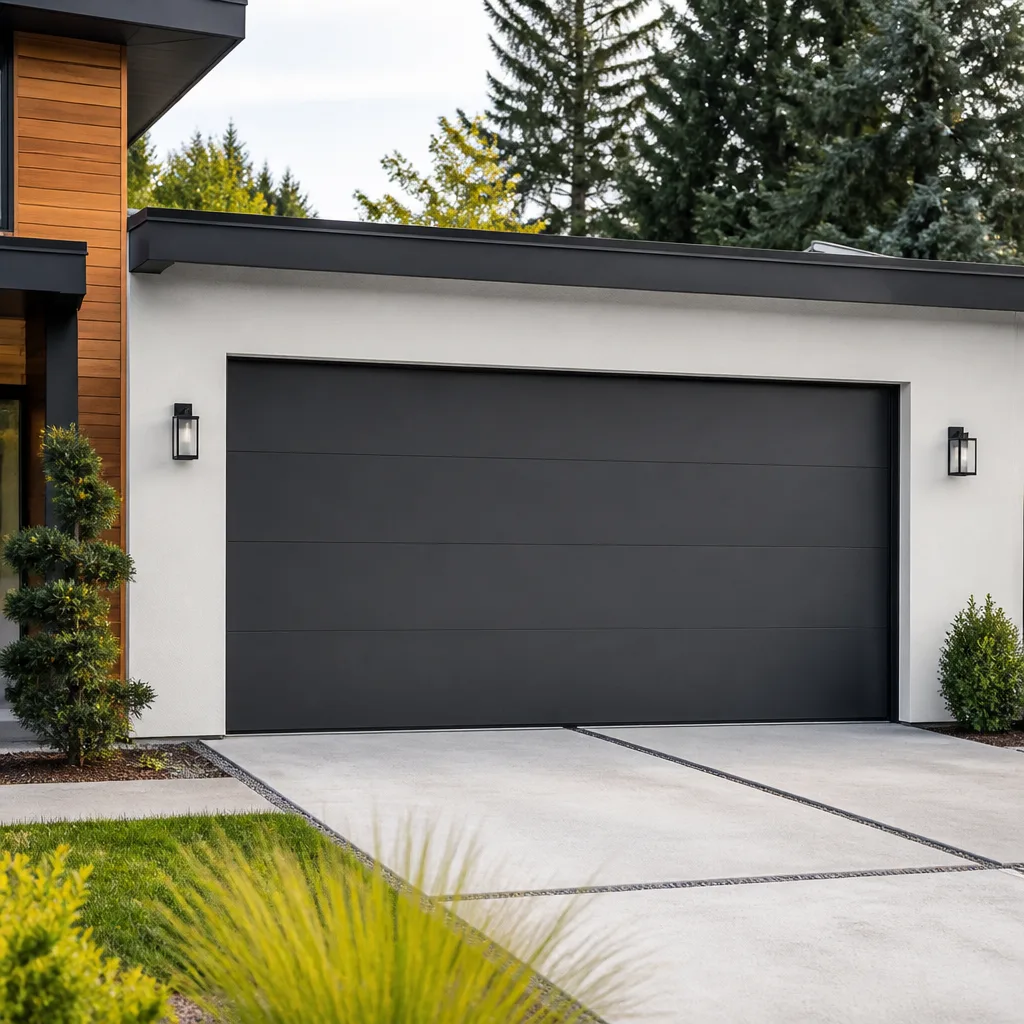
The issue is worst with black or dark-brown doors that face south or west. These doors absorb solar radiation all afternoon, heating the air inside the garage. The opener’s logic board, mounted directly above the door in the hottest air pocket, runs hotter than the manufacturer intended. Over time, repeated thermal cycling degrades solder joints and shortens the board’s lifespan. Brands like LiftMaster and Chamberlain build their boards to handle temperatures up to about 140 degrees Fahrenheit, but a south-facing black door in August can push garage air temperatures past that threshold.
What you can do to reduce opener thermal stress:
- Ventilate the garage. A simple passive vent installed in the garage door or wall improves air circulation and drops interior temperature by 10 to 15 degrees. This is the single most effective intervention.
- Schedule opener use during cooler hours. If you have flexibility, avoid cycling the door during peak afternoon heat. The opener’s motor and board both heat up during operation; adding ambient heat to operational heat compounds the stress.
- Consider a belt-drive opener. Belt drives run cooler than chain drives. If you’re replacing an older chain-drive model, a belt-drive from Genie or Chamberlain will generate less internal heat.
- Check the opener’s ventilation slots. Dust and insect debris clog the small vents on the opener housing, trapping heat inside. A quick vacuum pass in April and October keeps airflow moving.
If your opener has already failed during a heat wave, the logic board may be the culprit. We’ve replaced boards in openers that were only three or four years old because the garage environment was hotter than the design assumed. A replacement board is less expensive than a full opener replacement, though it’s worth evaluating whether the underlying thermal problem needs fixing too.
Common Mistakes to Avoid
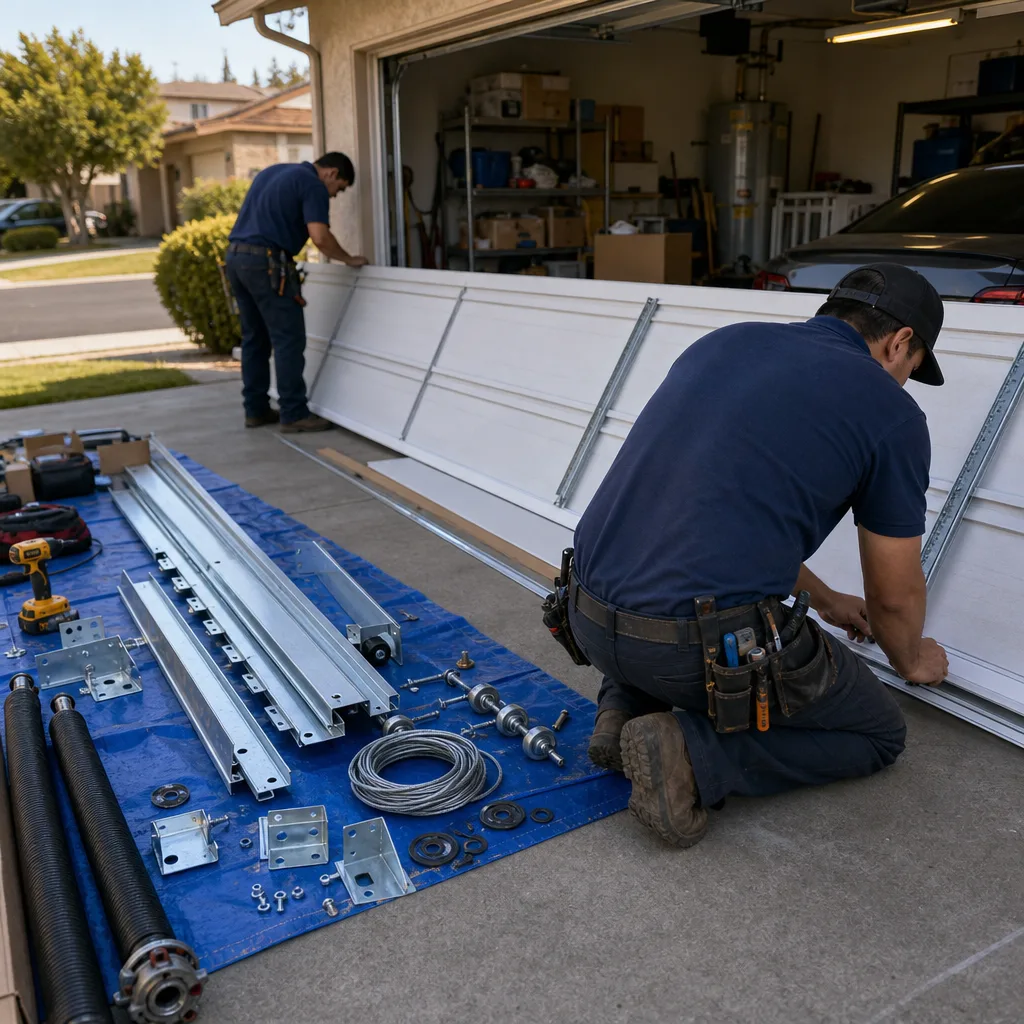
- Using WD-40 as a primary lubricant. It’s a water displacer, not a lasting lubricant. It breaks down quickly under Van Nuys summer heat and leaves moving parts running dry within weeks.
- Skipping track cleaning after Diablo wind events. The grit that accumulates in October doesn’t go away on its own. Every cycle grinds it deeper into rollers and hinges. If you do nothing else in the Wind-Grit period, clean your tracks.
- Ignoring a noisy door because it “still works.” Noise is the earliest warning sign of lubrication failure, roller wear, or misalignment. By the time a noisy door stops working, the repair is always more expensive.
- Replacing weatherseal with the cheapest option. Low-cost PVC seals harden and crack after one summer heat cycle. You’ll replace them every year. An EPDM rubber seal costs more up front and lasts three to five years in Van Nuys conditions.
- Attempting DIY torsion spring work. This is the single most dangerous garage door repair task there is. Torsion springs are under extreme tension and can cause serious injury if they release unexpectedly. Always hire a trained technician for spring work.
- Lubricating tracks themselves. The track channel should stay dry and clean. Lubricant goes on rollers and hinges, not the surface the rollers roll on. Lubricated tracks collect more grit and accelerate wear.
- Forgetting the auto-reverse test. This is a legal safety requirement for every garage door opener installed since 1993. A door that doesn’t reverse on contact is a hazard to children and pets. The test takes 30 seconds. Do it quarterly.
When to Call a Professional
Some garage door tasks are safe and satisfying homeowner work. Others are genuinely dangerous or require specialized knowledge and tools. Torsion spring replacement always goes to a professional; the stored energy in a wound spring can cause catastrophic injury. Cable replacement, track realignment, and significant opener electrical work also belong with a trained technician. If your door is making new or unfamiliar sounds, binding during operation, or showing visible damage to any hardware, a professional assessment is the right move. Servo Garage Doors Van Nuys offers free estimates in Van Nuys, with a written price delivered before any work begins. Call (213) 418-2520 to schedule an inspection.
Frequently Asked Questions
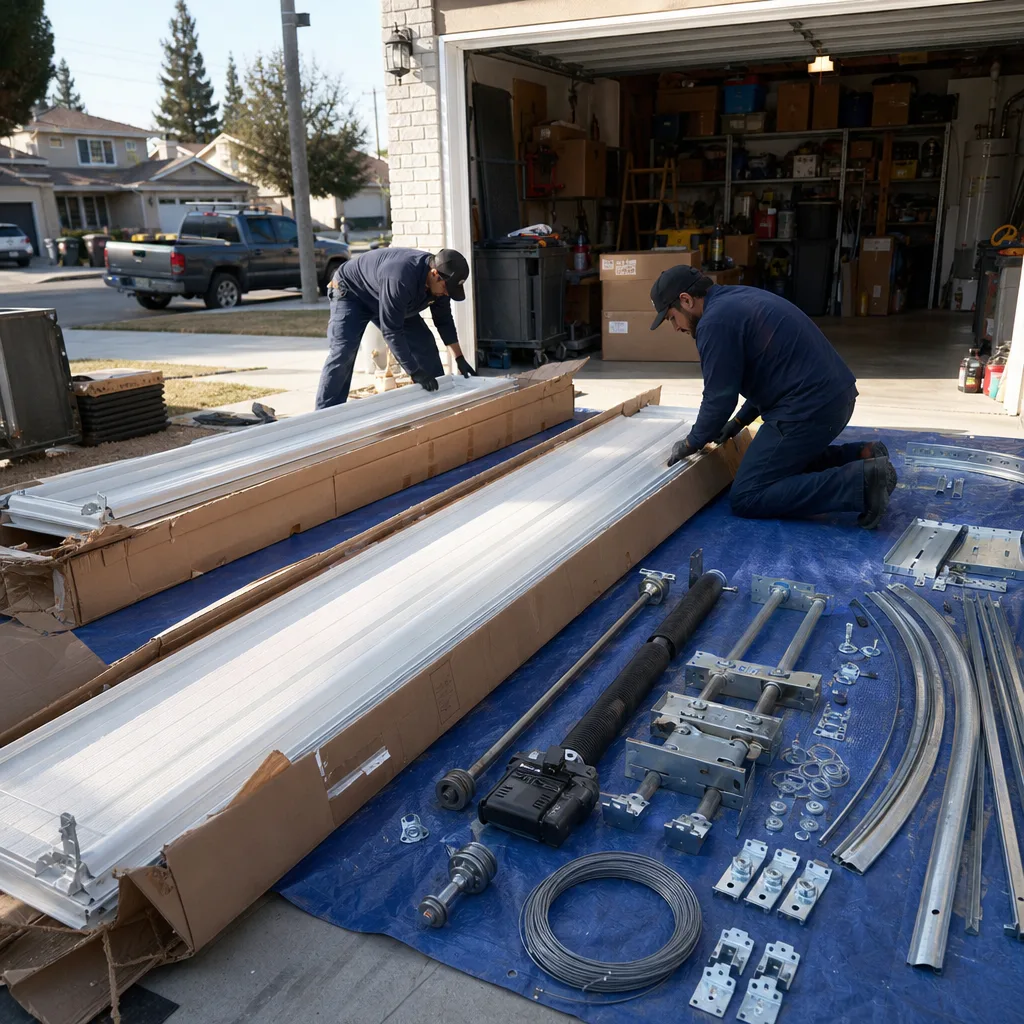
During the Pre-Heat and Peak Heat periods (April through September), lubricate rollers, hinges, and springs every 8 to 10 weeks. During the Mild period (December through March), every 10 to 12 weeks is sufficient. Always clean track channels before lubricating so you’re not sealing grit against the moving parts. Call (213) 418-2520 if you’d rather have a technician handle it, and we’ll document exactly what was found and what was done.
Torsion spring replacement in Van Nuys typically runs $180 to $340 for a standard single-door spring, depending on wire diameter, spring length, and whether the spring is matched to a specific door brand like Raynor or Clopay. The price is quoted in writing before any work starts, so there’s no guessing. For an exact quote on your door, call (213) 418-2520, and a technician will measure the existing spring and provide a flat price.
Yes, and this is the maintenance task most Van Nuys homeowners miss. The Diablo and Santa Ana wind events between October and November deposit fine grit into track channels that accelerates roller wear dramatically. Wipe the channels with a dry cloth, then clean with isopropyl alcohol, and re-lubricate only the roller bearings and hinges afterward. If you’re not comfortable doing this yourself, call (213) 418-2520 and we’ll include track cleaning as part of a seasonal service visit.
No. The flat, written price you receive before any work starts is the price you pay, regardless of what the technician finds during the visit. That’s Clause 1 of The Haven Standard, the operating framework Servo Garage Doors Van Nuys has worked under since 2015. If additional work is recommended, it’s quoted separately in writing before anything is added. Call (213) 418-2520 for a quote before you commit to anything.
Yes, and it happens more often than opener manufacturers would like to admit. South-facing black doors on uninsulated garages can push interior temperatures past the thermal limits of the opener’s logic board, leading to premature failure. Passive ventilation, belt-drive openers from brands like LiftMaster or Chamberlain, and scheduling use during cooler hours all reduce the risk. If your opener has already failed, call (213) 418-2520 for an assessment and a written quote on repair or replacement.
Our service vehicles carry the most commonly needed parts for Van Nuys garage doors, including torsion springs, cables, rollers, hinges, weatherseal, and opener components. Standard repairs are completed on the first visit in most cases. Every job closes with a documented photo record of what was found and what was done. Call (213) 418-2520 and a real person will answer, day or night.
The Bottom Line
Van Nuys doesn’t reward a generic garage door maintenance schedule. The climate is too specific, with Diablo winds, sustained heat, and concentrated rain patterns that each demand different care. Clean your tracks after October wind events. Lubricate before summer, not during it. Check weatherseal before the rains arrive in December. Inspect torsion springs for heat-stress signs during Peak Heat, and never attempt spring work yourself. The goal is a garage door that operates quietly and reliably through every Van Nuys climate phase. Servo Garage Doors Van Nuys home is ready when you need a professional, with written pricing, documented findings, and a real person on the phone at (213) 418-2520, 24 hours a day.
Written by Marcus Deller, Owner at Servo Garage Doors Van Nuys, serving Van Nuys since 2015. For more guides & resources, visit our blog.