
Last updated September 20, 2026
Full 25-point door and opener safety check with every visit - springs, cables, rollers, tracks, and your LiftMaster or Chamberlain opener included
You get a price before we start. It does not change when the truck arrives.

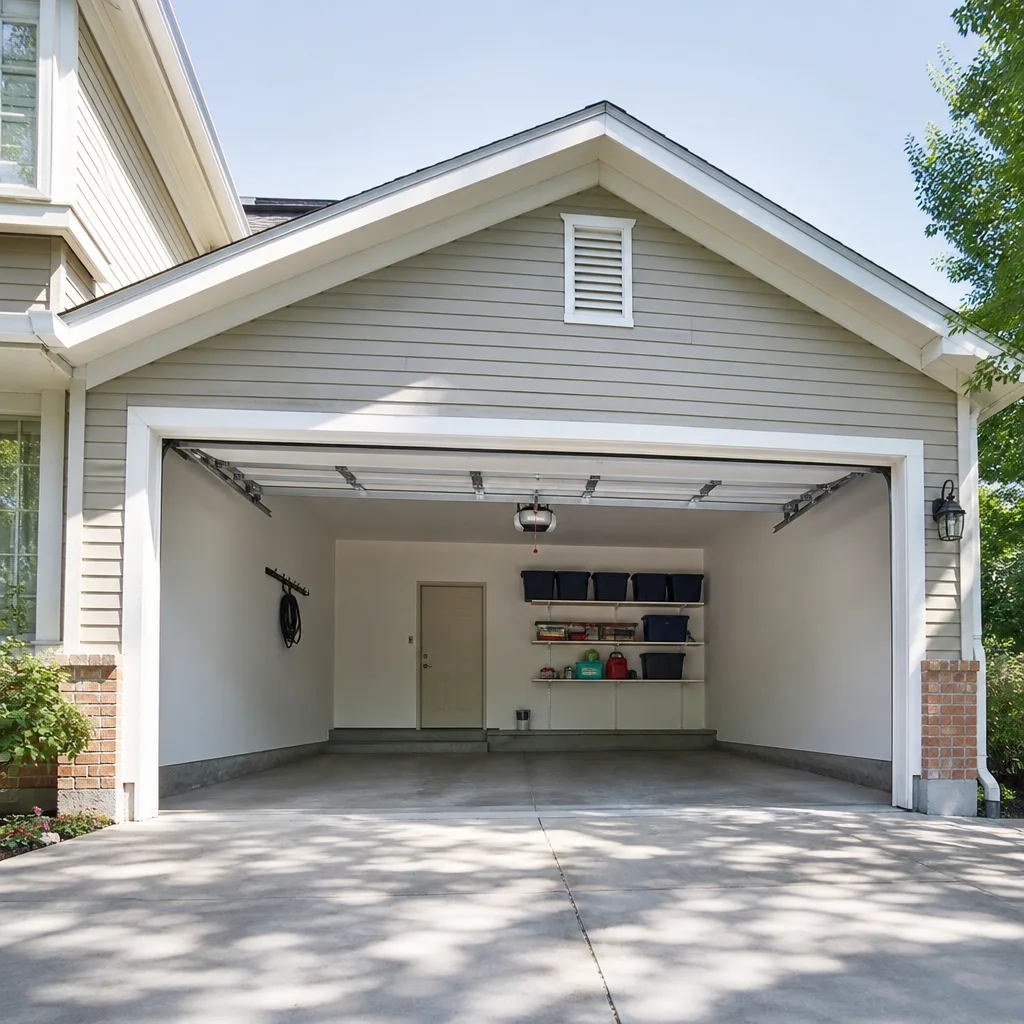
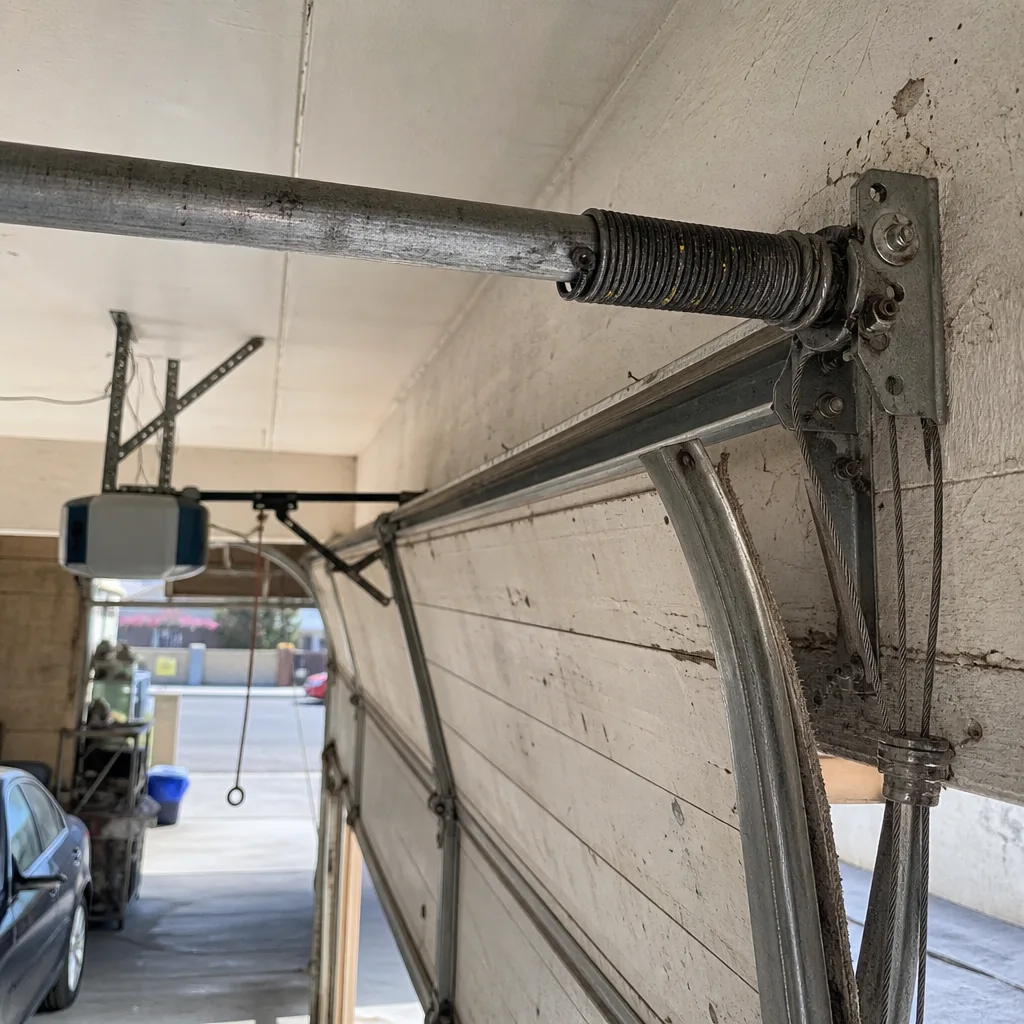 Before
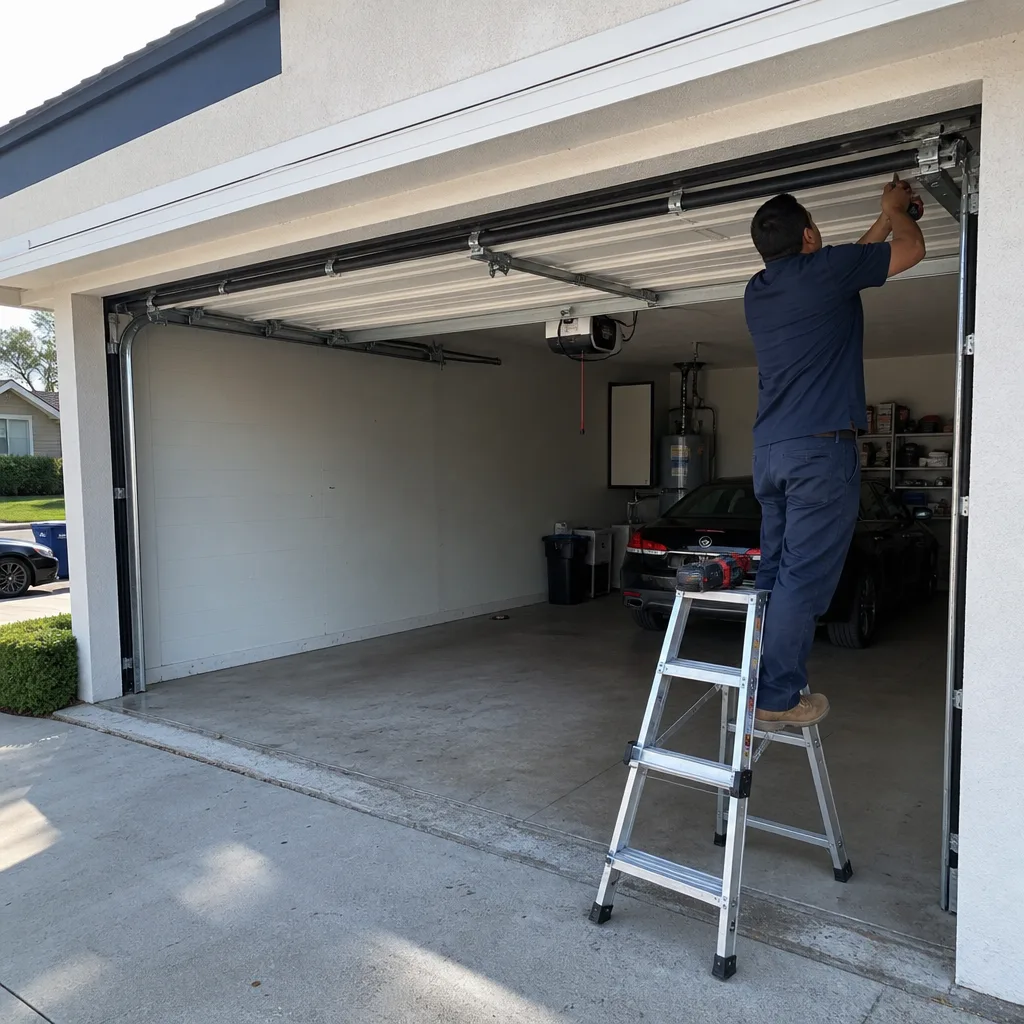 After
After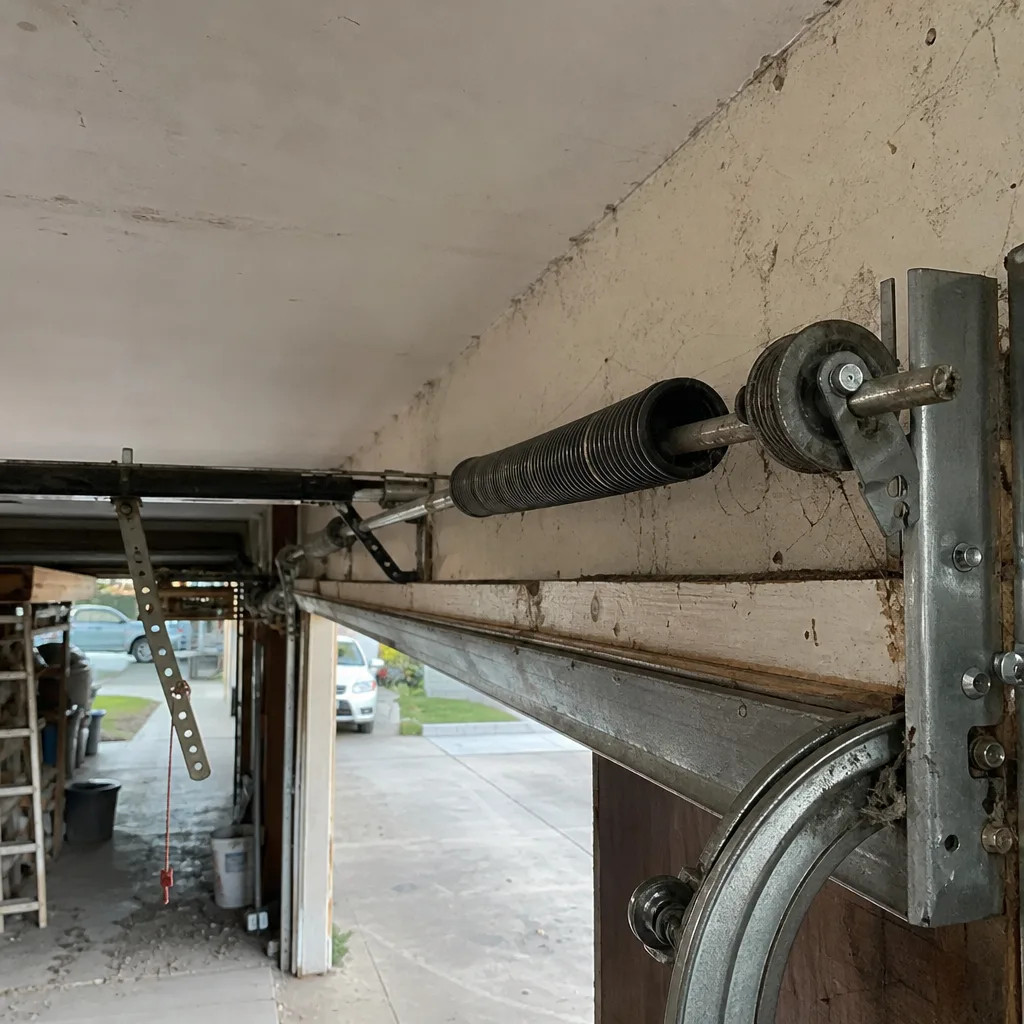 Before
 After
After Before
 After
AfterHow to Hire a Garage Door Contractor in Van Nuys: A Step-by-Step Guide
California Business and Professions Code §7159 requires home improvement contracts over $500 to be written and signed before work starts. Yet most garage door service calls in Van Nuys are still quoted verbally at the door, which leaves the homeowner with no documented scope, no itemized parts list, and no legal footing if the final invoice doesn’t match the handshake number. This guide walks through exactly how to verify a contractor’s license, which documents to request before signing anything, how to compare bids using a normalized line-item format, and what a legitimate written price-first workflow actually looks like. For The Complete Guide to Garage Door in Van Nuys, see our full resource. You’ll finish with a checklist you can hand to any contractor who shows up at your door in Van Nuys.
Quick Answer
To hire a garage door contractor in Van Nuys, verify their CSLB license classification (look for C-61/D28, not just a general contractor’s license), request five written documents before any work begins (itemized quote, photo of the failed part, material spec sheet, warranty terms, and proof of insurance), reject any contractor who quotes verbally and pushes same-day urgency pricing, and compare bids by spring grade and labor hours rather than bottom-line price alone. A legitimate contractor will hand you a written scope and price before touching anything; a red flag walks in with a verbal number and a clipboard that stays closed.
Table of Contents
- How to Verify a CSLB License in 90 Seconds (And What C-61/D28 Actually Covers)
- The Five Documents to Request Before Signing Anything
- Red-Flag Bid Behaviors Specific to the Garage Door Trade
- How to Compare Three Quotes Using a Normalized Line-Item Format
- What a Legitimate Written Price-First Workflow Looks Like, Step by Step
- Van Nuys-Specific Considerations: Climate, Code, and Market Realities
- Common Mistakes to Avoid
- When to Call a Professional
- Frequently Asked Questions
- The Bottom Line
BeforeAfterHow to Verify a CSLB License in 90 Seconds (And What C-61/D28 Actually Covers)
Open the California Contractors State License Board website, type in the business name or license number, and look at the classification field. You want to see C-61/D28 specifically, which is the Door and Gate specialty classification. A general building contractor (Class B) can legally pull a permit and frame a wall, but a Class B license does not demonstrate any tested competency in torsion spring mechanics, opener logic boards, or door balance calibration. A handyman with no contractor’s license at all is legal for jobs under $500 in California, but most garage door repairs in Van Nuys exceed that threshold once you factor in spring replacement and labor.
The 90-second check: search the name, confirm the license status reads “Active,” confirm the classification reads C-61/D28, and confirm the business address on file matches the one on the estimate. If the contractor hands you a business card with a license number that doesn’t match the name on the card, walk away. In Van Nuys, we see this regularly: a subcontractor working under someone else’s number, or a license that expired during COVID and never got renewed. The CSLB lookup takes less time than reading the warranty fine print.
What C-61/D28 actually covers: installation, repair, and modification of garage doors, roll-up doors, gates, and related hardware, including springs, cables, tracks, operators, and safety devices. What it doesn’t cover: structural framing, electrical panel work beyond the opener circuit, or any modification to the garage itself. We hold our own C-61/D28 license as an independently owned and operated business under The Haven Standard, and our license number sits on every written estimate we hand out. It’s not buried in fine print. It’s on the page next to the price.
The Five Documents to Request Before Signing Anything
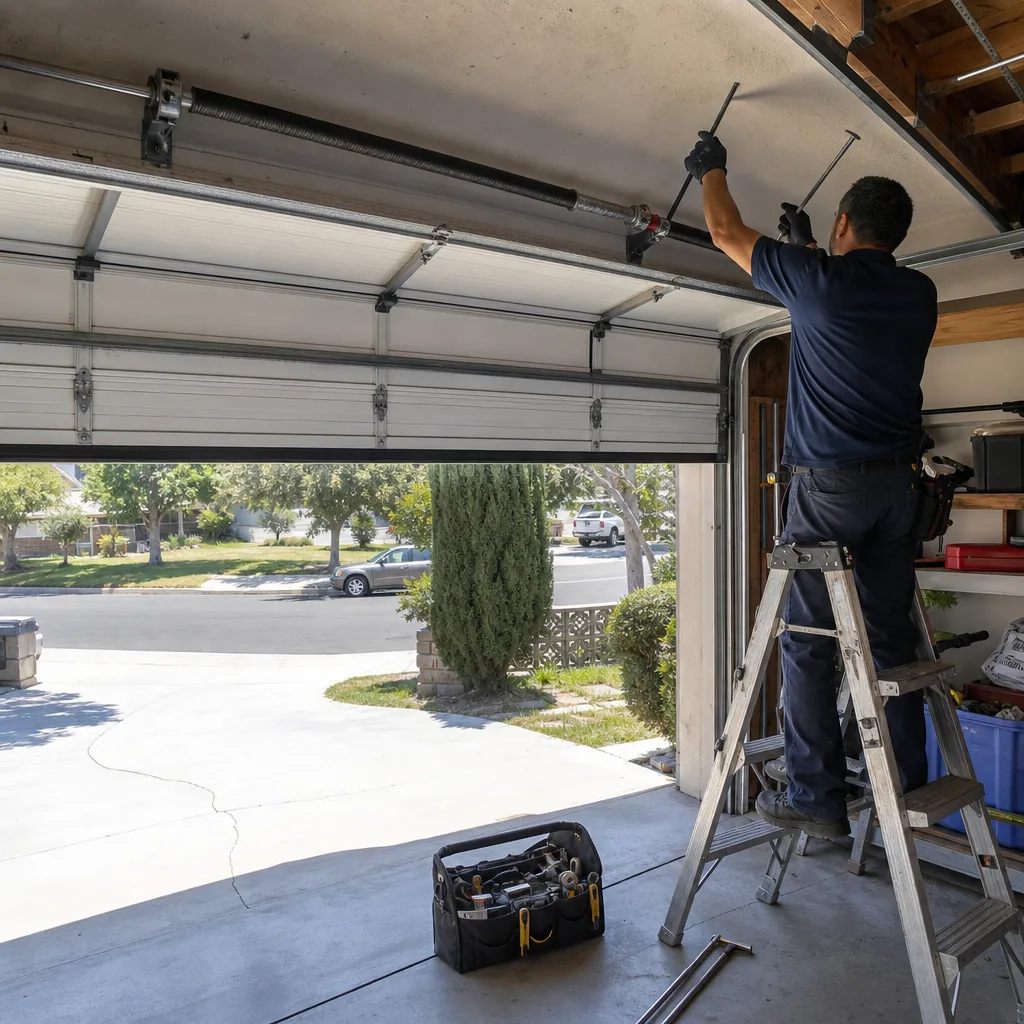
A legitimate garage door repair in Van Nuys starts with paper, not a handshake. Here are the five documents every homeowner should receive before authorizing any work. If a contractor “doesn’t do written quotes” or “will write it up after,” you’re dealing with someone who hasn’t thought about what happens when the final price exceeds the verbal one.
- The written itemized quote. This separates parts from labor. A torsion spring line item should read something like “Torsion spring, 0.250-inch wire, 2-inch ID, 24-inch length, grade 3” rather than “spring repair.” If the quote says “repair door” as a single line, you have no way to compare it against another bid. Clause 1 of The Haven Standard exists because of this exact problem: a flat, written price and written scope are delivered before any work starts, always.
- A photo of the failed or failing component. Before anyone quotes a replacement, the part should be photographed and shown to you. A torsion spring with a clean break at the coil is a different situation from a spring that’s simply lost tension over eight years. A roller with a seized bearing requires a different fix than a roller that’s merely noisy. Our founding rule at Servo, now codified as Clause 4, is that the technician photographs the failed component before quoting a replacement. In Van Nuys, where the same door model can age very differently on a house facing west into the afternoon heat versus one shaded by a valley oak, a photo tells you what years of sun exposure actually did to the part.
- The material spec sheet. This is the document most homeowners never see. A spec sheet tells you the wire gauge, spring grade, cycle rating (10K, 25K, 50K cycles), and material composition. A 10,000-cycle spring quoted at $145 might sound better than a 25,000-cycle spring quoted at $195, until you learn the higher-grade spring lasts three times as long. The spec sheet is how you verify the spring grade actually matches the quote.
- Warranty terms in writing. “We’ll take care of it” is not a warranty. A written warranty document states the term (90 days, 1 year, 3 years), what’s covered (parts, labor, or both), and what voids it. Ask for this before the work starts, not after. If the contractor won’t put warranty terms in writing before taking the job, assume there are no warranty terms.
- Proof of general liability insurance. Ask for a certificate of insurance naming the contractor as the policyholder, not a subcontractor. In Van Nuys, many handymen operate uninsured, which means if the door falls off its track and damages your car, you’re filing against your own homeowner’s policy. An insured contractor can produce a COI in one business day. We consider this a baseline requirement for anyone we’d let near a torsion spring under tension.
Red-Flag Bid Behaviors Specific to the Garage Door Trade
Garage door work has its own negotiating patterns, and they’re different from what you’d see in a kitchen remodel or a roofing quote. Here are four behaviors that should end the conversation before it starts.
Same-day urgency pricing. A contractor who knocks $100 off the price if you sign today is pricing your fear, not the job. This tactic shows up most often right before the contractor “happens to be in the area” with extra parts on the truck. A legitimate written quote has a price that holds for the stated validity period, usually 30 days, because the price reflects actual parts and labor rather than whatever the market will bear at the moment. We don’t use urgency pricing at Servo because the price is already written down before you decide anything.
Refusal to itemize parts versus labor. A single bottom-line number is not a quote; it’s a number designed to prevent comparison. If the contractor won’t tell you what the spring costs and what the labor costs, you cannot check whether the spring grade justifies the price. Ask for the itemized breakdown. If you get a blank stare, get a different contractor.
“Assessment fees” that disappear if you hire. A contractor who charges a $49 assessment fee that gets “waived” if you proceed with the repair is building a penalty into the negotiation. The fee exists to make you feel like you’ve already spent something. A straightforward contractor either charges a diagnostic fee as a separate service or includes the diagnostic time in the quote. We don’t play this game: the written price covers the work from the first time we look at the door.
The cash-only discount. A contractor who knocks 10% off for cash and off the books is telling you two things. First, the price isn’t real. Second, they don’t intend to report the income, which means they probably don’t carry the insurance they claim to carry. Cash discounts above $25 are a signal you’re hiring an undocumented operation, and an undocumented operation has no incentive to honor a warranty, or even to answer the phone next month.
How to Compare Three Quotes Using a Normalized Line-Item Format
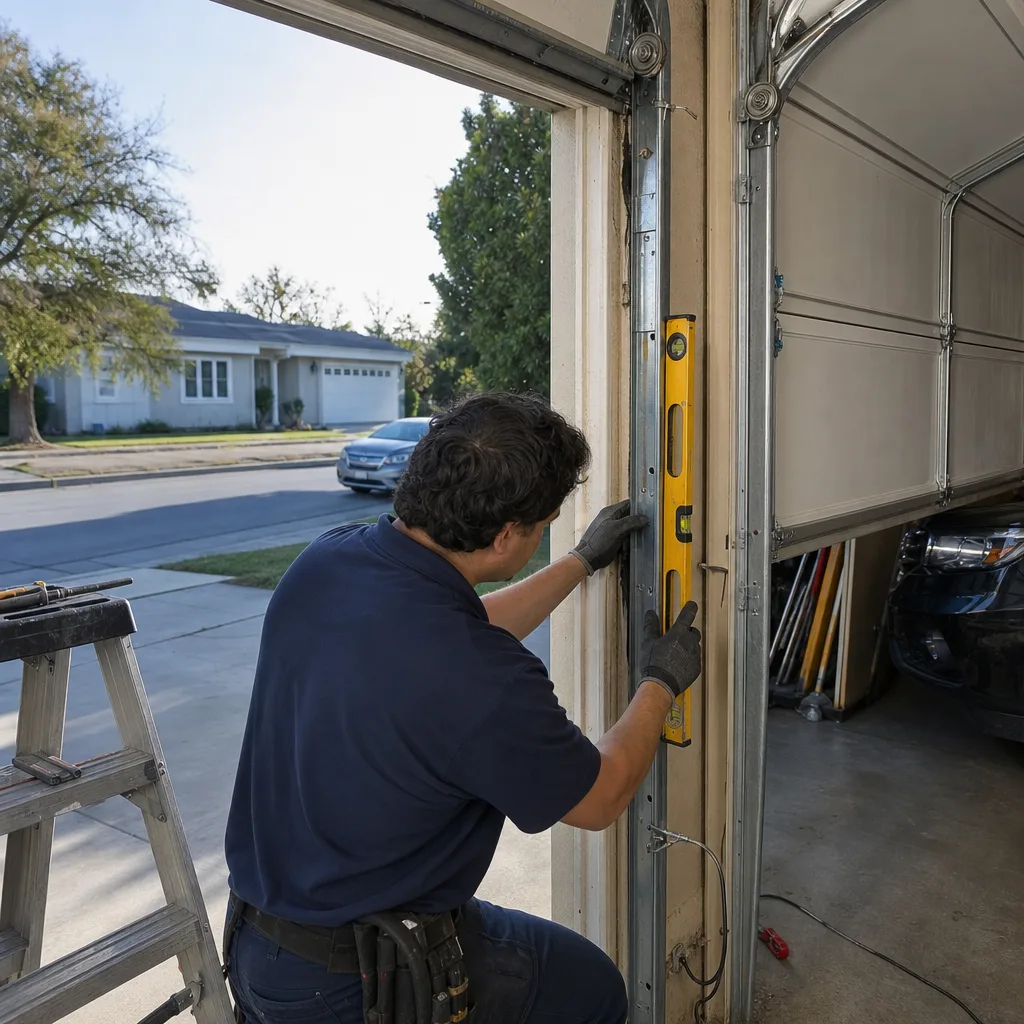
Bottom-line price comparison is how homeowners get burned in the garage door trade. A $50 difference between two torsion spring quotes usually isn’t a difference in labor rates: it’s a difference in spring grade that’s worth $300 in replacement lifespan. Here’s the normalized format we recommend for any three-bid comparison in Van Nuys.
- Pull apart every quote into three columns: part description, part spec, labor hours. If a contractor won’t give you all three, that’s a red flag (see above).
- Compare the part spec, not just the part name. “Torsion spring replacement” on three quotes could mean three entirely different springs. One might be a 0.207-inch wire diameter economy spring rated at 8,000 cycles. Another might be a 0.250-inch wire spring rated at 25,000 cycles. The second costs more and lasts years longer. Normalize by asking: what wire diameter, what coil count, what cycle rating, what brand?
- Check the labor hours against the job description. A single spring replacement should be 1 to 2 hours. A full door reset with new springs, cables, and rollers should be 2 to 4. If one quote shows half the labor hours of the other two, the contractor is either under-bidding to win the job and will hit you with extras later, or planning a shortcut.
- Compare warranty terms across the normalized lines. A 90-day labor warranty on a spring with a 10,000-cycle rating is a weaker package than a 1-year labor warranty on a 25,000-cycle spring. Add the warranty difference into your comparison as a dollar value: an extra 9 months of labor coverage on a spring that can snap without warning is worth roughly the price of another service call.
- Check the brand names on the parts lines. A LiftMaster logic board is a different component than a generic aftermarket board. A Chamberlain opener has a different parts ecosystem than a Genie. If the quote says “opener board” without a brand, ask for it. In Van Nuys, where we service all major brands including LiftMaster, Chamberlain, Genie, Clopay, Amarr, Wayne Dalton, Craftsman, and Raynor, the brand on the line item tells you whether the contractor is replacing like-for-like or swapping in whatever’s on the truck.
The goal isn’t to make every line identical. It’s to make every line comparable, so a price difference becomes visible as a parts difference or a labor difference. That visibility is what the written price-first process is for.
What a Legitimate Written Price-First Workflow Looks Like, Step by Step
Here’s the sequence you should recognize as the normal, no-pressure workflow when a contractor shows up at a home in Van Nuys. It’s the same sequence we follow on every job, and it’s codified in The Haven Standard so it doesn’t depend on who answers the phone.
- The technician arrives and asks what you’re experiencing, not what you want to buy. The first question should be about symptoms: noise, binding, slow movement, door won’t close, remote won’t pair. Not “what’s your budget” and not “want me to swap the whole door.”
- The technician inspects the door, opens the panel or inspects the track, and photographs the failed or failing component. Clause 4 of The Haven Standard: the customer sees the failed part before anyone quotes a replacement. In Van Nuys homes built in the 1950s with original tracks still in service, this photo often shows a roller that was never designed for the door’s current weight or a cable that’s worn through at the pulley.
- The technician writes down the diagnosis, the exact part specified, the labor hours, and the price. On paper or digitally, but in writing. It’s delivered before any work starts, per Clause 1. You’re free to read it, compare it, and call someone else if you like.
- You approve the scope in writing. This doesn’t have to be a signed contract for every small repair, but it does mean you’re not giving verbal approval for a vague scope. Even an email that says “go ahead with the spring replacement as quoted” is a written trail.
- The technician does the work, and tests the door through a full open/close cycle. Balance, travel limits, force settings, safety reversal. You should watch this happen.
- You receive a documented photo record of the failed part and the completed work, plus a written warranty statement. This is the leaving packet. If the contractor doesn’t provide these, ask for them. The documented photo record is how you know what was actually replaced after the truck pulls away.
This workflow takes about 15 minutes longer than a verbal quote and a handshake. The point of the paperwork isn’t to slow things down: it’s to make sure that when the invoice matches the quote, that fact is verifiable by both parties. In Van Nuys, where we answer calls live 24/7 and dispatch a named technician with an on-the-way text, this sequence runs the same way on a Tuesday afternoon repair as it does on a 3 a.m. emergency call. The paperwork doesn’t get skipped just because the door came off its track at night.
Van Nuys-Specific Considerations: Climate, Code, and Market Realities
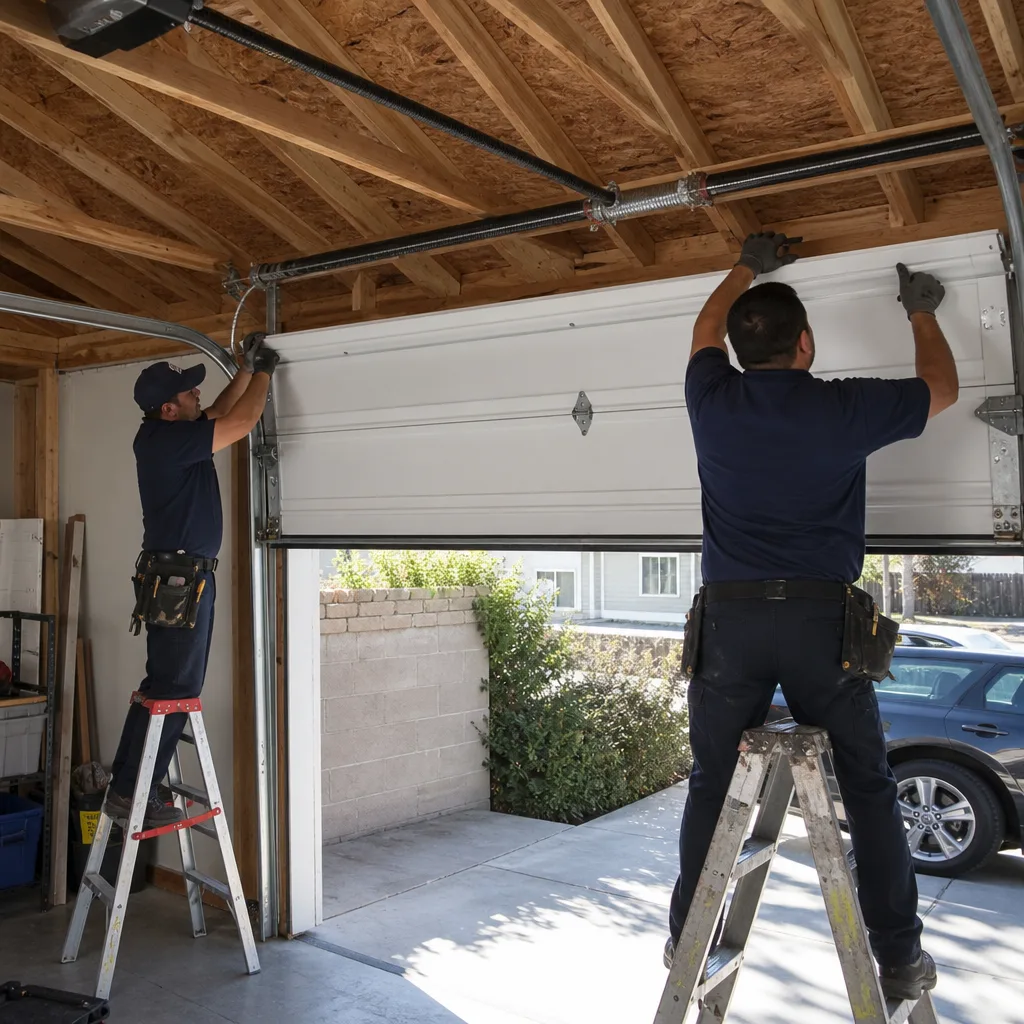
Van Nuys sits in the San Fernando Valley, where summer daytime highs routinely reach the mid-90s and the winter nights dip into the 40s, and the door hardware on a west-facing garage absorbs direct sun for six hours a day in August. That heat accelerates rust on exposed rollers and degrades the nylon bearings inside the hinges faster than a coastal door. We see torsion springs lose tension earlier on doors that face Sepulveda Boulevard than on identical doors tucked behind eucalyptus shade on a side street. A contractor who has worked Van Nuys for years will ask which way your garage faces before they quote a spring replacement, because the answer affects the recommended spring grade. For more on local conditions, read our Seasonal Garage Door Care for Van Nuys: Year-Round Homeowner’s Guide.
Code-wise, Van Nuys follows Los Angeles County building codes, which means every garage door installed after 1991 must have a photo-eye safety reversal system, and every opener must reverse on contact with a 1.5-inch obstruction. Older homes in Van Nuys, especially those built before 1991, often still have doors without these safety systems. A legitimate contractor will flag this during inspection and recommend upgrading to a compliant system as part of any garage door installation in Van Nuys. We’ve seen doors in older Van Nuys homes that could crush a 2×4 before reversing, and we won’t leave one in service without at least documenting the deficiency in writing.
Market-wise, Van Nuys has no shortage of unlicensed handymen advertising garage door repair on street-pole signs and door hangers. The price spread between a licensed C-61/D28 contractor and a side-job repairman in this neighborhood is typically $80 to $150 on a spring replacement, and the difference is usually the insurance, the license compliance, and the warranty backing. Paying the extra hundred dollars buys you a documented photo record, a written scope, and a 365-day promise that the repair will be made right if it isn’t. In Van Nuys, you can find a cheaper door fix by driving down Vanowen Street and picking up a flyer, but the paper trail is the entire point.
Common Mistakes to Avoid
- Hiring before checking the CSLB number. A business name and a magnetic truck sign don’t mean a valid license. The CSLB lookup takes 90 seconds and tells you whether your contractor is legal, active, and classified for doors. In Van Nuys, we’ve had customers show us estimates from unlicensed operators who undercut us by $90 and then disappeared when the spring snapped again three weeks later.
- Accepting a verbal quote for a job over $500. California law requires a written contract for home improvement work over $500, and most spring replacements in Van Nuys cross that line when you add labor. A verbal number means no documented scope, no comparison basis, and no legal enforceability if the final price is higher.
- Comparing bottom-line price without spring grade. A $50 difference between two quotes usually means different spring wire diameter, cycle rating, or brand. The cheaper quote often means a lower-grade spring that fails in two years instead of seven. Always compare the line items, never the headline.
- Paying upfront before work starts. A legitimate contractor doesn’t need your money to buy parts. California law caps down payments on home improvement contracts at $1,000 or 10% of the project total, whichever is less. If a contractor wants half the job price before showing up, that’s a red flag.
- Skipping the documented photo record. You can’t verify what was replaced if you never saw the failed part. A contractor who photographs the broken spring before quoting and photographs the new one installed after is giving you evidence, not a story. In Van Nuys, where the same job might be sold to you twice by a less scrupulous operator, the photo record is your receipt.
- Accepting urgency pricing on the spot. “I can do it today for $50 less” is a negotiation strategy, not a discount. The price you get under time pressure is the price that reflects what the contractor thinks you’ll pay, not what the job actually costs. Ask for it in writing and take the time to compare.
- Not asking about the warranty term in writing. A verbal warranty is worthless. Ask for the warranty document before approving the work, and check what’s covered: parts, labor, or both, and for how long. A contractor who won’t write down the warranty term doesn’t intend to honor one.
When to Call a Professional
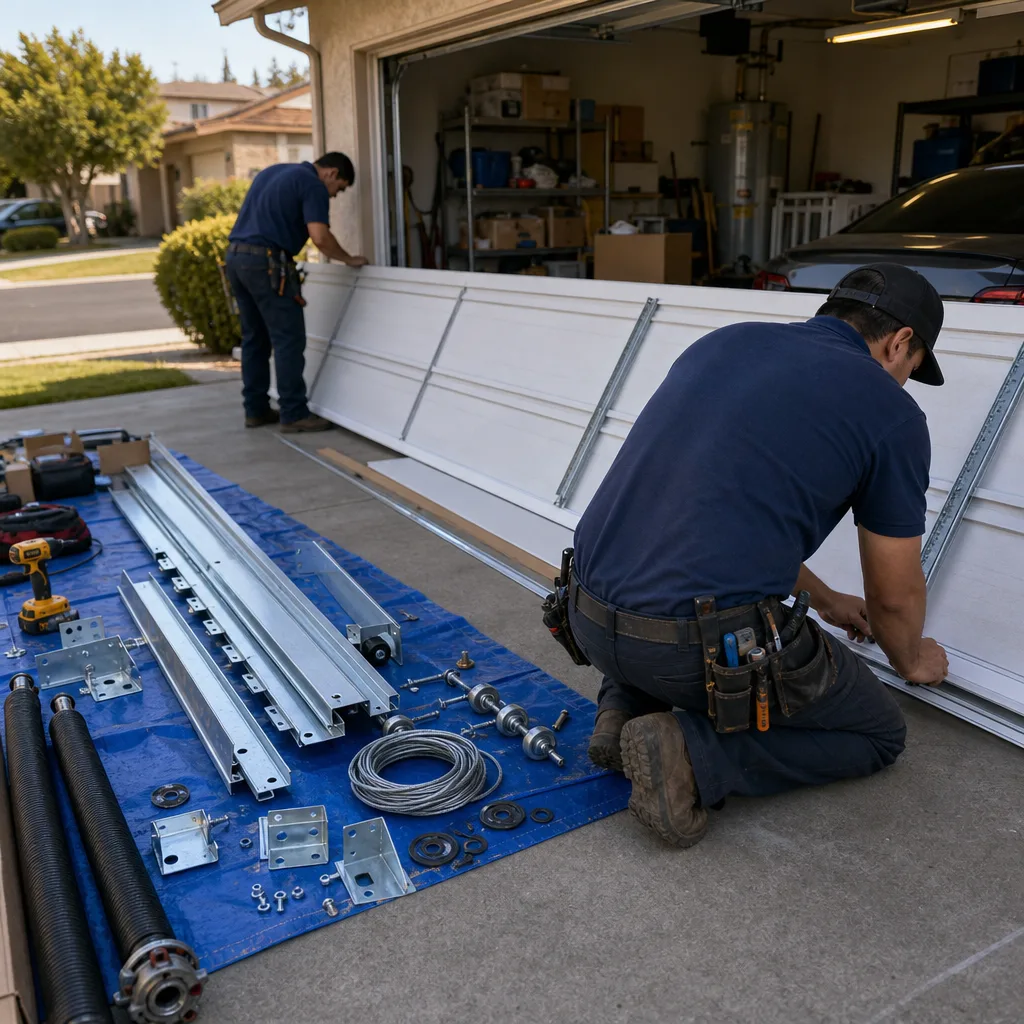
Garage door work involves high-tension springs that can cause serious injury if mishandled. A torsion spring under full tension stores enough energy to break bones or worse if it releases while you’re working on it. If your door has a broken spring, a cable off its drum, a door that’s come off its track, or an opener that won’t respond, call a licensed C-61/D28 contractor rather than attempting a DIY repair. See our DIY vs Professional Garage Door: The Van Nuys Homeowner’s Decision Guide for help deciding. In Van Nuys, where garage doors are often the largest moving object on the property and many older doors lack modern safety reversal systems, the stakes of an improvised fix are higher than they look. Servo Garage Doors Van Nuys offers free estimates in Van Nuys, and we answer the phone live 24/7: call (213) 418-2520 if your door has failed or if you need a written second opinion on a competitor’s written estimate.
Frequently Asked Questions
Go to the CSLB website, enter the business name or license number, and confirm the license status is “Active” and the classification is C-61/D28, which is the Door and Gate specialty. This takes about 90 seconds and tells you whether your contractor is legally permitted to work on garage doors. A general contractor’s license alone does not demonstrate competency in garage door systems.
Request five documents: a written itemized quote with parts and labor separated, a photo of the failed or failing component, the material spec sheet for the parts being quoted, warranty terms in writing, and proof of general liability insurance. A contractor who won’t provide these is choosing not to document the job, which means you’ll have no paper trail if the work fails or the price changes.
Single torsion spring replacement in Van Nuys typically ranges from $180 to $320 depending on spring grade, wire diameter, and cycle rating, while double-spring systems run $280 to $500. Labor is usually included in those ranges. The difference between a $180 spring and a $320 spring is often a 10,000-cycle rating versus a 25,000-cycle rating, so ask for the spec sheet before comparing on price alone.
Many contractors who serve Van Nuys offer same-day service for common repairs like broken springs, off-track doors, and opener issues, but same-day work should never come with urgency pricing. A legitimate contractor will give you a written quote with a timeframe, not a verbal number that drops $50 if you sign right now. For emergencies, Servo Garage Doors Van Nuys answers live 24/7 and dispatches a named technician.
A written quote based on a documented inspection shouldn’t change once the contractor arrives, unless there’s a hidden condition that wasn’t visible during the initial assessment. If the original estimate was itemized and the scope didn’t change, the price shouldn’t change. Clause 1 of The Haven Standard requires a flat, written price and written scope before any work starts, and that price is what appears on the invoice.
Most contractors that focus on garage door repair in Van Nuys stock common parts on their trucks, including torsion springs across common wire diameters, rollers, hinges, cables, and opener components. If a contractor needs to order a part, they should tell you before starting and include the parts wait in the written schedule. Servo stocks common spring sizes and opener parts for LiftMaster, Chamberlain, Genie, and Raynor systems so most Van Nuys repairs are completed in one visit.
The Bottom Line
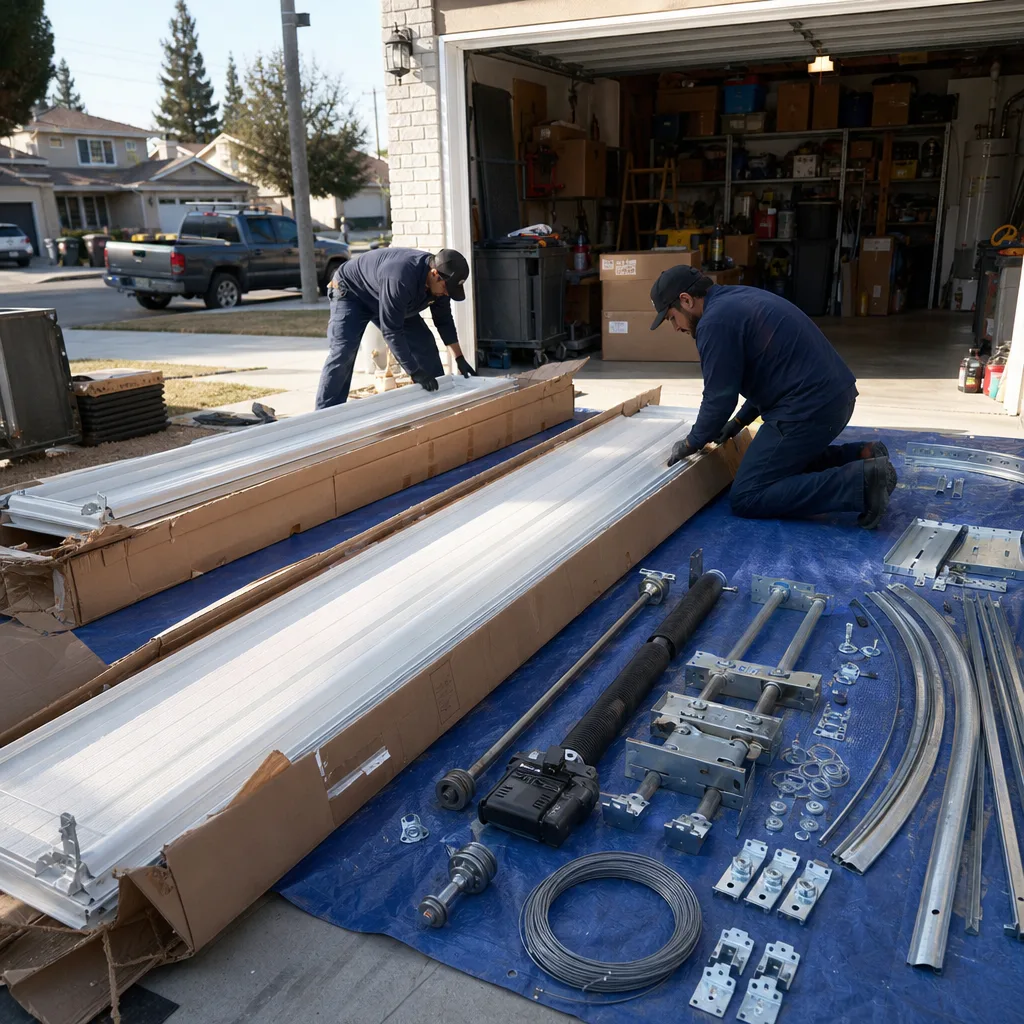
Hiring a garage door contractor in Van Nuys isn’t about finding the cheapest bid or the shiniest truck. It’s about finding someone who hands you a written price, a documented scope, and a photo of the failed part before any money changes hands. Verify the C-61/D28 license, request the five documents, reject urgency pricing and non-itemized quotes, and compare spring grades rather than bottom lines. When a contractor’s process is already on paper before you’ve decided anything, you don’t have to take their word for it. That’s the entire point. Whether you’re in need of garage door opener repair or installation in Van Nuys, the same rules apply: written first, documented always. To learn more about our process or to schedule a free estimate, visit Servo Garage Doors Van Nuys home or call (213) 418-2520.
Written by Marcus Deller, Owner at Servo Garage Doors Van Nuys, serving Van Nuys since 2015. Explore more guides & resources on our blog.